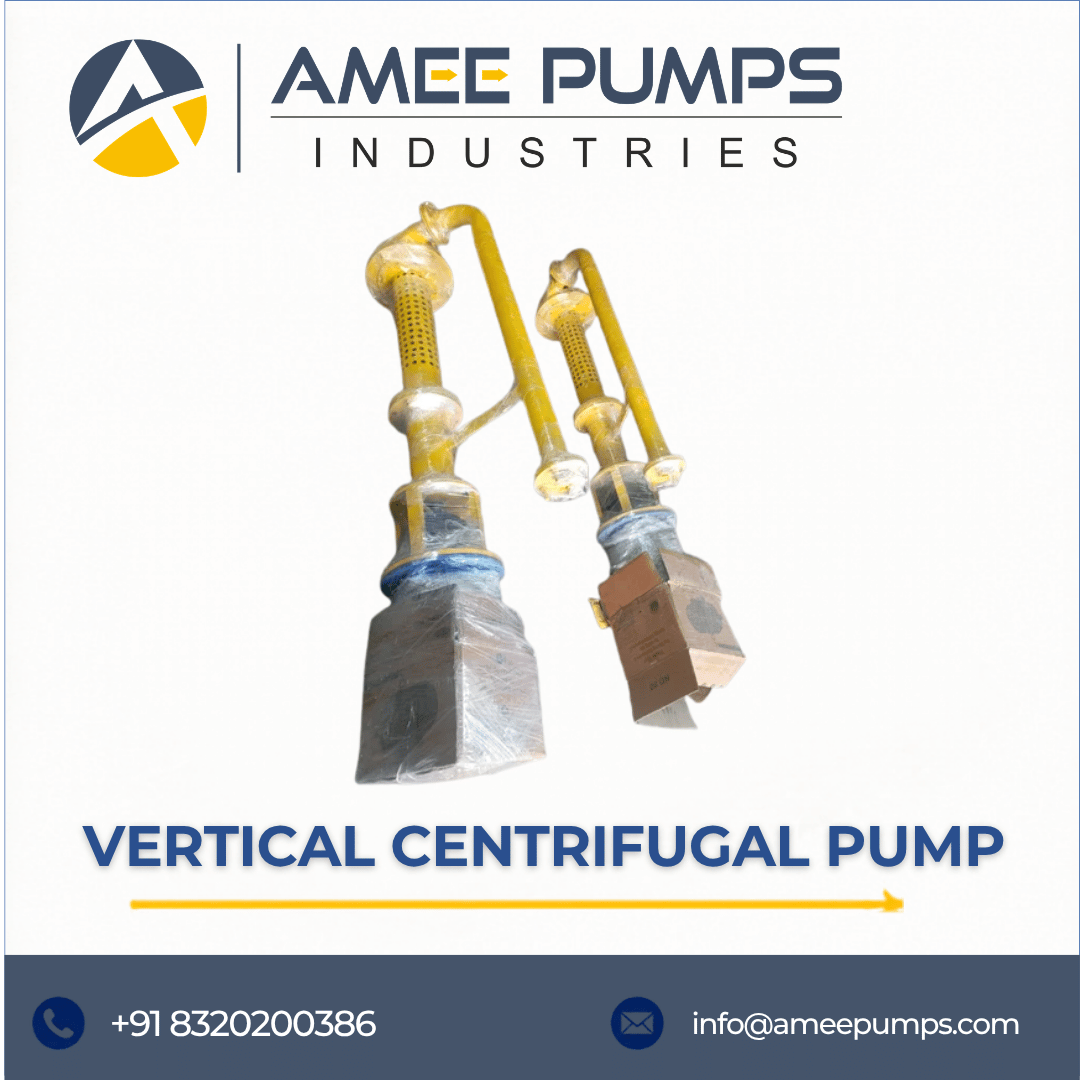
Vertical Centrifugal Pump
In the realm of fluid dynamics and industrial operations, efficient and reliable pumping systems are paramount. Vertical centrifugal pumps stand out as a versatile and space-saving solution, catering to a wide array of applications across various sectors. These pumps are engineered to optimize performance where traditional horizontal setups might be impractical or inefficient. AMEE PUMPS INDUSTRIES, with its tech-driven approach and deep-rooted expertise, offers robust solutions in this domain, focusing on precision, cost-effectiveness, and dependable performance.
Understanding the intricacies of vertical centrifugal pumps is crucial for selecting the right equipment that meets specific operational demands. This guide delves into their design, benefits, applications, and the critical factors to consider when choosing a pump that ensures longevity and efficiency.
Understanding Vertical Centrifugal Pumps
A vertical centrifugal pump operates on the principle of converting rotational kinetic energy into hydrodynamic energy. Unlike their horizontal counterparts, these pumps are designed with the motor and pump assembly oriented vertically. This design orientation offers significant advantages, particularly in installations where space is a constraint.
The core components include an impeller, casing, suction bell, and discharge head. The impeller, a rotating component with vanes, draws fluid into the pump and accelerates it outwards. The casing then collects this high-velocity fluid and converts the kinetic energy into pressure energy. Vertical centrifugal pumps come in various configurations, including inline types, which are directly fitted into pipelines, and long shaft types, suitable for deeper installations like wells or sumps.
Key design features often include suction and discharge ports aligned on the same horizontal centerline for inline models, simplifying piping and reducing installation complexities. For long shaft pumps, a vertical shaft connects the motor at the surface to the pump stages submerged in the fluid. This inherent robustness and adaptability make them indispensable in many industrial and commercial settings.
Key Features and Design Considerations
- Space Efficiency: Their vertical orientation requires a smaller footprint, ideal for confined spaces.
- Simplified Piping: Inline designs allow direct mounting in pipelines, reducing the need for extensive pipework and bends.
- Improved NPSH: Many vertical designs offer better Net Positive Suction Head (NPSH) characteristics, reducing the risk of cavitation and ensuring smoother operation.
- Ease of Maintenance: Some models feature independent motor and pump shafts, simplifying maintenance procedures.
- Robust Construction: Built to withstand demanding conditions, offering chemical and thermal resistance for continuous operation.
Diverse Applications of Vertical Centrifugal Pumps
The versatility of vertical centrifugal pumps allows them to be employed across a broad spectrum of industries and applications. Their ability to handle various fluid types, coupled with their space-saving design, makes them a preferred choice for many engineers and facility managers.
Water Supply & Treatment
Essential for municipal water distribution, boosting pressure in high-rise buildings, and managing water in treatment facilities.
Commercial HVAC Systems
Used for circulating water in heating, ventilation, and air conditioning systems, ensuring optimal temperature control.
Industrial Fluid Transfer
Handling a wide range of process fluids, chemicals, and coolants in manufacturing plants and refineries.
Agriculture & Irrigation
Powering irrigation systems for large-scale farming operations, moving water efficiently.
Marine Installations
Used in bilge pumping, cooling systems, and general fluid transfer on vessels.
Fire Fighting Systems
Providing reliable water flow for fire suppression systems in buildings and industrial sites.
Advantages of Choosing Vertical Centrifugal Pumps
The adoption of vertical centrifugal pumps offers a compelling list of benefits that translate into operational efficiencies and cost savings. AMEE PUMPS INDUSTRIES leverages these advantages in their manufacturing to deliver high-performing equipment.
- Space Optimization: Minimizes the physical footprint required for pump installations, crucial in crowded industrial environments or compact building designs.
- Reduced Installation Costs: Simplified piping for inline models and ease of integration can significantly lower labor and material expenses during setup.
- Enhanced Reliability: Robust design and engineering, often with features to prevent cavitation, ensure consistent and dependable performance, even with challenging fluids.
- Operational Efficiency: When correctly sized and selected, these pumps operate at high efficiency levels, contributing to lower energy consumption.
- Low Maintenance Requirements: Simple designs and availability of interchangeable parts, as highlighted by AMEE PUMPS INDUSTRIES, can lead to reduced downtime and maintenance costs over the pump's lifecycle.
- Versatile Fluid Handling: Capable of handling clean water, dirty liquids, and even media containing small solids, depending on the specific model and design.
Selecting the Right Vertical Centrifugal Pump
Choosing the appropriate vertical centrifugal pump is critical for ensuring optimal performance, longevity, and cost-effectiveness. A systematic approach, considering various operational parameters and pump characteristics, is essential. AMEE PUMPS INDUSTRIES emphasizes a practical approach to help clients find the best fit for their unique needs.
Buyer Insight: Application First
Always start with a thorough understanding of your application. Consider the fluid's properties (viscosity, temperature, solids content), required flow rate, head pressure, and any space limitations. The right pump selection prevents premature wear, energy waste, and costly downtime.
Key Selection Criteria:
- Flow Rate and Head: Determine the maximum and minimum flow rates and the total dynamic head required for your system.
- Fluid Characteristics: Assess the type of fluid being pumped – is it clean water, corrosive, abrasive, or does it contain solids? This influences material selection and pump design.
- NPSHa vs. NPSHr: Ensure the Net Positive Suction Head Available (NPSHa) in your system is greater than the Net Positive Suction Head Required (NPSHr) by the pump to avoid cavitation.
- Motor Efficiency and Power: Select an energy-efficient motor that provides adequate power without being oversized, to optimize running costs.
- Installation Environment: Consider the available space, environmental conditions (temperature, humidity), and accessibility for maintenance.
- Materials of Construction: Choose materials compatible with the pumped fluid and operating temperature to ensure durability and prevent corrosion.
Questions to Ask Before Buying:
What is the maximum operating temperature and pressure the pump can handle?
Understanding the pump's limits ensures it can operate safely and reliably within your system's parameters.
What are the recommended maintenance intervals and procedures?
Proactive maintenance planning is key to longevity and minimizing unexpected downtime.
Are spare parts readily available?
Ensuring access to spare parts can significantly reduce repair times and costs.
What efficiency rating does the pump achieve at its duty point?
Higher efficiency translates to lower energy consumption and operational costs.
Does the pump design minimize the risk of cavitation?
Cavitation can severely damage pumps and reduce their performance; a good design mitigates this risk.
AMEE PUMPS INDUSTRIES: Your Partner in Pumping Solutions
Founded in 2009 and led by Mr. Amit Panchal, who brings two decades of industry expertise, AMEE PUMPS INDUSTRIES is dedicated to providing practical and dependable pumping solutions. Based in Ahmedabad, Gujarat, India, the company adopts a tech-driven approach to design and manufacturing, focusing on precision engineering to deliver cost-effective results.
AMEE PUMPS INDUSTRIES specializes in manufacturing high-quality vertical centrifugal pumps, including vertical inline and vertical long shaft models. Their commitment to innovation and customer satisfaction is reflected in their pursuit of high efficiency and robust performance. The company aims to achieve operational excellence through meticulous design and manufacturing processes, striving to meet the diverse needs of industries requiring reliable fluid transfer solutions.
With a focus on a practical, tech-driven methodology, AMEE PUMPS INDUSTRIES positions itself as a valuable partner for businesses seeking dependable pumping technology. The company emphasizes delivering solutions that are not only effective but also engineered for longevity and ease of integration into existing systems.
Frequently Asked Questions (FAQ)
What is the primary difference between vertical inline and vertical long shaft pumps?
Vertical inline centrifugal pumps are designed to be installed directly into the pipeline, featuring aligned suction and discharge ports for a compact setup. Vertical long shaft pumps, on the other hand, are designed for deeper installations, such as sumps or wells, with the motor located above the fluid and connected to the submerged pump stages via a long shaft.
Can vertical centrifugal pumps handle fluids with solids?
Many vertical centrifugal pump models are designed to handle fluids containing small solids or abrasive particles. The suitability depends on the specific pump design, impeller type, and materials of construction. Heavy-duty models are often employed for applications like wastewater treatment.
How does a vertical centrifugal pump improve space efficiency?
Their vertical orientation means they occupy less floor space compared to horizontal pumps. This is particularly advantageous in installations where space is limited or premium, such as in commercial buildings or densely packed industrial plants.
What is NPSH and why is it important for vertical centrifugal pumps?
NPSH (Net Positive Suction Head) is a measure of the pressure head in the liquid at the pump suction connection, above the vapor pressure. It's crucial because insufficient NPSH can lead to cavitation – the formation and collapse of vapor bubbles – which damages the pump and reduces efficiency. Vertical pump designs often offer favorable NPSH characteristics.
Ready to Optimize Your Pumping System?
Choosing the right vertical centrifugal pump is a critical decision that impacts your operational efficiency and costs. AMEE PUMPS INDUSTRIES offers expertise and a range of solutions designed for reliability and performance.
Contact us today to discuss your specific requirements and let our experts help you select the ideal vertical centrifugal pump for your application.
Request a Solution