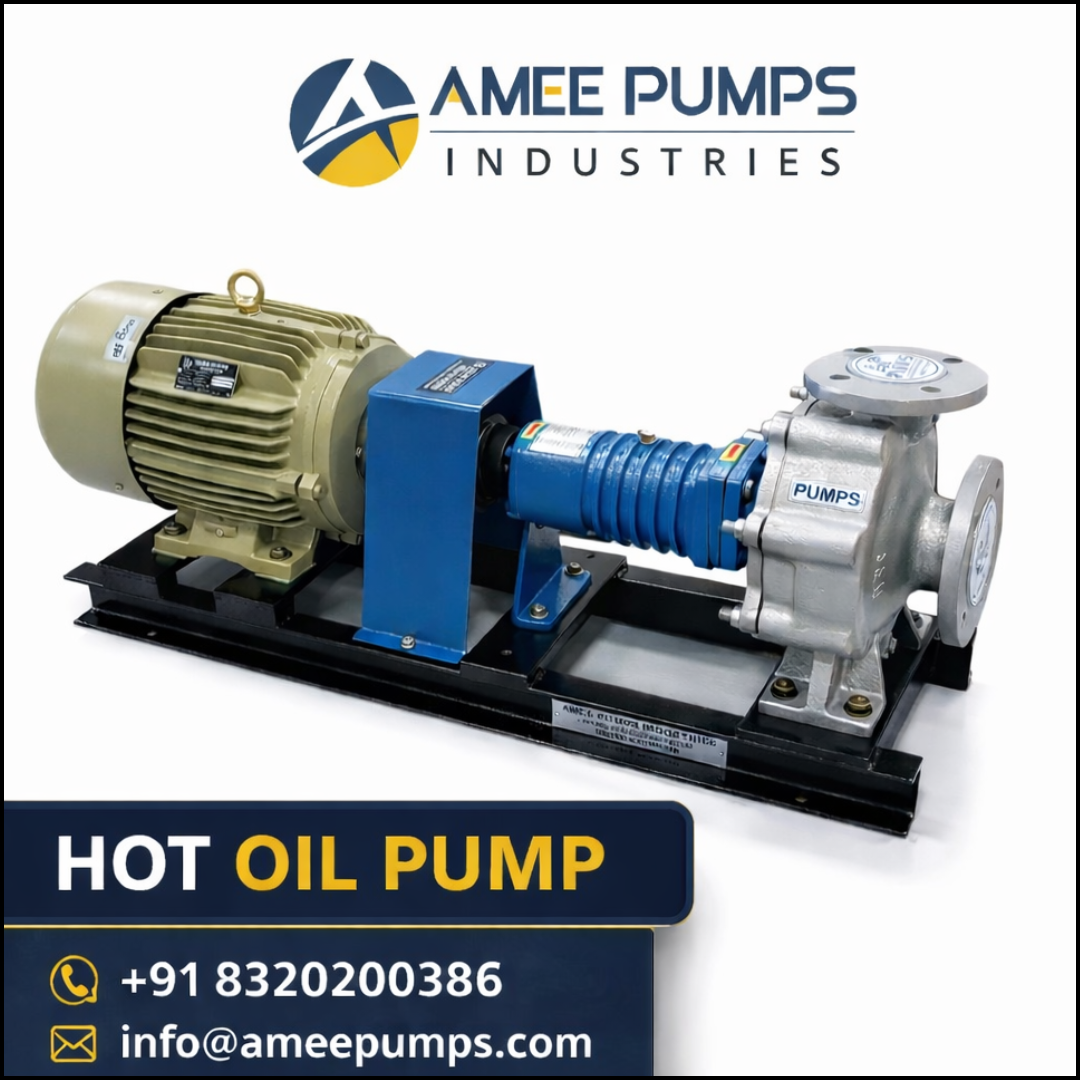
Hot Oil Pump in Gujarat
Industrial heating systems depend on consistent fluid circulation, controlled temperature management, and the safe handling of thermal media. In many manufacturing environments, a hot oil pump plays a vital role in maintaining uninterrupted heat transfer operations. Industries across Gujarat, particularly those operating thermic fluid heating systems, rely on these pumps for process continuity, energy efficiency, and operational stability.
A hot oil pump is designed to handle elevated temperatures where conventional pumping systems may not perform reliably. These pumps are engineered to circulate thermal oils used in indirect heating applications, where maintaining uniform temperature is critical to production performance. In Gujarat, expanding industrial sectors such as chemicals, textiles, pharmaceuticals, food processing, and engineering have increased demand for dependable hot oil pumping systems.
AMEE Pumps Industries has developed expertise around practical engineering, process-focused pump design, and performance-driven manufacturing. With a strong focus on industrial fluid handling applications, the company supports users seeking durable pumping systems suited for demanding thermal operations.
Understanding Hot Oil Pump Applications in Industrial Systems
A hot oil pump is generally used to circulate heated thermal fluid through a closed-loop heating system. Instead of direct flame-based process heating, many industries prefer thermic fluid systems because they offer precise temperature control, lower pressure operation, and improved safety.
These pumps are commonly integrated into:
- Thermic fluid heaters
- Chemical reactors
- Heat exchangers
- Drying systems
- Boiler auxiliary circuits
- Asphalt and bitumen plants
- Textile processing lines
- Food-grade thermal heating units
In these applications, the pump must circulate heated oil efficiently without leakage, cavitation concerns, or thermal stress-related damage.
Why Hot Oil Pumps Are in Demand in Gujarat
Gujarat has a strong industrial base, making it a major market for specialized process pumps. Many industries in the region operate continuously and require reliable thermal oil circulation systems to support productivity.
Demand for hot oil pumps in Gujarat is driven by several practical factors. Process industries require pumps capable of handling elevated temperatures while maintaining stable flow performance. Manufacturing units also prefer systems designed for long service life, low maintenance needs, and compatibility with demanding process fluids.
In sectors where downtime directly impacts output, dependable heat transfer pumps become a critical operational requirement rather than simply a utility component.
How a Hot Oil Pump Works
The operating principle of a hot oil pump centers on circulating thermic fluid at controlled flow rates while handling high operating temperatures.
The process generally involves:
- Thermal oil is heated inside a heater unit
- The pump circulates the heated oil through process equipment
- Heat is transferred indirectly to machinery or materials
- The fluid returns to the heater for reheating
- Continuous circulation maintains process temperature stability
Because the fluid often operates at elevated temperatures, pump construction, sealing arrangements, and material selection play an important role in performance.
Important Features of Industrial Hot Oil Pumps
High-temperature pumping applications require specialized design features beyond conventional centrifugal pumps.
Key features often considered include:
- High-temperature handling capability
- Robust mechanical seal arrangements
- Thermal expansion-friendly construction
- Efficient impeller and hydraulic design
- Low-vibration performance
- Reliable shaft support systems
- Reduced heat loss design
- Durable bearing arrangements
These features help improve safety, efficiency, and operating life in demanding industrial environments.
Industries Using Hot Oil Pumps in Gujarat
The application range for thermal oil pumps continues to expand with increased process automation and energy optimization.
Factors to Consider When Selecting a Hot Oil Pump
Selecting a suitable hot oil pump involves evaluating operating conditions, not simply choosing by pump size or capacity.
Important considerations include:
- Operating temperature range
- Flow rate requirement
- Differential head requirement
- Type of thermal oil used
- Seal arrangement suitability
- Material of construction
- System pressure conditions
- Energy efficiency expectations
- Maintenance accessibility
A properly matched pump contributes significantly to process reliability and long-term operating economy.
Role of Precision Engineering in Hot Oil Pump Performance
Performance in thermal oil pumping is heavily influenced by engineering accuracy. Improper tolerances, poor hydraulic balancing, or unsuitable materials can lead to overheating, leakage, or premature failure.
Precision-engineered hot oil pumps are designed to withstand thermal stress while maintaining hydraulic efficiency. This becomes especially important in continuous-duty industrial systems where pumps operate for extended periods under challenging conditions.
Engineering-driven manufacturers often focus on balancing durability with operating efficiency, helping improve both pump life and system performance.
Maintenance Practices for Hot Oil Pumps
Even well-designed pumps benefit from preventive maintenance. Routine inspection helps reduce unscheduled shutdowns and improve equipment reliability.
Recommended maintenance practices include monitoring:
- Seal condition
- Bearing temperature
- Shaft alignment
- Lubrication condition
- Flow consistency
- Noise and vibration patterns
- Oil quality and contamination levels
Regular inspection often prevents minor concerns from developing into larger system failures.
Benefits of Using Quality Hot Oil Pumps
Using a properly engineered hot oil pump can support multiple operational advantages.
Common performance benefits include:
- Stable heat transfer circulation
- Improved process temperature control
- Reduced risk of leakage issues
- Lower maintenance interruptions
- Higher system efficiency
- Long service life potential
- Reliable continuous-duty performance
These factors contribute directly to process stability and production efficiency.
Hot Oil Pump and Thermic Fluid Pump: Are They the Same?
The terms hot oil pump and thermic fluid pump are often used interchangeably, as both generally refer to pumps designed for thermal oil circulation.
In industrial search behavior, users may also look for:
- Thermic fluid circulation pump
- Heat transfer oil pump
- High temperature centrifugal pump
- Thermal oil transfer pump
- Industrial hot oil circulation pump
Including these related terms naturally aligns the content with broader search intent while helping users locate relevant technical information.
Why Gujarat Industries Focus on Heat Transfer Pump Reliability
Industrial users in Gujarat often prioritize reliability over short-term procurement considerations. In thermal systems, pump failure can interrupt heating, affect processes, and increase operating costs.
That is why users typically evaluate design quality, manufacturing consistency, and technical suitability when selecting pumps for high-temperature applications.
A dependable hot oil pump supports safer operation, improved thermal control, and long-term process continuity.
Conclusion
Demand for hot oil pump systems in Gujarat continues to grow with the expansion of process industries requiring dependable thermal fluid circulation. These pumps play an important role in maintaining controlled heat transfer, operational stability, and industrial efficiency.
From chemical processing to textile and food applications, selecting a properly engineered hot oil pump supports long-term performance and safer process operation. For users evaluating thermic fluid circulation systems, understanding application needs, pump design considerations, and operating requirements remains essential for informed decision-making.
