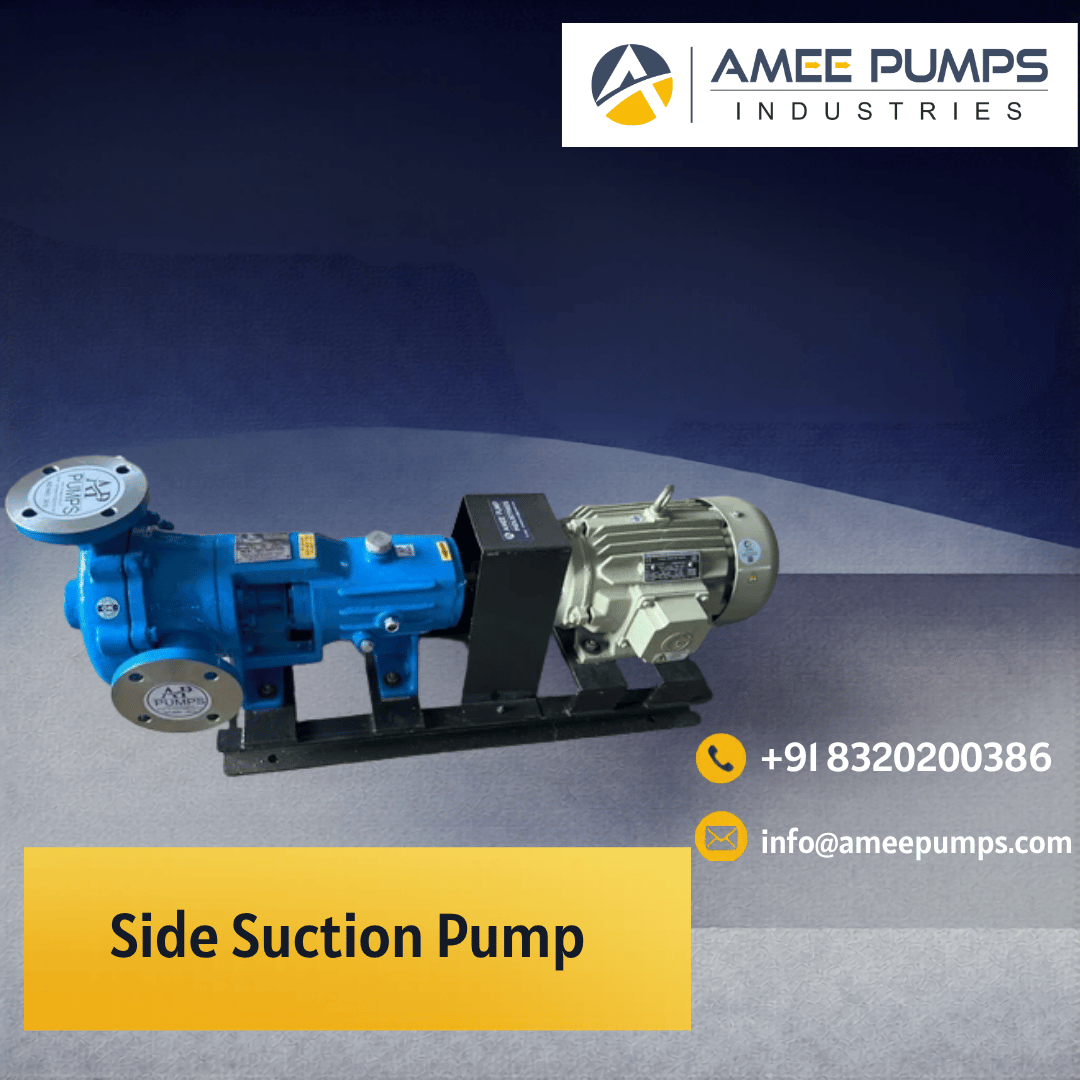
Side Suction Pump
Expertly designed side suction pumps for industrial use in Ahmedabad. Discover reliable, efficient, and cost-effective solutions from Amee Pumps Industries.
What is a Side Suction Pump? — Overview
A side suction pump, often a type of centrifugal pump, is characterized by its inlet port being located on the side of the casing, typically perpendicular to the shaft, while the discharge port is usually on the top. This configuration allows for a more direct flow path from the suction source into the impeller. Unlike end-suction pumps where fluid enters axially, the side suction design can sometimes offer advantages in terms of priming, NPSH (Net Positive Suction Head) requirements, and the ability to handle fluids with some entrained vapors or solids. They are engineered to move liquids efficiently across a wide range of applications.
Key Features and Technical Specifications
- Side Inlet Port: Designed for direct fluid entry, often improving flow dynamics.
- Top Discharge Outlet: Standard configuration for easy piping integration.
- Robust Casing Construction: Typically made from cast iron, stainless steel, or specialized alloys for durability.
- Efficient Impeller Design: Optimized for specific fluid types and flow rates.
- Shaft Sealing Options: Available with mechanical seals or gland packing to suit different operating conditions.
- Various Mounting Configurations: Can be supplied as bare shafts, close-coupled, or frame-mounted units.
- Material Compatibility: Offered in materials suitable for corrosive, abrasive, or high-temperature fluids.
- Standardized Flange Connections: For straightforward integration into existing piping systems.
Industrial Applications and Use Cases
- Chemical Processing: Transferring acids, alkalis, solvents, and other process chemicals.
- Pharmaceutical Manufacturing: Handling sensitive liquids, solvents, and intermediates with precision.
- Wastewater Treatment: Pumping sludge, effluent, and process water in treatment plants.
- Food and Beverage Industry: Moving viscous liquids, slurries, and ingredients where hygiene is paramount.
- Textile Dyeing and Finishing: Circulating dyes, chemicals, and process water.
- General Industrial Transfer: Moving water, oils, coolants, and other industrial fluids.
- Filtration Systems: Used in conjunction with filter presses for slurry or liquid transfer.
- Cooling Tower Applications: Circulating water for industrial cooling systems.
How to Choose the Right Side Suction Pump
Selecting the appropriate side suction pump is crucial for optimal performance and longevity. Consider these factors:
- Fluid Characteristics: Viscosity, temperature, corrosivity, presence of solids or vapors.
- Flow Rate and Head Requirements: Determine the necessary capacity and pressure the pump must deliver.
- NPSH Available (NPSHa): Ensure the pump's NPSH required (NPSHr) is less than the system's NPSHa to prevent cavitation.
- Material of Construction: Choose materials resistant to the fluid being pumped.
- Seal Type: Mechanical seals for leak-free operation or gland packing for easier maintenance in some applications.
- Motor Power and Type: Select an appropriately sized motor with suitable electrical specifications.
- Industry Standards and Certifications: Verify compliance with relevant safety and performance standards.
- Supplier Reputation and Support: Look for manufacturers with a proven track record and good after-sales service.
Quality Standards and Compliance
When procuring side suction pumps, especially for critical industrial applications in Ahmedabad, adherence to quality standards and compliance is non-negotiable. Reputable manufacturers will ensure their pumps meet national and international standards such as those set by the Bureau of Indian Standards (BIS) or ISO certifications for quality management systems. For specific applications, compliance with standards like API (American Petroleum Institute) for petrochemical services or relevant IEC (International Electrotechnical Commission) standards for electrical components is vital. Buyers should always verify that the pump's design, materials, and manufacturing processes align with the required industry regulations and performance expectations.
Why Amee Pumps Industries' Experience and Capability Matters
At Amee Pumps Industries, our two decades of experience, led by Mr. Amit Panchal, have been dedicated to mastering the intricacies of pump design and manufacturing. We leverage a technology-driven approach that allows for precision engineering and cost-effective solutions, a critical advantage for industries in Ahmedabad. Our manufacturing processes are honed for efficiency and reliability, ensuring that each side suction pump we deliver meets stringent quality controls. We understand the practical demands of industrial fluid transfer and are committed to providing robust, high-performance pumps that contribute directly to our clients' operational success and efficiency.
Installation, Maintenance, and Care Tips
Proper installation and regular maintenance are essential for the longevity and optimal performance of your side suction pump.
- Installation: Ensure the pump is installed on a solid, level foundation to minimize vibration. Align the pump and motor shafts accurately if they are separate units. Connect piping carefully, avoiding strain on the pump casing. Ensure the suction line is airtight and submerged sufficiently to prevent vortex formation.
- Priming: Before initial startup, the pump casing and suction line must be completely filled with the liquid to be pumped. This is critical for centrifugal pumps.
- Operation: Monitor operating parameters such as pressure, temperature, and vibration. Avoid running the pump dry, as this can damage seals and internal components.
- Routine Checks: Regularly inspect seals for leaks, check bearing lubrication levels, and examine the foundation for any signs of wear or instability.
- Scheduled Maintenance: Follow the manufacturer's recommendations for periodic servicing, including seal replacement, impeller inspection, and motor checks. Keep a log of maintenance activities.
Frequently Asked Questions
The primary advantage often lies in its suction port orientation, which can lead to more direct flow into the impeller, potentially improving efficiency and reducing NPSH requirements in certain configurations. This design can also be more forgiving with fluids containing some entrained vapors.
Yes, side suction pumps can handle viscous fluids, but their efficiency may decrease as viscosity increases. It's crucial to select a pump with appropriate impeller design and motor power for the specific viscosity to ensure effective performance.
Common materials include cast iron for general-purpose applications, stainless steel for corrosive or hygienic environments, and specialized alloys for highly aggressive or high-temperature fluids. The choice depends on the fluid being handled.
Cavitation occurs when the liquid pressure drops below its vapor pressure. To prevent it, ensure the Net Positive Suction Head Available (NPSHa) in your system is greater than the pump's Net Positive Suction Head Required (NPSHr). This involves optimizing suction piping, minimizing friction losses, and ensuring adequate submergence.
The lifespan of a side suction pump can vary significantly based on the application, operating conditions, maintenance practices, and the quality of the pump itself. With proper installation, regular maintenance, and operation within design parameters, many industrial side suction pumps can last for many years.
Yes, Amee Pumps Industries can engineer side suction pumps using appropriate materials and sealing arrangements, and with ATEX-certified motors, to be suitable for hazardous environments where flammable or explosive substances are present. Specific requirements should be discussed during the consultation phase.
Conclusion
For industries in Ahmedabad seeking reliable and efficient fluid transfer solutions, the side suction pump offers a versatile and effective option. Understanding its design advantages, application suitability, and the critical factors in selection—from fluid characteristics to material compatibility—is paramount. Partnering with an experienced manufacturer like Amee Pumps Industries ensures you receive not only a high-quality pump but also the expertise to integrate it seamlessly into your operations, backed by a commitment to performance and customer satisfaction.
Get In Touch
Amee Pumps Industries
