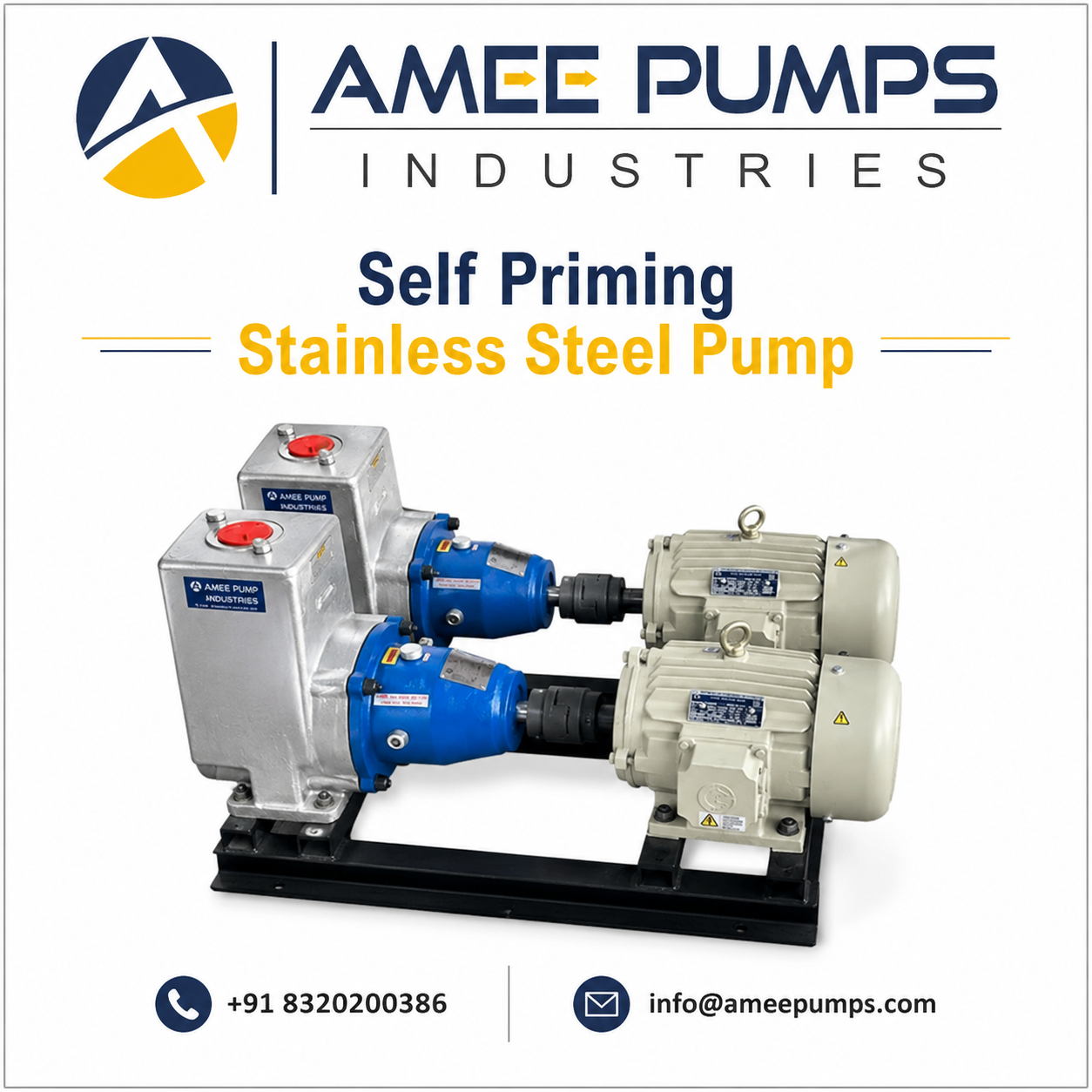
Self Priming Stainless Steel Pump
Expertly engineered self-priming stainless steel pumps for industrial use in Ahmedabad. Discover reliable, efficient, and durable solutions from Amee Pumps Indu
What is a Self Priming Stainless Steel Pump? — Overview
A self-priming stainless steel pump is a type of centrifugal pump designed to evacuate air from its suction line and casing, allowing it to draw liquid without needing to be manually primed each time it starts. The "self-priming" feature is achieved through an internal recirculation system that creates a vacuum. The "stainless steel" construction provides excellent resistance to corrosion, oxidation, and contamination, making it suitable for handling a wide range of fluids, including aggressive chemicals, saltwater, and food-grade liquids. These pumps are engineered for reliability in demanding industrial settings.
Key Features and Technical Specifications
- Material of Construction: High-grade stainless steel (e.g., SS304, SS316) for wetted parts, ensuring superior corrosion resistance.
- Self-Priming Capability: Capable of lifting water from a depth of up to 8 meters when the pump casing is filled with water.
- Discharge Pressure: Designed to handle moderate to high discharge pressures suitable for various industrial processes.
- Flow Rate: Available in a range of capacities to meet diverse application requirements, from small batch transfers to continuous industrial supply.
- Motor Options: Typically offered with TEFC (Totally Enclosed Fan Cooled) motors, suitable for industrial environments, with options for different power ratings and voltages.
- Seal Type: Mechanical seals are standard, chosen for their durability and compatibility with the pumped fluid and operating conditions.
- Flange Connections: Standardized flange connections for easy integration into existing piping systems.
- Robust Casing Design: Engineered for durability and to withstand operational stresses in industrial applications.
Industrial Applications and Use Cases
- Chemical Processing: Transferring corrosive acids, alkalis, solvents, and other aggressive chemicals where material compatibility is crucial.
- Pharmaceuticals: Handling sensitive liquids, purified water, and intermediates in a hygienic manner, preventing contamination.
- Food and Beverage: Pumping food-grade liquids, oils, syrups, and dairy products, ensuring compliance with sanitary standards.
- Water Treatment: Transferring treated water, brine solutions, and chemicals in water and wastewater treatment plants.
- Marine Applications: Pumping bilge water, saltwater, and other corrosive fluids on ships and offshore platforms.
- General Industrial Transfer: Moving various liquids in manufacturing processes, including coolants, oils, and process water.
- Dyeing and Textile Industry: Handling dyes, chemicals, and process water in textile manufacturing facilities.
- Agriculture: Transferring fertilizers, pesticides, and irrigation water where corrosion resistance is needed.
How to Choose the Right Self Priming Stainless Steel Pump
Selecting the appropriate self-priming stainless steel pump involves careful consideration of several factors to ensure optimal performance and longevity for your specific application.
- Fluid Characteristics: Identify the exact nature of the fluid to be pumped – its viscosity, corrosivity, temperature, and presence of solids. This dictates the required grade of stainless steel and seal type.
- Required Flow Rate and Head: Determine the volume of fluid you need to move per unit of time and the total head (suction lift plus discharge head) the pump must overcome.
- Suction Lift Requirements: Confirm the maximum vertical distance the pump needs to lift the fluid from its source to the pump inlet. Ensure the pump's self-priming capability meets or exceeds this.
- Operating Environment: Consider the ambient conditions – temperature, humidity, and potential exposure to dust or hazardous substances. This influences motor enclosure type and overall pump durability.
- Power Availability: Verify the available electrical power supply (voltage, phase) and ensure it matches the pump motor specifications.
- Certifications and Standards: Check if specific industry certifications (e.g., food-grade, ATEX) are required for your application.
- Supplier Reputation and Support: Evaluate the manufacturer's experience, warranty, and availability of after-sales service and spare parts.
Quality Standards and Compliance
For self-priming stainless steel pumps used in critical industrial applications, adherence to stringent quality standards and compliance with relevant regulations is non-negotiable. Buyers should verify that the pumps meet national and international standards such as ISO 9001 for quality management systems. For specific industries, compliance with standards like those set by the American Society of Mechanical Engineers (ASME) for pressure vessels or specific hygienic standards for food and pharmaceutical applications (e.g., FDA compliance for materials) is essential. Reputable manufacturers will openly provide documentation and certifications to demonstrate their commitment to quality and safety.
Why Amee Pumps Industries' Experience and Capability Matters
At Amee Pumps Industries, our two decades of focused expertise, led by seasoned professionals like Mr. Amit Panchal, translate directly into superior self-priming stainless steel pump solutions for Ahmedabad's industries. We leverage a technology-driven approach that streamlines design and manufacturing, allowing us to deliver precision-engineered pumps cost-effectively. Our proven track record, including a 100% project success rate, underscores our commitment to reliability and performance. We meticulously manage our manufacturing processes, from material selection to final testing, ensuring each pump meets rigorous quality controls.
Our capability extends to understanding the unique challenges faced by industries in Gujarat, enabling us to offer tailored solutions and responsive after-sales support. This deep understanding, combined with our dedication to innovation and customer satisfaction, makes Amee Pumps Industries a trusted partner for your fluid transfer needs. We don't just build pumps; we engineer solutions designed for long-term, efficient operation.
Installation, Maintenance, and Care Tips
Proper installation and regular maintenance are crucial for the optimal performance and extended lifespan of your self-priming stainless steel pump.
- Installation: Ensure the pump is installed on a solid, level foundation to minimize vibration. Connect piping securely, avoiding undue stress on the pump casing. For self-priming models, ensure the suction line is airtight and the pump casing is filled with liquid before the initial start-up.
- Initial Priming: Always fill the pump casing and suction line with the fluid before the first start-up. Subsequent starts should be self-priming if the suction line remains filled.
- Regular Inspections: Periodically check for leaks around seals and flanges. Listen for unusual noises or vibrations, which could indicate bearing wear or impeller issues.
- Seal Maintenance: Monitor the mechanical seal for any signs of leakage. Excessive leakage may require seal replacement.
- Motor Care: Ensure the motor cooling fan is unobstructed and clean. Lubricate bearings as per the manufacturer's recommendations.
- Cleaning: If pumping food-grade or pharmaceutical liquids, ensure regular cleaning and sanitization of the pump and associated piping.
- Winterization: In colder climates, if the pump is not in use, drain it completely to prevent damage from freezing.
Frequently Asked Questions
Stainless steel offers superior resistance to corrosion and rust, making it ideal for handling aggressive chemicals, saltwater, and food-grade liquids where contamination or material degradation is a concern. Cast iron pumps are generally more suited for clean water applications.
A self-priming pump has an internal mechanism, often a recirculation chamber, that allows it to expel air from the suction line and casing. Once the casing is filled with liquid, the vacuum created by the impeller draws more liquid in, and the pump continues to operate without needing re-priming, provided the suction line remains submerged.
While designed for liquids, some self-priming stainless steel pumps can handle small amounts of soft solids or abrasives, depending on the impeller design and clearance. However, for fluids with significant solids, a specialized solids-handling pump would be more appropriate.
With proper installation, regular maintenance, and operation within its design parameters, a high-quality self-priming stainless steel pump can last for many years, often 10-15 years or more, depending on the severity of the application and the quality of the unit.
Mechanical seals require careful monitoring for leakage. While they are designed for longevity, factors like abrasive fluids, dry running, or improper installation can shorten their lifespan. Periodic checks and prompt replacement if leakage occurs are essential.
Most self-priming stainless steel pumps are designed for a maximum suction lift of around 8 meters (approximately 25 feet) when the pump casing is initially filled with water. This capability allows them to be installed above the liquid source.
Conclusion
For industries in Ahmedabad requiring robust, corrosion-resistant, and operationally convenient fluid transfer solutions, self-priming stainless steel pumps represent a critical investment. Their ability to handle challenging fluids and operate reliably without constant manual intervention ensures efficiency and minimizes downtime. When selecting a supplier, prioritize experience, technical capability, and a commitment to quality. Amee Pumps Industries, with its deep expertise in pump design and manufacturing, offers precisely this assurance, providing durable, cost-effective self-priming stainless steel pumps tailored to the demanding needs of modern industrial operations.
Get In Touch
Amee Pumps Industries
