Chemical Process Pump in Ahmedabad
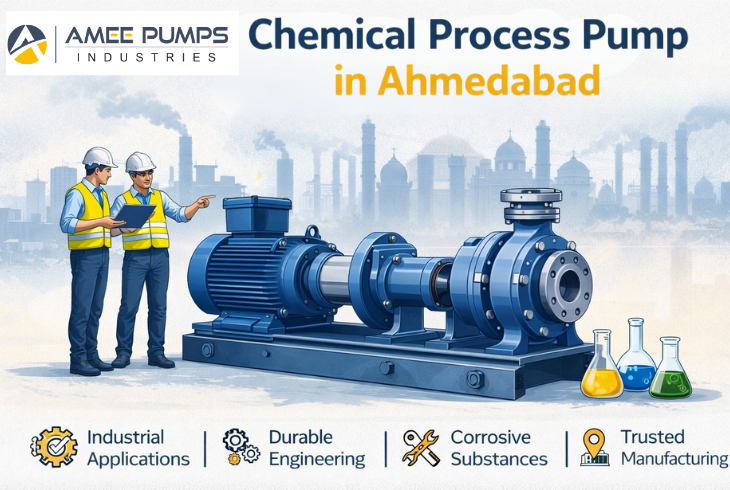
Chemical Process Pump in Ahmedabad
Reliable chemical process pumps for industrial applications in Gujarat. Expert manufacturing and engineering solutions since 2009.
Understanding chemical process pumps and their industrial role
A chemical process pump is specifically designed to handle corrosive, abrasive, toxic, or high-temperature liquids used in industrial processes. Unlike standard water pumps, these pumps are engineered to withstand aggressive chemicals, pressure variations, and continuous operating conditions. Internal components, sealing arrangements, and materials of construction are carefully selected to ensure chemical compatibility and long-term reliability.
In process plants, chemical process pumps are commonly used for transferring acids, alkalis, solvents, slurry-based chemicals, and specialty fluids between reactors, storage tanks, heat exchangers, and filtration systems. Any leakage or failure can result in production losses, environmental risks, or safety concerns, which makes pump reliability a critical requirement.
Why chemical process pumps are essential for Ahmedabad industries
Ahmedabad has developed into one of India's key industrial cities, particularly for chemicals, pharmaceuticals, textiles, dyes, and engineering products. Manufacturing units across industrial areas such as Vatva, Naroda, Odhav, Kathwada, and Changodar require pumps that can operate continuously under demanding conditions without frequent breakdowns.
Chemical process pumps are widely used in Ahmedabad for handling process fluids that are sensitive to contamination, pressure fluctuation, or temperature variation. With growing emphasis on safety regulations, pollution control, and energy efficiency, industries prefer pumps designed with proven engineering practices rather than generic pumping solutions.
Working principle of a chemical process pump
Most chemical process pumps used in industrial applications operate on the centrifugal principle. Mechanical energy from the motor is converted into hydraulic energy through the rotation of an impeller. As the impeller rotates, centrifugal force moves the liquid outward from the center, increasing its velocity and pressure before it exits through the discharge nozzle.
The design of the impeller, casing, shaft, and sealing system ensures smooth flow, minimal vibration, and resistance to chemical attack. Pumps are selected to operate at specific speeds, capacities, and pressure ranges to meet defined process requirements.
Key technical characteristics of chemical process pumps
Chemical process pumps are defined by several technical parameters that determine their suitability for specific applications. These parameters help engineers match pump performance with system demands.
Typical characteristics include operating head suitable for short or long-distance transfer, flow capacities that support batch or continuous processes, and discharge sizes compatible with existing piping systems. Material selection is especially critical and may include cast iron, carbon steel, stainless steel, alloy steels, or corrosion-resistant alloys based on chemical compatibility.
Mechanical sealing systems are designed to prevent leakage while handling hazardous fluids. Depending on operating pressure, temperature, and safety requirements, single or double mechanical seals may be used. Operating speed also influences energy consumption, wear, and overall pump efficiency.
Common applications of chemical process pumps
Chemical process pumps are used across a wide range of industries in and around Ahmedabad due to the diversity of fluids involved in industrial operations.
They are commonly installed in chemical manufacturing plants for transferring acids, solvents, and intermediates. Pharmaceutical facilities rely on them for handling process liquids that require consistency and controlled conditions. In water and effluent treatment plants, these pumps are used for chemical dosing, neutralization, and treatment processes.
Additional applications include textile processing, dye and pigment production, fertilizer manufacturing, food processing operations using chemical additives, and engineering industries where reliable circulation of process fluids is required.
Benefits of using properly engineered chemical process pumps
Using a properly designed chemical process pump provides significant operational and safety advantages. These benefits directly affect productivity, maintenance requirements, and regulatory compliance.
- Appropriate material selection ensures longer service life even when handling corrosive or abrasive chemicals.
- Stable hydraulic design minimizes vibration and noise, contributing to safer working conditions.
- Effective sealing systems reduce leakage risks, protecting personnel and the environment.
- Optimized pump performance also helps lower energy consumption and minimize unplanned downtime.
- Over the long term, this leads to improved lifecycle cost efficiency compared to using unsuitable or low-quality pumps.
How to choose the right chemical process pump
Selecting the correct chemical process pump requires careful evaluation of operating conditions and process needs. An incorrect selection can lead to frequent failures, higher maintenance costs, and production interruptions.
Key factors include the chemical properties of the fluid, operating temperature, viscosity, and corrosiveness. Accurate calculation of required flow rate and head is essential. Material compatibility between the pump and the fluid must be ensured to avoid corrosion or contamination.
Seal selection depends on operating pressure, temperature, and safety considerations. Installation environment, ease of maintenance, and availability of spare parts also influence long-term pump reliability.
Key considerations during pump installation and operation
Even a well-designed chemical process pump can underperform if installation and operating guidelines are not followed. Proper alignment between the pump and motor is essential to prevent premature bearing or seal failure. Piping systems should be adequately supported to avoid excessive mechanical loads on the pump.
Operating the pump within its recommended performance range helps maintain efficiency and reduces wear. Regular monitoring of vibration, temperature, and seal condition allows early identification of potential issues. Preventive maintenance programs play a key role in sustaining consistent performance.
Importance of quality manufacturing and inspection
Chemical process pumps are safety-critical equipment in many industries. Strict quality control during manufacturing ensures dimensional accuracy, material integrity, and consistent performance. Pumps should be tested for hydraulic performance, leakage control, and mechanical stability before dispatch.
Manufacturers with established engineering processes and experienced technical teams are better positioned to deliver pumps that meet industrial expectations. Thorough inspection and testing reduce the risk of on-site failures and improve user confidence.
Why Ahmedabad manufacturers are trusted for chemical process pumps
Ahmedabad has earned a strong reputation for engineering and industrial manufacturing. Pump manufacturers in this region benefit from skilled manpower, established supplier networks, and proximity to major industrial users.
Local manufacturing enables quicker customization, better communication, and responsive after-sales support. Industries prefer working with Ahmedabad-based manufacturers who understand regional operating conditions and sector-specific challenges.
Chemical process pump manufacturing at AMEE Pumps Industries
AMEE Pumps Industries has been involved in pump design and manufacturing since 2009, with a focus on practical engineering and technology-driven processes. The company emphasizes precision manufacturing, consistent quality, and reliable performance across its pump range.
Chemical process pumps produced by the company are designed for demanding industrial applications, with attention to material selection, sealing reliability, and operational stability. Each pump undergoes inspection to verify functional and performance requirements before delivery.
Experience across diverse industrial environments enables the company to provide cost-effective solutions without compromising safety or durability. This approach has supported long-term relationships with industrial users in Ahmedabad and across Gujarat.
Maintenance practices for long-term pump reliability
Regular maintenance is essential for maximizing the service life of chemical process pumps. Routine activities include inspection of mechanical seals, bearings, and impellers. Monitoring changes in vibration or noise helps detect potential issues at an early stage.
Lubrication schedules should be followed as recommended. In applications involving aggressive chemicals, periodic inspection of internal components for corrosion or erosion is important. Well-planned maintenance reduces unplanned shutdowns and supports consistent process performance.
Future trends in chemical process pumping solutions
Industrial pumping technology continues to evolve with greater emphasis on energy efficiency, safety, and environmental compliance. Chemical process pumps are increasingly designed with improved hydraulic efficiency to reduce power consumption, while advanced sealing technologies aim to further minimize leakage risks.
Digital monitoring and condition-based maintenance systems are becoming more common, allowing real-time tracking of pump performance. As industries in Ahmedabad continue to modernize, demand for advanced and reliable chemical process pumping solutions is expected to grow.
Conclusion
A chemical process pump is a vital component in industrial operations where reliability, safety, and performance are essential. For industries in Ahmedabad, selecting the right pump and working with an experienced manufacturer supports smooth process flow, reduced downtime, and long-term operational efficiency. Understanding pump design, application requirements, and maintenance practices helps industries make informed decisions and build dependable pumping systems.
Frequently Asked Questions
Our Blogs
- Acids Transfer PVDF Chemical Pump
- Air Cooled Pump Set
- Thermic Fluid Hot Oil Air Cooled Pump
- Air Operated Double Diaphragm SS 316 Pump
- AODD Pump PVDF MOC
- Centrifugal End Suction Pump
- High Pressure Centrifugal Pump
- Vertical Centrifugal Pump
- Hygienic Centrifugal Pump
- Petroleum Industry Centrifugal Process Pump
- Self Priming Boiler Feed Pump
- Bare Shaft PP Pump
- Self Priming Monoblock Mud Pump
- Hot Oil Centrifugal Pump
- Horizontal Centrifugal Back Pull Out Bare Shaft Coupled Pump
- Teflon Line Centrifugal Process Pump
- Corrosion Resistant Pump
- Semi Open Impeller Centrifugal Pump
- Corrosion Resistant Polypropylene Pump
- Boiler Feed Pump
- 20 LPM Oil Gear Pump
- PVDF Loading Unloading Centrifugal Pump
- Vertical Extended Shaft Slurry Pump
- Pneumatic Air Operated Double Diaphragm Pump
- CF Series Stainless Steel Centrifugal Pump
- Oil Transfer Rotary Gear Pump
- High Temperature Pump
- Horizontal Centrifugal End Suction Pump
- Sewage Plants Self Priming Mud Pump
- Caustic Vertical Pump
- Polypropylene Gland Less Pump
- 300 LPM Acid Pump
- Single Stage Centrifugal Back Pull Out Pump
- Water Treatment Centrifugal Back Pull Out Pump
- Vertical Extended Shaft Sump Pump
- Horizontal Slurry Pump
- Mechanical Diaphragm Dosing Pump
- 2 HP Centrifugal Pump
- Vertical Long Shaft Sump Pump
- Stainless Steel Pump
- Centrifugal Circulation Process Pump
- Thermic Fluid Hot Oil Pump
- Self Priming Non Clog SS 316 Mud Pump
- Vertical Long Shaft Submerged Centrifugal Pump
- High Pressure Multi Stage Boiler Feed Pump
- Vertical Sump Pump
- Side Suction Pump
- Polypropylene Descaling Pump
- Non Clog Impeller Pump
- High Discharge Pump
- Filter Press Feeding Pump
- Polypropylene Chemical Process Pump
- Magnetic Drive Polypropylene Pump
- Water Circulation Pump
- Non Metallic Pump
- Side Suction Bare Shaft Pump
- SS 304 Centrifugal Fabricated Pump
- SS316 Rotary Gear Pump
- Centrifugal Flameproof Pump
- Corrosion Resistant PVDF Chemical Pump
- Centrifugal Pump Closed Impeller
- Stainless Steel Centrifugal Pump
- Corrosion Resistant PP Pump
- Heavy Duty Rotary Gear Pump
- External Gear Pump
- SS 316 AODD Pump
- Self Priming Non Clog Mud Pump
- Hot Oil Circulation Pump
- Internal Gear Pump
- Pneumatic Double Diaphragm Pump
- Thermic Fluid Boiler Feed Pump
- Magnetic Chemical Pump
- ETP Slurry Pump
- Filter Press Feed Pump
- Water Transfer Pump
- PVDF Lined Chemical Process Pump
- Industrial Chemical Process Pump
- SS Chemical Transfer Pump
- Vertical Single Stage Centrifugal Pump
- Hot Oil Circulation Pump in India
- Centrifugal Pump Manufacturers & Suppliers in India
- Chemical Process Pump Manufacturer in India
- Horizontal Single Stage Centrifugal Pump
- Self Priming Stainless Steel Pump
- Rotary Gear SS 316 Pump
- PVDF Chemical Pump in India
- PP AODD Pump
- PP Chemical Process Pump
- Vertical Long Shaft Sump Pump
- Air Cooled Thermic Fluid Hot Oil Pump
- Centrifugal Chemical Process Pump
- Air Operated Diaphragm Pneumatic Pump
- Industrial AODD Pump
- SS Air Operated Diaphragm Pump
- Air Cooled Pump Manufacturer & Supplier in India
- AIR COOLED HOT OIL PUMP
- PP Air Operated Double Diaphragm Pumps
- Vertical Inline Single Stage Centrifugal Pump
- Magnetic Drive Acid Handling Pump
- PVDF LINED CENTRIFUGAL PUMP
- Horizontal Single Stage Centrifugal Pumps
- SS 316 Pumps Centrifugal Chemical Transfer
- Pvdf Chemical Process Pump
- Self Priming Stainless Steel Pump in india
- SS TWIN LOBE PUMP
- SS ROTARY GEAR PUMP
- HOT OIL AIRCOOLED PUMP
- SS CENTRIFUGAL PUMPS IN INDIA
- SS GEAR PUMP IN INDIA
- PVDF MAGNATIC DRIVE PUMP
- Filter Press Side Suction Pump
- CHEMICAL PROCESS PUMP
- CENTRIFUGAL COUPLED PUMP
- THERMIC FLUIED AIR COOLED PUMP
- Lobe Pump in India
- SS Self Priming Mud Pump in Gujarat
- Solvent Transfer Pump in Gujarat
- PVDF Centrifugal Pump in Ahmedabad
- Rotary Lobe Pump in Ahmedabad
- End Suction Pumps Gujarat
- SS Centrifugal Pump in Gujarat
- Solvent Transfer Pump in Ahmedabad
- Vertical Seal Less Gland Less PP Pump in Ahmedabad
- VERTICAL SEAL LESS GLAND LESS PP PUMP
- PP SELF PRIMING PUMP
- SOLVENT TRANSFER PUMP
- SS CENTRIFUGAL PUMP
- ROTARY GEAR PUMP
- CENTRIFUGAL PP PUMP
- CHEMICAL PROCESS CENTRIFUGAL PUMP
- ROTARY LOBE PUMP
- Filter Press Side Suction Pump in Gujarat
- Air Cooled Thermic Fluid Pump in India
- SS Centrifugal Monoblock Pump in Ahmedabad
- MAGNATIC DRIVE CENTRIFUGAL PUMP
- ACID APPLICATION PUMP
- AIR OPERATED DOUBLE DIAPHRAGAM PUMP
- LOBE PUMP
- HORIZONTAL CENTRIFUGAL PUMP
- SS GEAR PUMP
- FIRE FIGHITING PUMPS
- FILLTER PRESS PUMP
- BACK PULL OUT SS CENTRIFUGAL PUMP
- PP SELF PRIMING PUMP
- Horizontal Back Pull Out End Suction Pumps in India
- Hot Oil Pump in Gujarat
- PVDF Centrifugal Pump in Gujarat
- Centrifugal Pump
- Thermic Fluid Air Cool Pump
- PP Pump
- PVDF Centrifugal Pump Manufacturers in Gujarat
- End Suction Pumps in Ahmedabad
- Bentonite Pumps in Gujarat
- SS SELF PRIMING MUD PUMP
- PP MONOBLOCK PUMP
- SS CENTRIFUGAL MONOBLOCK PUMP
- LOBE PUMP
- FILLTER PRESS SIDE SUCTION PUMP
- HOT OIL PUMP
- AIR COOLED THERMIC FLUID PUMP
- PVDF CENTRIFUGAL PUMP MANUFACTURERS IN AHMEMDABAD
- Magnetic Drive PP Pump
- Horizontal Back Pull Out End Suction Pumps in Gujarat
- Bentonite Pumps in Gujarat
- AIR OPERATED DIAPHRAGAM PUMP
- MAGNATIC DRIVE PP PUMP
- Rotary Gear Pumps
- PVDF CENTRIFUGAL PUMP
- End Suction Pumps in Gujarat
- Centrifugal Process Pump in Ahmedabad
- Horizontal Back Pull Out End Suction Pumps Manufacturer in Ahmedabad
- Bentonite Pumps Manufacturer in Ahmedabad
- Chemical Process Centrifugal Pump Supplier in Ahmedabad
- End Suction Pumps
- Centrifugal Process Pump
- Horizontal Back Pull Out End Suction Pumps
- Chemical Process Centrifugal Pump
- BENTONITE PUMPS
- Pp Centrifugal Acidic Liquid Transfer Pump
- Centrifugal Process Pump For Evaporators
- Polypropylene Aodd Pump
- PP Centrifugal Monoblock Pump
- Self Priming Mud Pump in Ahmedabad
- Rotary Gear Pump Supplier in Ahmedabad
- AODD Pump in Ahmedabad
- PP Monoblock Pump in Ahmedabad
- Centrifugal Couple Drive Chemical Process Pump
- SS 316 Pumps Centrifugal Chemical Transfer in Ahmedabad
- Eva Operation Pump
- Air Operated Double Diaphragm Pump Manufacturer in Ahmedabad
- Industrial Mud Pump Manufacturer in Ahmedabad
- AODD Pump Supplier in Gujarat
- Self Priming Mud Pump in Gujarat
- PP Monoblock Pump Supplier in Ahmedabad
- PP Centrifugal Pump Manufacturer in India
- Chemical Transfer Pump Supplier in Gujarat
- End Suction Pump Manufacturer in Ahmedabad
- Centrifugal Back Pull Out Pump Manufacturer in India
- SS Centrifugal Pump Manufacturing Company in Gujarat
- SS Gear Pump Supplier in Ahmedabad
- Rotary Gear Pump Manufacturer in India
- Flange Mounted Rotary Gear Pump Manufacturer in India
- Horizontal Centrifugal Pump Supplier in Gujarat
- Acid Transfer Pump Manufacturer in India
- Multistage Boiler Feed Pump Manufacturing in Gujarat
- Polypropylene Pump in India
- Chemical Process Pump in Ahmedabad
- High Pressure Multistage Boiler Feed Pump in Gujarat
- Vertical Inline Centrifugal Pump in Ahmedabad
- Magnetic Drive Pumps in Ahmedabad
- Lobe Pump in Ahmedabad
- PP Monoblock Pump Supplier in India
- PP Centrifugal Pump Manufacturer in Ahmedabad
- Chemical Transfer Pump Supplier in India
- End Suction Pump Manufacturer in Gujarat
- Centrifugal Back Pull Out Pump in Gujarat
- SS Centrifugal Pump Manufacturer in India
- SS Gear Pump Manufacturer in Gujarat
- Hot Oil Pump in ahemdabad
- Air Cooled Thermic Fluid Pump Manufacturer in Gujarat
- Air Cooled Pump Manufacturer in Gujarat
- Rotary Gear Pump Manufacturer in Ahmedabad
- Bentonite Pump Manufacturer in India
- Centrifugal Back Pull Out Pump Manufacturer in Ahmedabad
