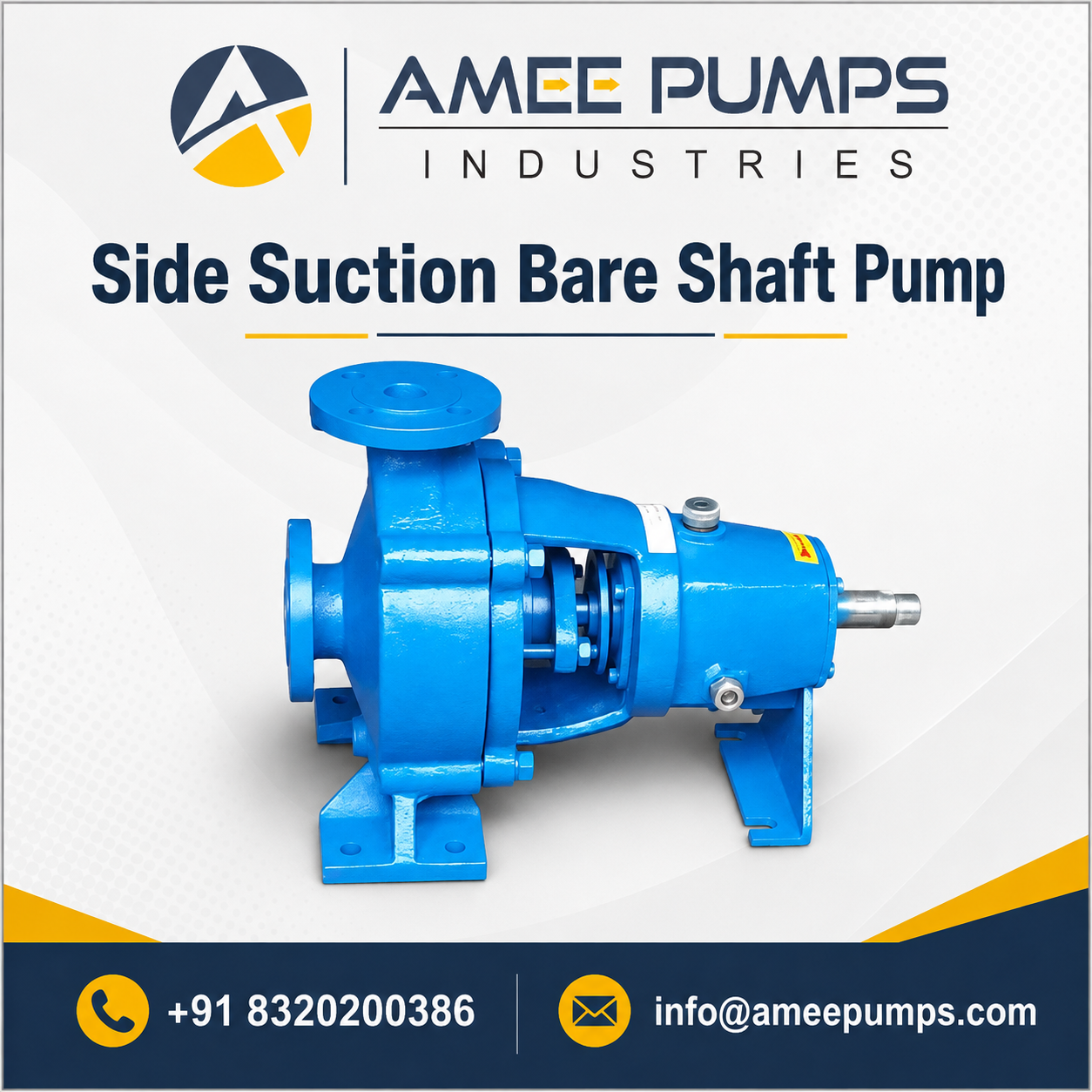
Side Suction Bare Shaft Pump
Expertly designed Side Suction Bare Shaft Pumps for industrial applications in Ahmedabad. Reliable, efficient, and cost-effective solutions from Amee Pumps Indu
What is a Side Suction Bare Shaft Pump — Overview
A side suction bare shaft pump is a type of centrifugal pump designed for specific fluid transfer applications. The "side suction" refers to the inlet port, which is positioned on the side of the pump casing, perpendicular to the shaft. This configuration often allows for easier priming and can accommodate larger suction line diameters. The term "bare shaft" indicates that the pump is supplied without a motor, coupling, or baseplate. This design offers flexibility, allowing users to select and integrate a motor and drive system that precisely matches their specific operational requirements, power availability, and space constraints.
Key Features and Technical Specifications
- Side Suction Inlet: Designed for efficient fluid intake, often facilitating self-priming capabilities.
- Robust Casing Construction: Typically made from cast iron, stainless steel, or other corrosion-resistant alloys for durability.
- Impeller Design: Optimized for specific fluid characteristics, available in various types like open, semi-open, or closed.
- Shaft Sealing: Options include mechanical seals or gland packing to prevent leakage and ensure operational safety.
- Flanged Connections: Standardized flanged ports for secure and leak-free integration into piping systems.
- High Efficiency: Engineered for optimal hydraulic performance, minimizing energy consumption.
- Compact Footprint: The bare shaft design allows for flexible motor mounting and integration.
- Material Options: Available in various materials to suit corrosive, abrasive, or high-temperature fluid applications.
Industrial Applications and Use Cases
- Chemical Processing: Transferring acids, alkalis, solvents, and other corrosive chemicals.
- Pharmaceutical Manufacturing: Handling sensitive liquids, purified water, and process fluids.
- Textile Industry: Pumping dyes, chemicals, and wastewater in dyeing and finishing processes.
- Water and Wastewater Treatment: Moving raw water, treated effluent, and sludge.
- Food and Beverage: Transferring viscous liquids, syrups, and process water where hygiene is critical.
- General Manufacturing: Circulating cooling water, transferring process fluids, and managing waste streams.
- Oil and Gas: Handling various hydrocarbons and process fluids in refineries and storage facilities.
- Agriculture: Pumping water for irrigation and fluid transfer in processing plants.
How to Choose the Right Side Suction Bare Shaft Pump
Selecting the appropriate side suction bare shaft pump requires careful consideration of several factors to ensure optimal performance and longevity.
- Fluid Characteristics: Understand the viscosity, temperature, corrosiveness, and presence of solids in the fluid to be pumped.
- Flow Rate and Head Requirements: Determine the required volume of fluid to be moved per unit of time and the total pressure the pump must overcome.
- Material Compatibility: Ensure the pump casing, impeller, and seals are constructed from materials resistant to the specific fluid.
- Motor Selection: Choose a motor with appropriate power, speed, and enclosure type to match the pump's performance curve and the operating environment.
- Seal Type: Decide between mechanical seals or gland packing based on the fluid, operating pressure, and maintenance capabilities.
- Compliance and Certifications: Verify that the pump meets relevant industry standards and any specific project requirements.
- Supplier Reputation and Support: Partner with a manufacturer known for quality, reliability, and excellent after-sales service.
- Customization Needs: Assess if any modifications or specific configurations are necessary for your application.
Quality Standards and Compliance
For any industrial pump, adherence to recognized quality standards is non-negotiable. Manufacturers like Amee Pumps Industries prioritize building pumps that meet stringent national and international benchmarks. This often includes compliance with standards such as IS (Indian Standards) for general pump design and performance, and potentially ISO certifications for quality management systems. Buyers should always inquire about the specific standards the pump is designed and manufactured to, and whether any third-party certifications are available. Verifying compliance ensures that the pump has undergone rigorous testing for safety, performance, and durability, providing confidence in its operational integrity and suitability for demanding industrial environments.
Why Amee Pumps Industries' Experience and Capability Matters
At Amee Pumps Industries, our two decades of experience, led by Mr. Amit Panchal, form the bedrock of our capability in manufacturing side suction bare shaft pumps. We leverage a technology-driven approach, which allows for precision in design and significant cost efficiencies compared to traditional methods. Our team has honed its skills in complex, fast-paced industrial settings, resulting in a proven track record and a reputation for reliability.
We focus on precision engineering and practical design, ensuring each pump is not only technically sound but also easy to integrate and operate. Our manufacturing processes are streamlined and efficient, enabling us to deliver high-quality, cost-effective solutions consistently. This commitment to excellence means that when you choose Amee Pumps Industries, you are partnering with a team dedicated to providing dependable fluid transfer solutions that enhance your operational efficiency and ensure long-term performance.
Installation, Maintenance, and Care Tips
Proper installation and regular maintenance are key to maximizing the lifespan and performance of your side suction bare shaft pump.
Installation
Ensure the pump is mounted on a solid, level foundation to prevent vibration.
Align the pump shaft precisely with the selected motor shaft to avoid premature bearing and seal wear.
Connect suction and discharge piping securely, ensuring no stress is transmitted to the pump casing.
Prime the pump thoroughly before starting to prevent dry running, which can damage seals and impellers.
Maintenance
Regularly inspect the shaft seal for any signs of leakage and address promptly.
Check bearing lubrication levels and replenish as per manufacturer recommendations.
Listen for unusual noises or vibrations, which could indicate wear or misalignment.
Periodically clean the pump casing and surrounding area to prevent debris accumulation.
For pumps handling abrasive fluids, monitor impeller wear and consider replacement at recommended intervals.
Ensure electrical connections to the motor are secure and insulated.
Frequently Asked Questions
The main advantage of a bare shaft pump is its flexibility. It allows users to select a motor and drive system that precisely matches their specific application requirements, available power supply, and operational environment, offering greater customization than a coupled unit.
The side suction design, with the inlet positioned on the side, can facilitate easier priming and a more direct fluid path into the impeller. This often leads to improved suction lift capabilities and can help reduce the risk of cavitation in certain applications.
Common materials include cast iron for general applications, stainless steel for corrosive environments, and specialized alloys for highly aggressive chemicals or high-temperature fluids. The choice of material depends heavily on the fluid being handled.
Yes, depending on the impeller design. Open or semi-open impellers are generally better suited for handling fluids containing suspended solids or fibrous materials, whereas closed impellers are more efficient for clean liquids.
The lifespan can vary significantly based on the application, fluid handled, operating conditions, and maintenance practices. With proper installation, regular maintenance, and operation within design parameters, these pumps can provide many years of reliable service.
Motor selection involves matching the pump's performance curve (flow vs. head) with the motor's power and speed. You need to consider the required horsepower, RPM, voltage, and enclosure type suitable for your plant's environment and safety standards.
Conclusion
For industrial facilities in Ahmedabad and beyond, the side suction bare shaft pump represents a critical component for efficient fluid management. Its adaptable design and robust construction make it suitable for a wide array of demanding applications. Choosing a manufacturer with proven expertise, a commitment to quality, and a deep understanding of industrial needs is paramount. Amee Pumps Industries, with its extensive experience and technology-driven approach, offers reliable, cost-effective solutions designed to keep your operations running smoothly and efficiently.
Get In Touch
Amee Pumps Industries
