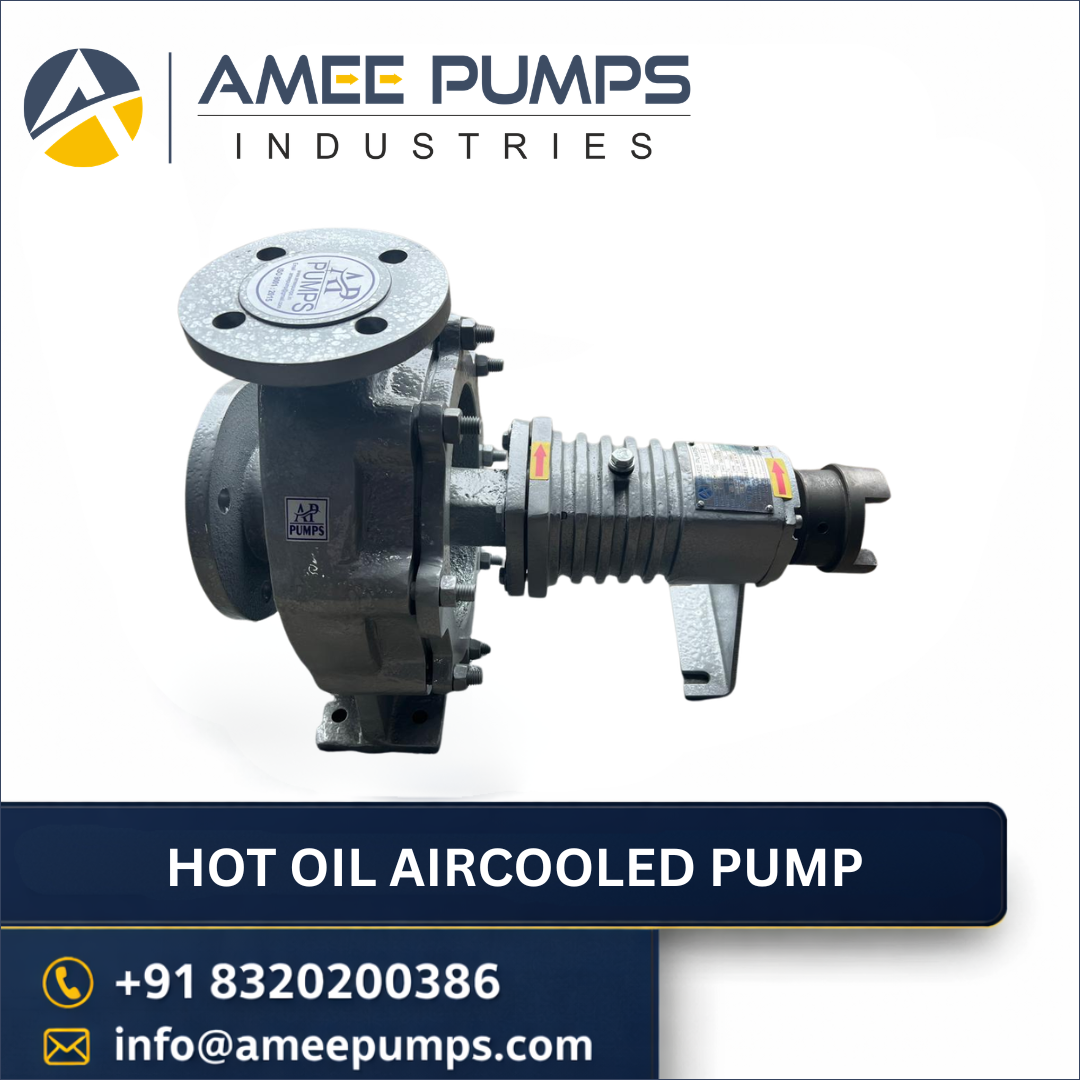
HOT OIL AIRCOOLED PUMP
Discover reliable hot oil air-cooled pumps in Ahmedabad. Amee Pumps Industries offers efficient, durable solutions for industrial heat transfer needs.
What is a Hot Oil Air Cooled Pump? — Overview
A hot oil air-cooled pump is a specialized centrifugal pump designed specifically for circulating thermal fluids at elevated temperatures. Unlike standard pumps that might require water cooling for their seals and bearings, these units are engineered with integrated air-cooling mechanisms. This typically involves fins on the pump casing, a fan, or a combination of both, to dissipate heat generated by the pump's operation and the hot fluid. The pump's construction materials and sealing systems are also designed to withstand high temperatures and the specific properties of thermal oils, ensuring safe and efficient operation without external cooling media.
Key Features and Technical Specifications
- Robust Casing Construction: Built with high-grade cast iron or steel alloys capable of withstanding high temperatures and pressures.
- Air-Cooled Design: Features integrated cooling fins or a fan system to dissipate heat from the pump body and bearings.
- High-Temperature Mechanical Seals: Utilizes specialized mechanical seals designed for thermal fluids and high operating temperatures.
- Heavy-Duty Bearings: Equipped with robust bearings that can handle thermal expansion and sustained high-temperature operation.
- Flange Connections: Standardized flange connections for easy integration into existing piping systems.
- Efficient Impeller Design: Optimized impeller geometry for maximum fluid flow and minimal energy consumption.
- Compact Footprint: Designed for efficient space utilization in industrial settings.
- Material Compatibility: Constructed with materials resistant to thermal degradation and chemical attack from common thermal oils.
Industrial Applications and Use Cases
- Chemical Processing: Circulating hot oils for reactors, distillation columns, and heat exchangers in chemical synthesis.
- Pharmaceutical Manufacturing: Maintaining precise temperatures for drying, sterilization, and reaction processes.
- Textile Industry: Heating and circulating oils for dyeing, finishing, and synthetic fiber production.
- Food and Beverage Processing: Heating oils for frying, pasteurization, and sterilization of food products.
- Asphalt and Bitumen Heating: Circulating hot oils to maintain the viscosity and temperature of asphalt for road construction.
- Plastic and Polymer Manufacturing: Providing controlled heating for extrusion, molding, and curing processes.
- Die Casting: Supplying heated oil to maintain die temperatures in metal casting operations.
- Oil and Gas Refineries: Used in various heating and transfer applications within refinery processes.
How to Choose the Right Hot Oil Air Cooled Pump
Selecting the appropriate hot oil air-cooled pump is crucial for operational success. Consider these factors:
- Fluid Type and Viscosity: Ensure the pump is compatible with the specific thermal fluid and its viscosity at operating temperatures.
- Flow Rate and Head Requirements: Determine the necessary flow rate and the total head the pump must overcome.
- Operating Temperature Range: Verify that the pump's design and materials can safely handle the maximum and minimum operating temperatures.
- System Pressure: Ensure the pump casing and seals can withstand the maximum system pressure.
- Cooling Efficiency: Assess the effectiveness of the air-cooling system for your specific ambient conditions.
- Seal Type and Material: Confirm the mechanical seal is suitable for the fluid, temperature, and pressure.
- Energy Efficiency: Look for pumps with optimized impeller designs to minimize power consumption.
- Manufacturer's Reputation and Support: Choose a reputable manufacturer with a proven track record and reliable after-sales service.
- Certifications and Compliance: Verify that the pump meets relevant industry standards and safety regulations.
Quality Standards and Compliance
When selecting a hot oil air-cooled pump, it is vital to ensure it adheres to stringent quality standards and industry compliance. Look for manufacturers who can demonstrate adherence to international standards such as ISO 9001 for quality management systems. Pumps intended for hazardous environments may require ATEX certification. Furthermore, compliance with national standards like BIS (Bureau of Indian Standards) where applicable, and adherence to specific industry guidelines for thermal fluid systems, are critical. Verifying the material certifications for all components, especially those in contact with the hot fluid, ensures longevity and safety.
Why Amee Pumps Industries' Experience and Capability Matters
At Amee Pumps Industries, our two decades of experience, led by Mr. Amit Panchal, have been dedicated to mastering pump design and manufacturing. We leverage a technology-driven approach to create precision-engineered solutions that are both efficient and cost-effective. Our manufacturing processes are honed for complex, fast-paced industrial demands, ensuring a high degree of reliability. We focus on practical design, ensuring our hot oil air-cooled pumps are not just functional but also easy to integrate and maintain.
Our commitment extends to rigorous quality control at every stage, from material selection to final testing. This meticulous attention to detail, combined with our technical expertise, allows us to deliver pumps that meet exacting performance requirements. We understand the critical nature of thermal fluid systems and pride ourselves on providing solutions that contribute to the smooth, uninterrupted operation of our clients' industrial processes. Our capability lies in translating complex engineering challenges into straightforward, reliable pumping solutions.
Installation, Maintenance, and Care Tips
Proper installation and regular maintenance are key to maximizing the lifespan and performance of your hot oil air-cooled pump.
Installation
Ensure the pump is installed on a solid, level foundation to prevent vibration.
Align the pump and motor shafts precisely during installation to avoid premature wear.
Connect piping carefully, avoiding strain on the pump casing.
Purge the system thoroughly to remove any air or contaminants before initial startup.
Verify that the air-cooling system (fan or fins) is unobstructed.
Maintenance
Regularly inspect the mechanical seals for any signs of leakage.
Check bearing lubrication and top up or replace as per the manufacturer's schedule.
Clean the air-cooling fins or fan blades to ensure efficient heat dissipation.
Monitor pump performance for any unusual noise, vibration, or temperature changes.
Periodically check system pressure and flow rates against design parameters.
Follow the thermal fluid manufacturer's guidelines for fluid condition monitoring and replacement.
Care:
Avoid running the pump dry, as this can damage seals and bearings.
Do not operate the pump outside its specified temperature or pressure limits.
Ensure adequate ventilation around the pump to allow for effective air cooling.
- Protect the pump from extreme environmental conditions if not designed for them.
Frequently Asked Questions
The main advantage is independence from an external water supply. This simplifies installation, reduces operational costs associated with water usage and treatment, and eliminates the risk of freezing in colder climates or issues related to water quality.
Air-cooled pumps typically use extended fins on the pump casing to increase surface area for heat dissipation. Some designs may also incorporate a fan, driven by the pump shaft or an external motor, to force air over the casing and cooling fins, enhancing heat removal.
Common materials include high-grade cast iron for the casing and impeller, suitable for moderate temperatures. For higher temperatures or more aggressive fluids, cast steel, stainless steel, or specialized alloys may be used to ensure durability and resistance to thermal degradation.
Mechanical seals should be visually inspected for leaks at regular intervals, typically daily or weekly, depending on the criticality of the application. A more thorough inspection and potential replacement schedule will be dictated by the pump's operating conditions and the seal manufacturer's recommendations, often ranging from months to a few years.
While primarily designed for thermal oils, some hot oil pumps can be adapted for other high-temperature, low-viscosity fluids. However, compatibility must be carefully assessed regarding chemical properties, viscosity, and potential for degradation or coking, and the pump's design specifications must be confirmed.
Operating below the design range can lead to increased fluid viscosity, potentially causing the pump to operate outside its best efficiency point, leading to higher energy consumption or cavitation. It can also affect the performance of the mechanical seal if it relies on fluid properties at higher temperatures for lubrication or cooling.
Conclusion
For industries in Ahmedabad requiring reliable thermal fluid circulation, the hot oil air-cooled pump offers a robust and efficient solution. Its self-contained cooling system simplifies operations and reduces reliance on external utilities. When selecting a pump, understanding your specific application requirements—from flow and head to fluid characteristics and operating temperatures—is paramount. Partnering with an experienced manufacturer like Amee Pumps Industries, with a proven track record in precision engineering and a commitment to quality, ensures you receive a durable, high-performance pump tailored to your industrial needs.
Get In Touch
Amee Pumps Industries
