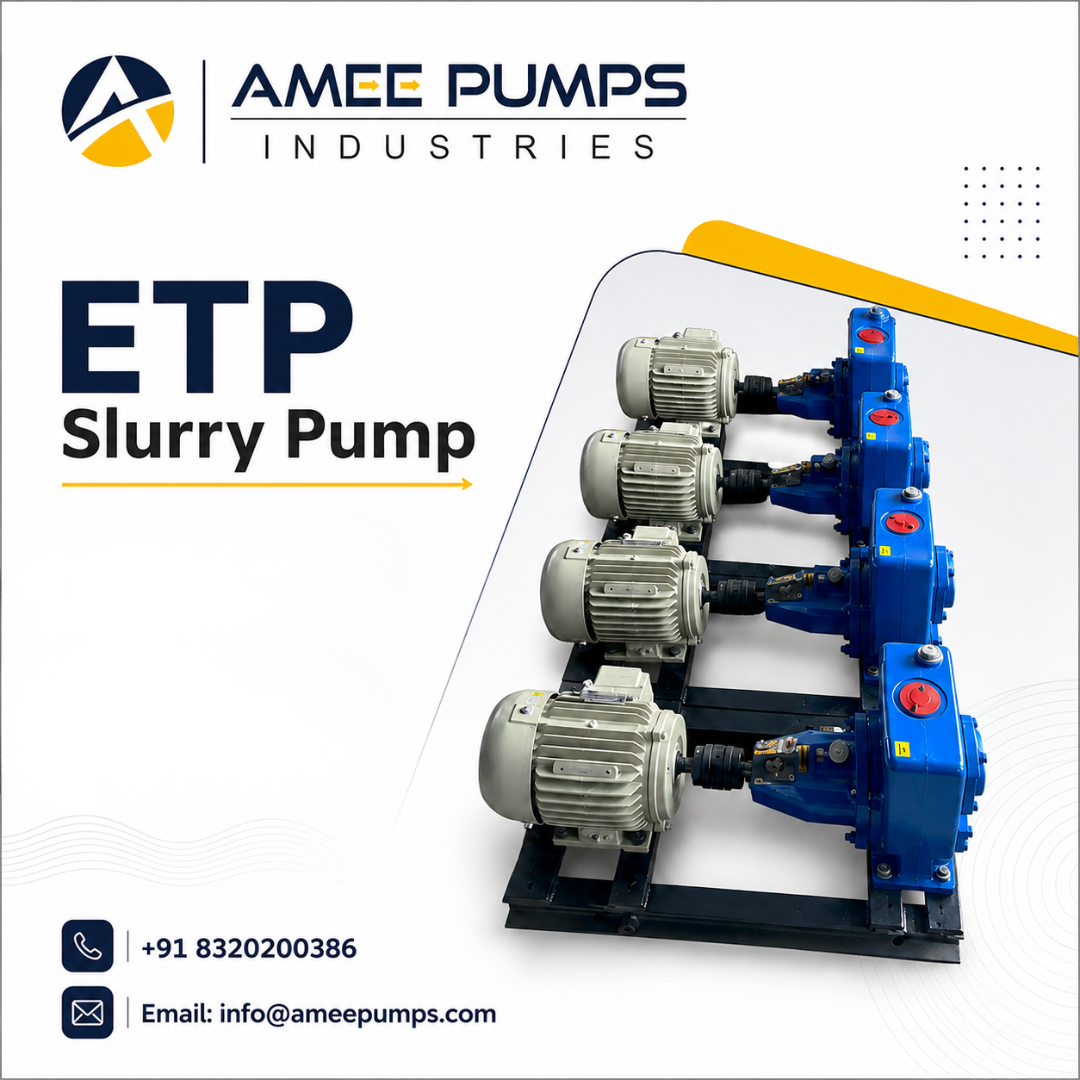
ETP Slurry Pump
Expert ETP Slurry Pump solutions in Ahmedabad. Discover reliable, efficient pumps for wastewater treatment plants from Amee Pumps Industries.
What is an ETP Slurry Pump? — Overview
An ETP slurry pump is specifically engineered to handle the challenging task of moving abrasive and high-solids content fluids commonly found in wastewater treatment processes. Unlike standard pumps, these are designed with robust materials and specialized components to withstand the erosive and corrosive nature of slurries. They are typically centrifugal pumps, but their impeller, casing, and shaft seals are reinforced to resist wear and tear. Their primary function is to transfer sludge, settled solids, and concentrated effluent from one stage of the treatment process to another, ensuring continuous flow and effective separation.
Key Features and Technical Specifications
- Abrasion-Resistant Construction: Utilizes hardened materials like high-chrome iron or specialized rubber linings for wetted parts to combat wear from solids.
- Corrosion Resistance: Materials are selected to withstand the chemical composition of industrial wastewater, preventing premature degradation.
- Heavy-Duty Impeller Design: Engineered for high solids handling capacity, often with semi-open or vortex designs to minimize clogging.
- Robust Shaft and Seals: Features oversized shafts and specialized mechanical seals or gland packing to prevent leakage and withstand abrasive forces.
- High Efficiency: Designed to move viscous and solid-laden fluids with optimal energy consumption.
- Modular Design: Allows for easier maintenance and replacement of wear parts, reducing downtime.
- Variable Speed Capability: Can be paired with VFDs to adjust flow rates based on slurry consistency and demand.
- API 610 Compliance (where applicable): Adherence to international standards for heavy-duty industrial pumps.
Industrial Applications and Use Cases
- Sludge Transfer: Moving settled sludge from clarifiers and thickeners to dewatering equipment.
- Effluent Pumping: Transferring concentrated effluent streams within the ETP process.
- Chemical Slurry Handling: Pumping abrasive slurries in chemical manufacturing wastewater treatment.
- Mining and Mineral Processing: Though not strictly ETP, similar pumps are used for tailings and slurry transport.
- Food and Beverage Industry: Handling waste streams with high organic solids content.
- Pharmaceutical Waste: Pumping viscous and potentially corrosive by-products from drug manufacturing.
- Textile Industry Wastewater: Managing sludge and effluent from dyeing and finishing processes.
- Paper Mill Slurries: Transferring pulp waste and process water.
How to Choose the Right ETP Slurry Pump
Selecting the correct ETP slurry pump is crucial for long-term operational success. Consider these factors:
- Slurry Characteristics: Analyze the solids content (%), particle size distribution, abrasiveness, and chemical composition of the fluid.
- Flow Rate and Head Requirements: Determine the volume of slurry to be moved and the vertical/horizontal distance it needs to travel.
- Material Compatibility: Ensure the pump's wetted parts are resistant to the specific corrosive elements present.
- Solids Handling Capacity: Verify the pump's ability to pass the largest expected solid particles without clogging.
- Duty Cycle: Assess whether the pump will operate continuously or intermittently.
- Energy Efficiency: Look for designs that offer good hydraulic performance to minimize operating costs.
- Ease of Maintenance: Consider the accessibility of wear parts and the availability of spare parts.
- Supplier Reputation and Support: Choose a manufacturer with a proven track record and reliable after-sales service.
Quality Standards and Compliance
When selecting an ETP slurry pump, verifying adherence to relevant quality standards is non-negotiable. Look for manufacturers who follow stringent quality control measures throughout their production process. Certifications like ISO 9001:2015 demonstrate a commitment to quality management systems. While specific BIS or IS standards for ETP slurry pumps might vary, pumps designed for industrial applications often align with general engineering standards for material strength, dimensional accuracy, and performance testing. Reputable manufacturers will provide documentation detailing material certifications and performance test results, ensuring the pump meets its specified duty and durability requirements.
Why Amee Pumps Industries' Experience and Capability Matters
At Amee Pumps Industries, our two decades of experience, led by Mr. Amit Panchal, have shaped our approach to manufacturing ETP slurry pumps. We focus on precision engineering, leveraging technology-driven processes to create solutions that are both robust and cost-effective. Our manufacturing facility in Ahmedabad is equipped to handle the complexities of producing pumps with specialized materials like high-chrome iron and wear-resistant alloys. We understand the unique challenges faced by industries in Gujarat and are committed to delivering pumps that offer reliable performance, minimizing downtime for our clients.
Our technical team possesses deep expertise in fluid dynamics and material science, enabling us to design pumps tailored to specific slurry characteristics. This capability allows us to offer customized solutions, ensuring optimal performance for each unique application. We pride ourselves on a meticulous quality control process, from raw material inspection to final performance testing, guaranteeing that every pump leaving our facility meets our high standards for durability and efficiency.
Installation, Maintenance, and Care Tips
Proper installation and regular maintenance are key to maximizing the lifespan and performance of your ETP slurry pump.
- Installation: Ensure the pump is installed on a solid, level foundation to prevent vibration. Verify correct rotation direction before starting. Connect piping securely, avoiding undue stress on the pump casing. For submersible pumps, ensure proper anchoring and electrical connections are watertight.
- Initial Run: During the first few hours of operation, monitor for unusual noises or vibrations. Check bearing temperatures and seal performance.
- Regular Inspections: Periodically inspect the pump for signs of wear on the impeller, casing, and liners. Check shaft seals for any leakage.
- Lubrication: Follow the manufacturer's recommendations for lubricating bearings.
- Clearing Blockages: If the pump becomes clogged, shut down the system safely. Follow the manual for procedures to clear the obstruction, which may involve removing the cover plate or impeller.
- Seasonal Checks: If the pump is in an environment subject to freezing, ensure it is drained or protected during cold weather.
- Spare Parts: Keep critical wear parts, such as impellers and liners, readily available to minimize downtime during replacements.
Frequently Asked Questions
An ETP slurry pump is designed to efficiently and reliably transfer abrasive, high-solids content fluids, such as sludge and concentrated effluent, within an Effluent Treatment Plant. Its robust construction and specialized components are essential for handling the challenging nature of wastewater treatment processes.
ETP slurry pumps are built with much harder, more abrasion-resistant materials for their wetted parts (impeller, casing, liners) and feature enhanced sealing systems. They are specifically engineered to withstand the erosive forces of solid particles and the corrosive nature of industrial wastewater, which standard pumps cannot tolerate.
The lifespan is primarily determined by the characteristics of the slurry being pumped (abrasiveness, solids content), the operating conditions (continuous vs. intermittent duty), the quality of pump construction and materials, and the regularity and quality of its maintenance. Proper installation also plays a significant role.
Yes, many ETP slurry pumps are constructed from materials that offer excellent resistance to a wide range of chemicals commonly found in industrial wastewater. However, it's crucial to match the pump's material specifications to the specific chemical composition of the effluent to ensure optimal corrosion resistance.
Routine maintenance includes regular visual inspections for wear and leaks, checking bearing lubrication, monitoring seal performance, and ensuring the pump is free from blockages. Periodic replacement of wear parts like impellers and liners is standard as they are designed to be sacrificial components.
Choosing a pump with a design optimized for the specific slurry characteristics and flow requirements is key. Look for pumps with good hydraulic efficiency ratings. Pairing the pump with a Variable Frequency Drive (VFD) can also significantly improve energy efficiency by allowing the motor speed to be adjusted to match the actual demand.
Conclusion
For industries operating in Ahmedabad and across Gujarat, the reliable performance of ETP slurry pumps is fundamental to efficient wastewater management. Selecting a pump that can withstand abrasive slurries, corrosive elements, and high solids content is not merely a technical choice but a strategic decision that impacts operational continuity and environmental compliance. Factors such as slurry characteristics, required flow rates, material compatibility, and adherence to quality standards are paramount. Partnering with an experienced manufacturer like Amee Pumps Industries, with a proven track record in precision engineering and a deep understanding of industrial needs, ensures you receive a durable, efficient, and cost-effective solution tailored to your specific effluent treatment challenges.
---
Get In Touch
Amee Pumps Industries
