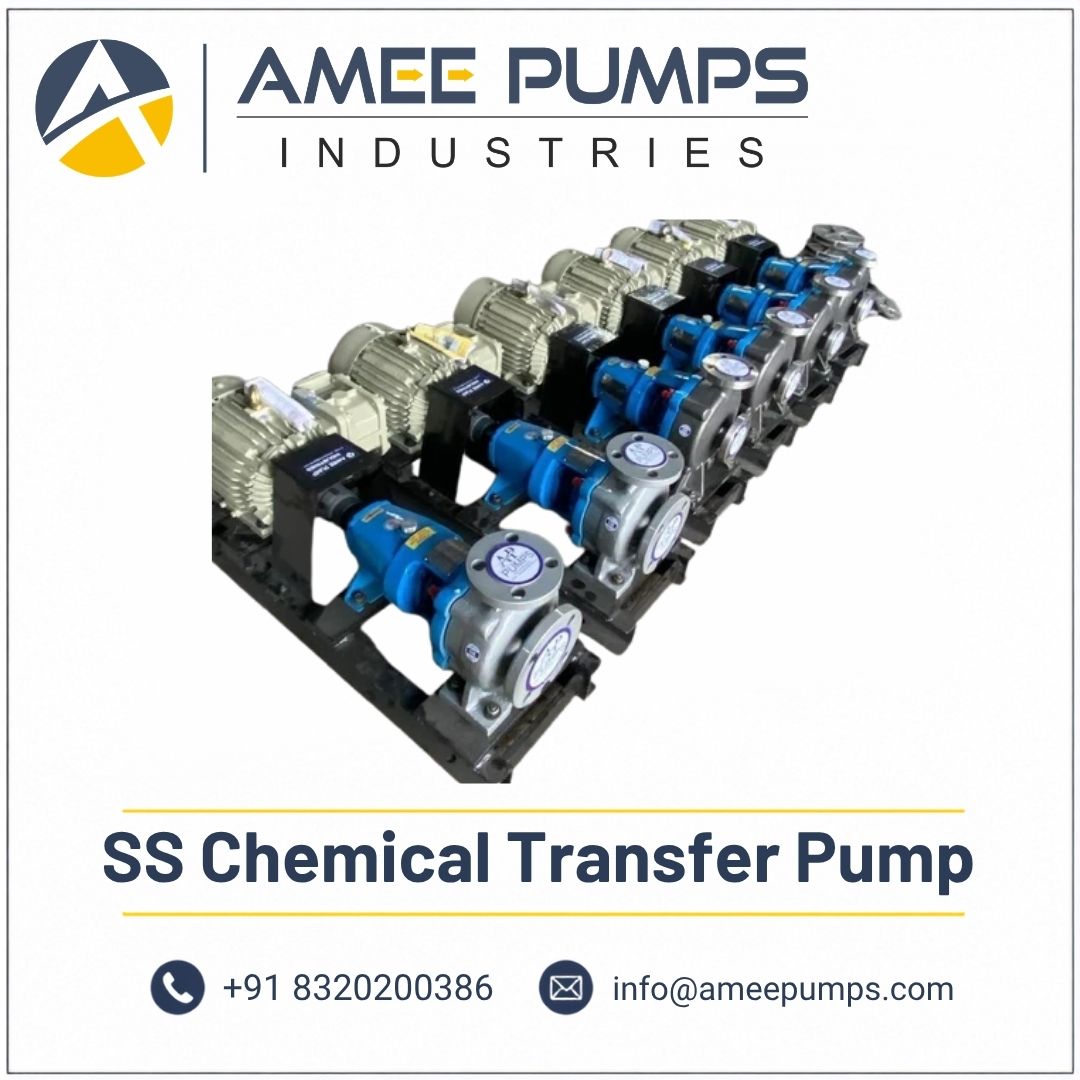
SS Chemical Transfer Pump
Explore robust SS Chemical Transfer Pumps for industrial fluid handling in Ahmedabad. Amee Pumps Industries offers durable, corrosion-resistant solutions for va
Why This Matters in Ahmedabad, Gujarat
Ahmedabad and the broader Gujarat region form a significant industrial hub in India, with a strong presence in chemical manufacturing, pharmaceuticals, textiles, and petrochemicals. These industries inherently involve the handling and transfer of a wide array of chemicals, from acids and alkalis to solvents and slurries. The demand for robust and corrosion-resistant pumping solutions, such as SS Chemical Transfer Pumps, is consistently high to support continuous production cycles, ensure worker safety, and comply with environmental regulations. Local availability of expert manufacturers is crucial for timely support and customized solutions.
What Is An SS Chemical Transfer Pump — Overview
An SS Chemical Transfer Pump is a type of centrifugal or positive displacement pump specifically engineered from stainless steel (SS) alloys to handle a wide range of corrosive and aggressive chemicals. These pumps are designed to move fluids from one point to another within an industrial process, often under demanding conditions of temperature, pressure, and chemical composition. The stainless steel construction provides superior resistance to corrosion and chemical attack, ensuring the longevity and reliability of the pump in environments where other materials would quickly degrade. They are vital for maintaining process purity and preventing contamination.
Key Features and Technical Specifications
Corrosion-resistant stainless steel construction (SS 304, SS 316, SS 316L).
Robust mechanical seals or magnetic drive options for leak-proof operation.
High-efficiency impeller designs for optimal fluid dynamics.
Wide operating temperature and pressure ranges suitable for diverse chemicals.
Self-priming capabilities for easier setup and operation in certain models.
Modular design allowing for straightforward maintenance and parts replacement.
Compliance with industry standards for safety and performance.
Various flow rates and head capacities to match specific process requirements.
Industrial Applications and Use Cases
- Chemical Manufacturing: Transferring acids, alkalis, solvents, and other raw materials or finished products.
- Pharmaceutical Production: Moving active pharmaceutical ingredients (APIs), intermediates, and cleaning agents.
- Petrochemical Industry: Handling hydrocarbons, refined products, and various process chemicals.
- Textile Processing: Pumping dyes, bleaching agents, and wastewater treatment chemicals.
- Water Treatment Plants: Dosing and transferring corrosive chemicals for purification and disinfection.
- Food and Beverage: Transferring sanitizing solutions and certain food-grade chemicals (with appropriate SS grades).
- Effluent Treatment: Moving industrial wastewater containing various chemical contaminants.
How To Choose The Right SS Chemical Transfer Pump
Selecting an appropriate SS Chemical Transfer Pump involves a careful assessment of several critical factors to ensure optimal performance and safety.
- Chemical Compatibility: Verify the specific stainless steel grade (e.g., SS 304, SS 316, SS 316L) is compatible with all chemicals being handled, considering concentration and temperature.
- Flow Rate and Head Requirements: Accurately determine the required volume of fluid to be moved per unit time and the necessary discharge pressure.
- Operating Conditions: Account for fluid temperature, viscosity, specific gravity, and the presence of any solids or abrasives.
- Seal Type: Choose between mechanical seals, gland packing, or magnetic drive pumps based on leak-proof requirements and chemical properties.
- Certifications and Standards: Ensure the pump meets relevant industry standards like ISO, ISI, or specific hazardous area classifications.
- Supplier Experience and Support: Evaluate the manufacturer's track record, technical expertise, and availability of after-sales service and spare parts.
- Customization Options: Consider if the pump can be tailored to unique process demands, such as specific port configurations or motor types.
Quality Standards and Compliance
For SS Chemical Transfer Pumps, adherence to stringent quality standards is not just a recommendation but a necessity for operational safety and reliability. Key standards often include ISO 9001 for quality management systems, ensuring consistent manufacturing processes. Material certifications, such as those for SS 304, SS 316, or SS 316L, confirm the chemical composition and mechanical properties of the stainless steel used. Depending on the application, compliance with specific industry guidelines, like those for pharmaceutical or food-grade equipment, may also be required. Buyers should always verify that a supplier can provide documentation for material traceability and performance testing.
Why Amee Pumps Industries' Experience and Capability Matters
Amee Pumps Industries brings over two decades of expertise in pump design and manufacturing, led by Mr. Amit Panchal. Since 2009, the company has focused on delivering reliable and cost-effective pump solutions, including specialized SS Chemical Transfer Pumps. Our approach integrates precision engineering with practical design, utilizing technology-driven manufacturing processes to ensure each pump meets demanding industrial requirements. We emphasize rigorous quality control at every stage, from material selection to final assembly and testing. This commitment ensures that our SS Chemical Transfer Pumps offer consistent performance, durability, and the necessary corrosion resistance for critical chemical handling applications. Our team's capability extends to understanding specific client needs, offering tailored solutions that integrate seamlessly into existing industrial setups.
Installation, Maintenance and Care Tips
Proper installation and routine maintenance are crucial for extending the lifespan and ensuring the safe operation of an SS Chemical Transfer Pump.
Installation
Ensure the pump is mounted on a stable, level foundation to minimize vibration.
Verify piping connections are correctly aligned and supported to avoid strain on the pump casing.
Confirm proper electrical connections and motor rotation direction before operation.
Always follow the manufacturer's specific installation guidelines.
Maintenance
Regularly inspect mechanical seals for leaks and replace them as needed to prevent chemical exposure.
Check bearings for unusual noise or excessive heat, lubricating them according to the manufacturer's schedule.
Monitor impeller and casing for signs of wear or corrosion, especially when handling abrasive chemicals.
Keep the pump and surrounding area clean to prevent accumulation of corrosive substances.
Care Tips
Flush the pump with a compatible cleaning agent or water after transferring aggressive chemicals, if appropriate for the fluid.
Ensure the pump is not run dry, as this can damage seals and internal components.
Store spare parts like seals and gaskets in a dry, cool place.
FREQUENTLY ASKED QUESTIONS
An SS Chemical Transfer Pump, particularly those made from SS 316 or SS 316L, can handle a broad spectrum of chemicals. This includes various acids like sulfuric acid (dilute), nitric acid, and phosphoric acid, as well as alkalis, solvents, and certain corrosive slurries. The specific chemical compatibility depends on the stainless steel grade, concentration, temperature, and presence of other compounds.
Stainless steel is highly preferred for chemical transfer due to its excellent corrosion resistance, durability, and hygienic properties. Its passive chromium oxide layer protects against chemical attack, ensuring the integrity of the pump and preventing contamination of the transferred fluid. Different grades offer varying levels of resistance to specific chemicals and operating conditions.
SS 316 contains molybdenum, which provides superior corrosion resistance compared to SS 304, especially against chlorides and other aggressive chemicals. While SS 304 is suitable for general chemical applications, SS 316 is often chosen for more demanding environments, such as those involving strong acids, saltwater, or pharmaceutical processes.
The service interval for an SS Chemical Transfer Pump depends on its operating conditions, the type of chemicals handled, and the manufacturer's recommendations. Generally, routine inspections should occur monthly, with more comprehensive servicing, including seal and bearing checks, performed every 6 to 12 months. Regular monitoring for unusual noises or leaks is always advisable.
While stainless steel offers good wear resistance, handling highly abrasive slurries can still cause erosion over time. For such applications, specific pump designs with hardened impellers or liners, or alternative pump types like peristaltic or diaphragm pumps, might be considered. However, SS pumps can manage slurries with mild abrasive properties effectively.
The lifespan of an SS Chemical Transfer Pump is influenced by several factors, including the chemical compatibility of materials, operating temperature and pressure, frequency of use, quality of maintenance, and the presence of abrasives in the fluid. Proper selection, installation, and adherence to a regular maintenance schedule significantly contribute to maximizing the pump's operational life.
Conclusion
Selecting the correct SS Chemical Transfer Pump is a critical decision for any industrial operation dealing with chemicals in Ahmedabad and beyond. These pumps are essential for ensuring safe, efficient, and reliable fluid handling, directly impacting productivity and compliance. Key considerations include material compatibility with the specific chemicals, precise flow and head requirements, and the integrity of the pump's sealing mechanism. Partnering with an experienced manufacturer like Amee Pumps Industries, known for its technical capability and commitment to quality, ensures access to robust and precisely engineered solutions that meet the demanding needs of various industrial processes.
Get In Touch
Amee Pumps Industries
