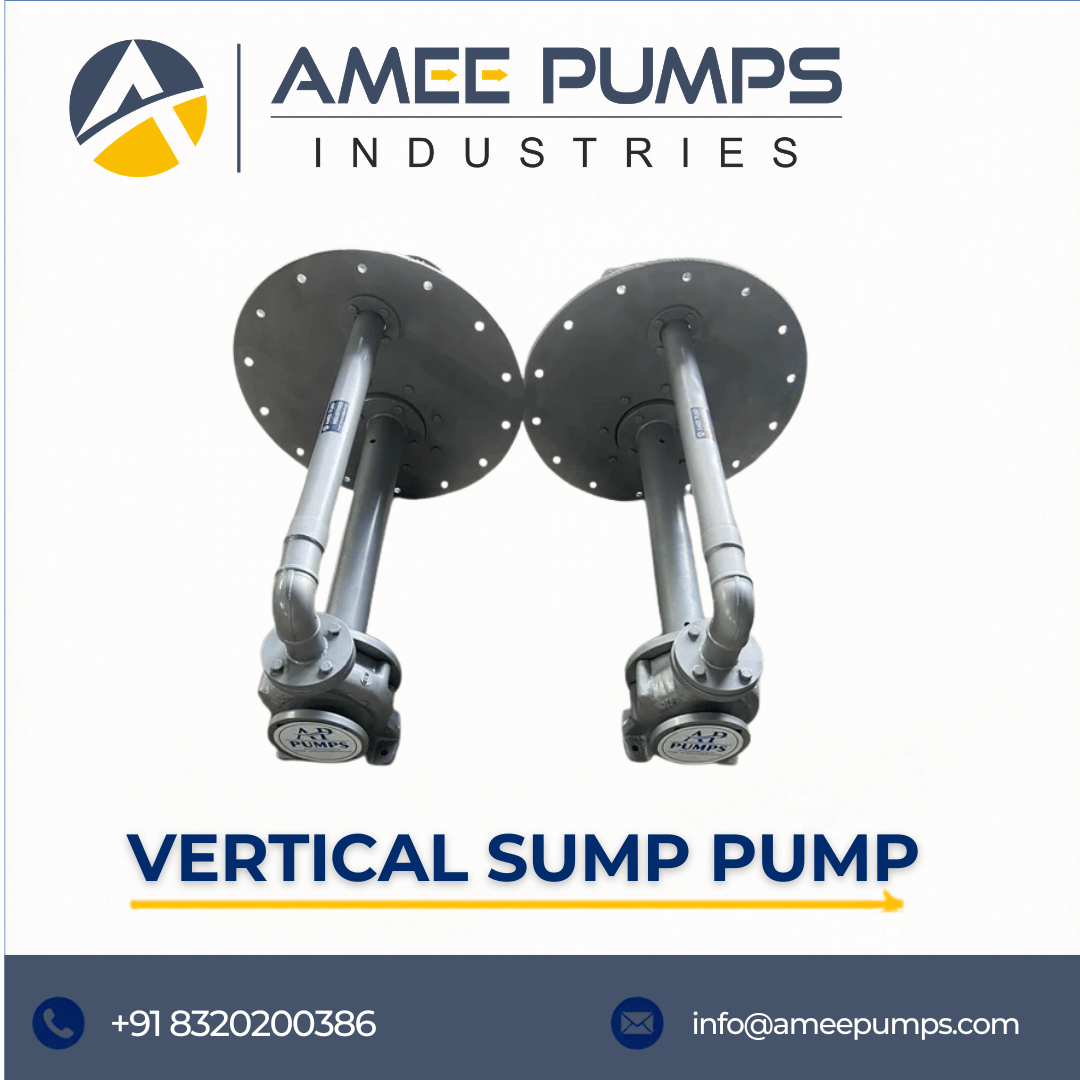
Vertical Sump Pump
Expertly designed vertical sump pumps for industrial needs in Ahmedabad. Discover reliable, efficient, and cost-effective solutions from Amee Pumps Industries.
What is a Vertical Sump Pump? — Overview
A vertical sump pump is a type of submersible pump designed to be installed vertically within a sump pit or tank. Its primary function is to automatically remove accumulated liquid, typically water or wastewater, from the pit. The pump casing is submerged in the fluid, while the motor is usually located above the liquid level or sealed within the pump housing. As the liquid level rises, it activates a float switch, engaging the pump to discharge the fluid until the level drops to a predetermined point.
Key Features and Technical Specifications
- Compact Design: Vertical orientation allows for a smaller footprint, ideal for confined spaces.
- Submersible Operation: The pump unit is fully submerged, reducing noise and preventing air entrainment.
- Integrated Float Switch: Automatic operation based on liquid level, ensuring efficient dewatering.
- Durable Construction: Typically built with cast iron, stainless steel, or robust thermoplastics for corrosion resistance.
- Various Discharge Sizes: Available with different outlet diameters to match flow rate requirements.
- Motor Protection: Often features thermal overload protection to prevent overheating.
- Ease of Installation: Can be suspended or mounted on a base, simplifying setup.
Industrial Applications and Use Cases
- Basement Dewatering: Preventing flooding in underground storage areas or equipment rooms.
- Wastewater Management: Removing effluent from industrial process sumps.
- Dewatering Construction Sites: Managing water accumulation in excavations and trenches.
- Flood Control: Pumping out accumulated water from low-lying areas or drainage sumps.
- Trench Dewatering: Keeping construction trenches dry for safe working conditions.
- Sump Pit Drainage: Regularly removing water from industrial sumps in manufacturing plants.
- Stormwater Management: Discharging accumulated rainwater from collection pits.
How to Choose the Right Vertical Sump Pump
Selecting the appropriate vertical sump pump involves considering several critical factors to ensure optimal performance and longevity for your specific application in Ahmedabad.
- Flow Rate (LPM/GPM): Determine the volume of liquid that needs to be moved per minute or hour. This depends on the size of the sump and the rate of liquid accumulation.
- Head Capacity (Meters/Feet): Calculate the total vertical distance the pump needs to lift the fluid, plus any friction losses in the discharge pipe.
- Fluid Type and Solids Handling: Assess if the pump needs to handle clean water, wastewater, or fluids with suspended solids. Check the pump's solids handling capability if applicable.
- Power Supply and Voltage: Ensure compatibility with your available electrical supply (e.g., single-phase, three-phase, voltage).
- Material of Construction: Choose materials resistant to corrosion and abrasion based on the fluid being pumped (e.g., cast iron, stainless steel).
- Discharge Outlet Size: Match the pump's discharge size to your piping system to avoid flow restrictions.
- Certifications and Standards: Verify if the pump meets relevant industry standards (e.g., IS, ISO) for quality and safety.
- Supplier Reputation and Support: Opt for a reputable manufacturer with a proven track record and reliable after-sales service.
Quality Standards and Compliance
For industrial applications, particularly in a demanding environment like Ahmedabad, ensuring that your vertical sump pump adheres to stringent quality standards and compliance is paramount. Look for pumps manufactured in accordance with relevant Indian Standards (IS) or international standards like ISO. Certifications such as ISI mark (for specific product categories) or ISO 9001 for the manufacturing process indicate a commitment to quality management. Compliance with electrical safety standards (like IEC) is also crucial for safe operation. Verifying these aspects with the supplier assures you of a product built for reliability, durability, and safe performance under industrial conditions.
Why Amee Pumps Industries' Experience and Capability Matters
At Amee Pumps Industries, our two decades of experience, led by Mr. Amit Panchal, have shaped our approach to pump design and manufacturing. We leverage a technology-driven process that allows for precision engineering and cost-effective solutions, a critical advantage for industries in Ahmedabad. Our team has honed its skills in complex, fast-paced settings, resulting in a proven track record of delivering reliable equipment. We focus on practical design, ensuring that each vertical sump pump we produce meets the specific demands of industrial applications.
Our manufacturing capabilities are supported by a robust quality control system, ensuring that every pump leaving our facility is built to last. We understand the importance of operational continuity for our clients, and our commitment extends to providing dependable after-sales support. This blend of technical expertise, manufacturing excellence, and customer focus makes Amee Pumps Industries a trusted partner for your fluid management needs.
Installation, Maintenance, and Care Tips
Proper installation and regular maintenance are key to maximizing the lifespan and efficiency of your vertical sump pump.
- Installation: Ensure the pump is installed vertically in a clean sump pit. The float switch should have ample clearance to operate freely without obstruction. Connect the discharge piping securely, ensuring it is properly supported and free from kinks. Electrical connections should be made by a qualified electrician, adhering to all safety codes.
- Initial Checks: Before permanent installation, test the pump's operation in clean water to verify it runs smoothly and the float switch activates and deactivates correctly.
- Regular Inspection: Periodically inspect the sump pit for debris that could clog the pump intake or interfere with the float switch. Check the pump casing and discharge pipe for any signs of damage or leaks.
- Motor and Electricals: Ensure the motor housing is sealed and free from water ingress. Check electrical connections for corrosion or damage.
- Performance Monitoring: Listen for unusual noises or vibrations, which could indicate wear or an impending issue. Monitor the pump's performance to ensure it is still effectively removing water.
- Professional Servicing: Schedule periodic professional servicing, especially for heavy-duty industrial applications, to ensure all components are in good working order.
Frequently Asked Questions
A vertical sump pump is designed to automatically remove accumulated water or wastewater from a sump pit, basement, or other low-lying areas. It activates when the liquid level rises to a certain point and deactivates once the level drops, preventing flooding and managing fluid discharge.
While vertical sump pumps are a type of submersible pump, the term "vertical sump pump" specifically refers to its orientation and typical application in a sump pit. All vertical sump pumps are submersible, but not all submersible pumps are designed specifically for sump applications or vertical installation.
The required flow rate depends on the volume of the sump pit and the rate at which liquid accumulates. Factors like rainfall intensity, groundwater seepage, or industrial discharge rates will influence how quickly the sump fills, dictating the necessary pump capacity to keep it manageable.
Some vertical sump pumps are designed to handle a certain amount of solids or debris. However, if your application involves significant solids, it's crucial to select a pump specifically rated for solids handling or consider a grinder pump or vortex impeller design.
Routine maintenance includes clearing debris from the sump pit and around the pump intake, checking the float switch for free movement, and inspecting the discharge piping. Periodic professional servicing is recommended to ensure the motor and seals are in good condition.
The lifespan of a vertical sump pump can vary significantly based on the quality of the unit, the frequency of use, the nature of the fluid being pumped, and the quality of maintenance. A well-maintained, high-quality pump can last anywhere from 5 to 15 years or even longer in less demanding applications.
Conclusion
For industries in Ahmedabad requiring dependable fluid management, a vertical sump pump offers an efficient and space-saving solution. The selection process hinges on understanding your specific flow rate, head requirements, and the nature of the fluid. Prioritizing pumps built to robust quality standards, from experienced manufacturers like Amee Pumps Industries, ensures reliability and longevity. By considering these factors and adhering to proper installation and maintenance practices, you can secure an effective system that keeps your operations running smoothly and safely.
---
Get In Touch
Amee Pumps Industries
