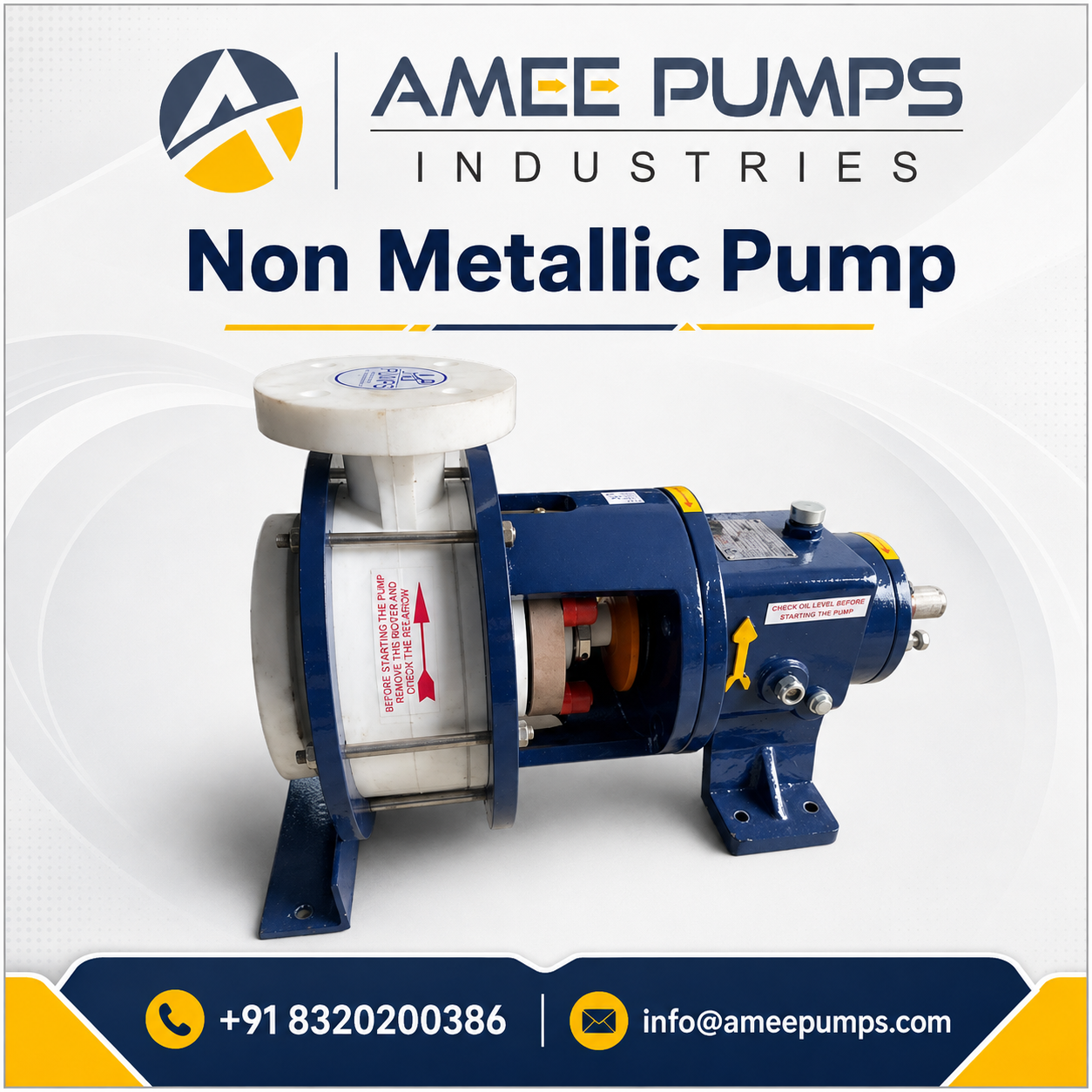
Non Metallic Pump
Discover high-performance non-metallic pumps in Ahmedabad. Amee Pumps Industries offers durable, corrosion-resistant solutions for demanding industrial applicat
What is a Non Metallic Pump? An Overview
A non-metallic pump is a fluid handling device constructed primarily from materials that are inherently resistant to chemical corrosion. Unlike their metallic counterparts, these pumps utilize advanced polymers, composites, or ceramics for their wetted parts, which come into contact with the fluid being pumped. This material selection ensures that the pump can handle a wide spectrum of aggressive chemicals without compromising its structural integrity or performance. They operate on various principles, such as centrifugal force, diaphragm action, or peristaltic movement, depending on the specific design and application requirements.
Key Features and Technical Specifications
Non-metallic pumps are distinguished by several key characteristics that make them ideal for corrosive fluid transfer:
- Exceptional Chemical Resistance: Made from materials like PP, PVDF, PTFE, or FRP, they resist a broad range of acids, bases, solvents, and salts.
- Corrosion-Proof Construction: Eliminates the risk of rust and electrochemical degradation common in metal pumps.
- High Purity Fluid Handling: Suitable for applications where product contamination must be avoided, such as in pharmaceutical or food-grade processes.
- Lightweight Design: Polymers and composites are significantly lighter than metals, simplifying installation and maintenance.
- Low Maintenance Requirements: Fewer moving parts and inherent resistance to wear reduce the need for frequent servicing.
- Temperature Limitations: While robust, specific polymer types have defined operating temperature ranges that must be considered.
- Abrasion Resistance: Certain non-metallic materials offer good resistance to abrasive slurries when properly selected.
- Cost-Effectiveness: Often provide a lower total cost of ownership due to extended lifespan and reduced maintenance.
Industrial Applications and Use Cases
The versatility of non-metallic pumps makes them indispensable across a multitude of industries:
- Chemical Processing: Transferring concentrated acids (sulfuric, hydrochloric), alkalis (sodium hydroxide), and various solvents.
- Pharmaceutical Manufacturing: Handling high-purity water, sterile solutions, and sensitive chemical intermediates.
- Water and Wastewater Treatment: Pumping corrosive treatment chemicals like chlorine or coagulants.
- Electroplating and Metal Finishing: Circulating plating baths and rinse water containing aggressive chemicals.
- Food and Beverage Industry: Transferring acidic ingredients, cleaning solutions, and beverages without product contamination.
- Mining and Metallurgy: Pumping corrosive slurries and process fluids in extraction and refining operations.
- Pulp and Paper Mills: Handling bleach liquors and other corrosive chemicals in the paper production process.
- Semiconductor Manufacturing: Pumping ultra-pure chemicals and etchants in cleanroom environments.
How to Choose the Right Non Metallic Pump
Selecting the appropriate non-metallic pump requires careful consideration of several factors to ensure optimal performance and longevity:
- Fluid Characteristics: Identify the exact chemical composition, concentration, temperature, and viscosity of the fluid to be pumped.
- Flow Rate and Head Requirements: Determine the necessary volume of fluid to be moved per unit time and the total pressure the pump must overcome.
- Material Compatibility: Verify that the pump's wetted parts are compatible with the specific fluid and operating temperature. Consult material charts and manufacturer recommendations.
- Operating Environment: Consider ambient temperature, potential for external corrosion, and any safety regulations applicable to the installation site.
- Seal Type: Decide between mechanical seals (single or double) or sealless designs (like magnetic drive or diaphragm pumps) based on fluid properties and leakage concerns.
- Certifications and Standards: Ensure the pump meets relevant industry standards (e.g., ISO, ANSI) and any specific compliance requirements for your application.
- Supplier Reputation and Support: Choose a manufacturer with a proven track record, strong technical expertise, and reliable after-sales service.
- Customization Needs: Assess if any specific modifications or special features are required for your unique process.
Quality Standards and Compliance
For any industrial pump, especially those handling hazardous or sensitive materials, adherence to quality standards and regulatory compliance is non-negotiable. Non-metallic pumps should be manufactured in accordance with international standards such as ISO 9001 for quality management systems. Specific material certifications, like those for PTFE or PVDF, are also important to verify the purity and performance characteristics of the polymers used. Compliance with industry-specific regulations, such as those governing chemical handling in pharmaceutical or food processing, is crucial. Buyers should always inquire about the certifications held by the manufacturer and ensure that the pump's design and materials meet all applicable safety and performance benchmarks for their intended application.
Why Amee Pumps Industries' Experience and Capability Matters
At Amee Pumps Industries, our two decades of experience, led by Mr. Amit Panchal, have been dedicated to mastering the intricacies of pump design and manufacturing. We leverage a technology-driven approach, allowing us to develop precision-engineered non-metallic pumps that offer exceptional performance and cost-efficiency. Our manufacturing processes are honed for speed and accuracy, enabling us to deliver reliable solutions even for complex projects.
We pride ourselves on a 100% project success rate, a testament to our commitment to quality control and deep understanding of material science. Our team possesses the technical capability to assess your specific fluid handling challenges and recommend or customize the ideal non-metallic pump. This expertise ensures that you receive a solution built for durability, chemical resistance, and long-term operational reliability, minimizing downtime and maximizing value for your operations in Ahmedabad and beyond.
Installation, Maintenance, and Care Tips
Proper installation and regular maintenance are key to maximizing the lifespan and performance of your non-metallic pump.
- Installation: Ensure the pump is installed on a solid, level foundation to prevent vibration. Align piping carefully to avoid stressing the pump casing. For centrifugal pumps, ensure the suction line is primed and free from air pockets. Follow manufacturer guidelines for electrical connections and safety protocols.
- Routine Checks: Periodically inspect the pump for any signs of leakage, unusual noise, or vibration. Check fluid levels if applicable and monitor operating temperatures.
- Seal Maintenance: If your pump uses mechanical seals, follow the manufacturer's recommended inspection and replacement schedule. Even minor leaks can indicate seal wear.
- Flushing and Cleaning: After handling highly corrosive or viscous fluids, it is advisable to flush the pump with a compatible, less aggressive fluid or water to remove residual material.
- Storage: If the pump is to be stored, ensure it is thoroughly cleaned, drained, and protected from extreme temperatures and environmental contaminants.
Frequently Asked Questions
Non-metallic pumps offer superior resistance to a wider range of aggressive chemicals, preventing corrosion and extending the pump's service life. They are also typically lighter, easier to maintain, and can prevent product contamination, making them ideal for sensitive applications.
They can effectively handle a broad spectrum of chemicals including most acids (like sulfuric, hydrochloric, nitric), alkalis (like sodium hydroxide, potassium hydroxide), solvents, salts, and oxidizing agents, depending on the specific polymer material used.
Material selection depends on the specific chemical, its concentration, operating temperature, and pressure. Consulting detailed chemical resistance charts provided by the manufacturer and understanding your process parameters are crucial steps.
While some non-metallic materials like PVDF and PTFE can withstand moderate to high temperatures, their thermal limits are generally lower than those of metals. It's essential to check the maximum operating temperature for the specific pump material and model.
The lifespan can vary significantly based on the application, fluid aggressiveness, operating conditions, and maintenance practices. However, when correctly selected and maintained, non-metallic pumps often outlast their metallic counterparts in highly corrosive service.
Some non-metallic materials, particularly certain composites or specialized polymers, offer good abrasion resistance. However, for extremely abrasive applications, a careful assessment of the slurry's particle size, hardness, and concentration is required to select the most appropriate pump design and material.
Conclusion
For industries in Ahmedabad dealing with corrosive fluids, the selection of appropriate pumping technology is a critical decision impacting operational efficiency, safety, and profitability. Non-metallic pumps offer a robust, reliable, and cost-effective solution, providing unparalleled chemical resistance where traditional metal pumps fail. Understanding the specific requirements of your application—from fluid characteristics and flow rates to material compatibility and regulatory compliance—is key to choosing the right pump. Partnering with an experienced manufacturer like Amee Pumps Industries ensures you receive expert guidance and a high-quality, durable non-metallic pump tailored to your demanding industrial needs.
Get In Touch
Amee Pumps Industries
