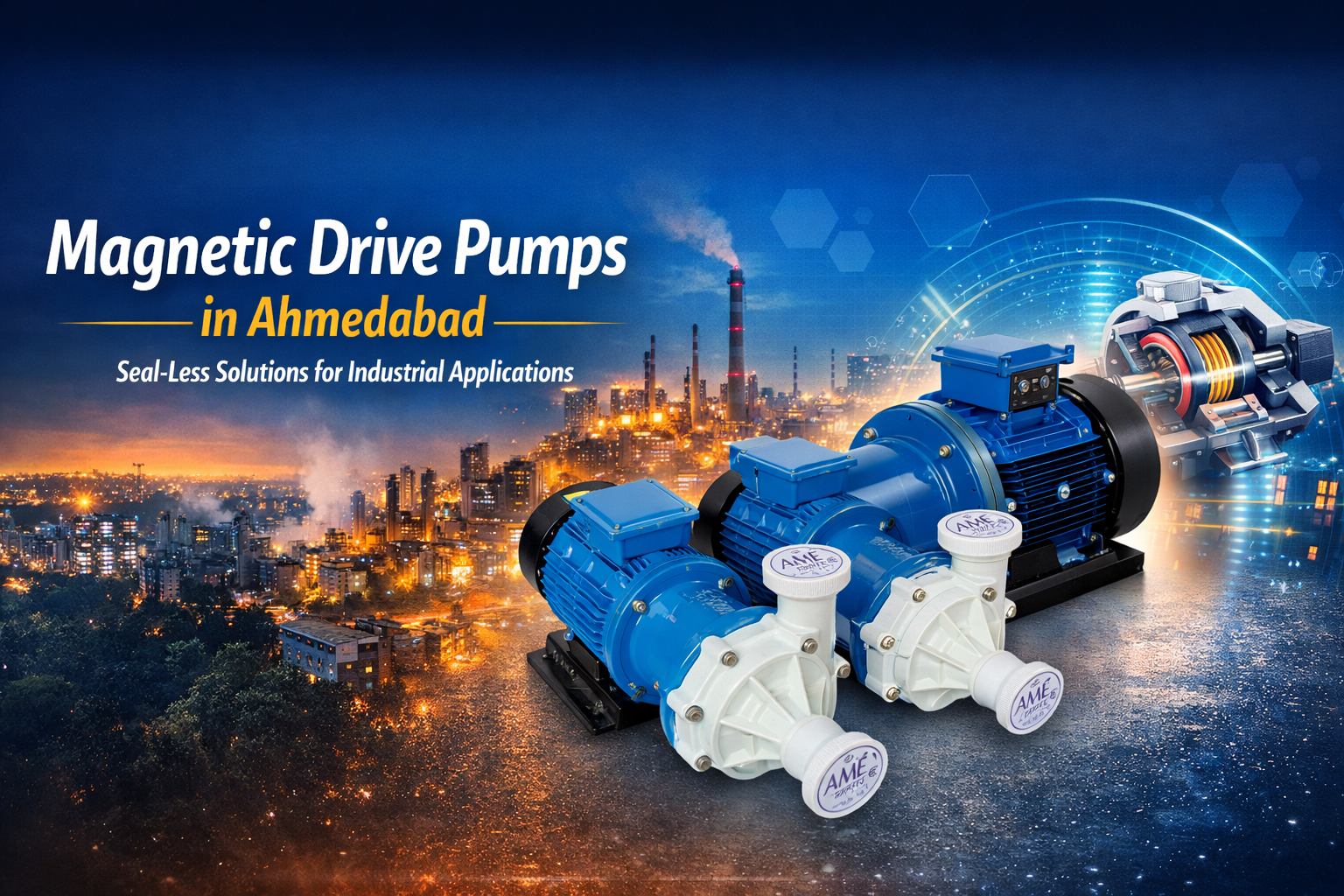
Magnetic Drive Pumps in Ahmedabad | Complete Industrial Guide
Magnetic Drive Pumps in Ahmedabad
Comprehensive Guide to Seal-Less Pump Technology for Industrial Applications
Magnetic drive pumps play a critical role in modern industrial fluid handling,
particularly in applications where safety, leakage prevention, and process reliability are essential. In
Ahmedabad, a city with a strong presence in chemical, pharmaceutical, textile, and process industries, magnetic
drive pumps are increasingly preferred for handling hazardous, corrosive, and sensitive liquids. Their seal-less
construction eliminates one of the most common failure points found in conventional pumps, making them well
suited for continuous and demanding industrial operations.
This article offers a practical and detailed understanding of magnetic drive pumps
in Ahmedabad, focusing on how they work, where they are used, why industries rely on them, and which factors are
important when selecting the right pump for local operating conditions.
Understanding Magnetic Drive Pump Technology
A magnetic drive pump is a type of centrifugal pump that uses magnetic coupling
instead of a traditional mechanical shaft seal. The motor drives an external magnet, which transfers torque to
an internal magnet connected to the impeller. Since there is no direct mechanical connection between the motor
and the pump casing, the pumped fluid remains completely sealed inside the pump.
This design removes any potential leakage path, even when handling aggressive or
volatile fluids. For industries operating under strict safety, environmental, and compliance requirements, this
feature significantly reduces operational risk and ongoing maintenance concerns.
In industrial environments like Ahmedabad, where chemical processing, dyeing,
plating, and pharmaceutical manufacturing are widespread, seal-less operation is not merely a design advantage
but a practical necessity.
Why Industries in Ahmedabad Rely on Magnetic Drive Pumps
Ahmedabad has a dense concentration of process-driven industries that regularly
handle chemicals, solvents, acids, alkalis, and temperature-sensitive liquids. Any leakage in such systems can
lead to safety hazards, product contamination, regulatory issues, and unplanned downtime.
Magnetic drive pumps address these challenges by delivering consistent performance
without the recurring problems associated with mechanical seals. Their ability to operate reliably under
continuous duty cycles makes them suitable for plants that operate around the clock.
Many local industries also prioritize long-term operational stability over
short-term cost considerations. Magnetic drive pumps support this approach by reducing maintenance
interventions, minimizing unexpected shutdowns, and improving overall plant reliability.
Working Principle of Magnetic Drive Pumps
The working principle of a magnetic drive pump is based on magnetic coupling. When
the motor rotates, it drives the outer magnet assembly. The magnetic field passes through a containment shell
and causes the inner magnet, which is connected to the impeller, to rotate at the same speed.
As the impeller is fully enclosed within the pump casing, the process fluid remains
isolated from the external environment. This design eliminates leakage and prevents exposure to harmful liquids
or vapors.
The containment shell is manufactured from materials selected to withstand pressure,
temperature, and chemical compatibility requirements. For Ahmedabad-based industries handling aggressive process
media, correct material selection is especially important.
Industrial Applications of Magnetic Drive Pumps
Magnetic drive pumps are widely used across multiple industrial sectors in Ahmedabad
due to their versatility and safety benefits. Application suitability depends on factors such as fluid type,
operating temperature, flow rate, and system pressure.
Common applications include:
Chemical processing plants handling acids, solvents, and reactive chemicals
Pharmaceutical manufacturing where contamination-free pumping is essential
Textile processing and dyeing units using chemical solutions and colorants
Water treatment and process water circulation systems
Refrigeration systems for agitation and de-scaling operations
These applications demonstrate why magnetic drive pumps are considered a reliable
solution for industries that cannot tolerate leakage or frequent maintenance interruptions.
Advantages of Magnetic Drive Pumps in Industrial Operations
The most significant advantage of magnetic drive pumps is their leak-proof
operation. By eliminating mechanical seals, they remove a common failure point found in conventional centrifugal
pumps. This directly enhances plant safety and supports environmental compliance.
Reduced maintenance is another key benefit. Without seals that require adjustment or
replacement, maintenance intervals become longer and more predictable. This is particularly valuable for
Ahmedabad-based plants that operate continuously or handle fluids that are difficult to drain or isolate.
Magnetic drive pumps also provide stable hydraulic performance. The absence of shaft
penetration minimizes alignment issues, and vibration levels are generally lower. As a result, bearing life is
extended and overall operation remains smoother.
Energy efficiency is also an important consideration. High-quality magnetic coupling
systems use permanent rare-earth magnets to ensure efficient torque transmission with minimal losses. When
correctly sized and installed, these pumps deliver consistent flow and head with optimized power consumption.
Material Considerations for Magnetic Drive Pumps
Material selection is a critical factor when specifying magnetic drive pumps. The
chemical properties of the pumped fluid, along with operating temperature and abrasiveness, must be carefully
evaluated to ensure long-term reliability.
Common construction materials include polypropylene, PVDF, stainless steel, and
other engineered alloys, selected based on application requirements. For chemical industries in Ahmedabad,
compatibility with acids, alkalis, and solvents is often the primary concern.
The containment shell and internal components must also be designed to manage heat
generated by eddy currents within the magnetic field. Proper engineering ensures effective heat dissipation
without compromising pump performance or fluid integrity.
Magnetic Drive Pumps Versus Conventional Centrifugal Pumps
Conventional centrifugal pumps rely on mechanical seals that require routine
inspection and periodic replacement. In applications involving hazardous or corrosive fluids, seal failure can
result in serious safety, environmental, and operational consequences.
Magnetic drive pumps eliminate this risk through their seal-less design. While
initial selection requires careful evaluation of operating limits, these pumps often deliver a lower total cost
of ownership over their service life.
For industries in Ahmedabad seeking to improve safety standards and reduce long-term
maintenance demands, magnetic drive pumps represent a technically sound alternative to traditional sealed pumps.
Factors to Consider When Selecting Magnetic Drive Pumps in Ahmedabad
Selecting the right magnetic drive pump requires a clear understanding of process
conditions and operational requirements. Inappropriate selection can lead to inefficiencies, overheating, or
premature wear.
Key factors include:
Nature of the pumped fluid, including chemical composition and viscosity
Operating temperature and pressure range
Required flow rate and head
Material compatibility with the process fluid
Installation environment and expected duty cycle
Local operating conditions such as ambient temperature, utility availability, and
maintenance practices should also be considered. Ahmedabad's industrial climate makes it important to choose
pumps designed for consistent performance under demanding conditions.
Installation and Operational Best Practices
Correct installation plays an important role in determining the performance and
service life of magnetic drive pumps. Proper alignment, adequate piping support, and correct suction conditions
help prevent cavitation and reduce stress on internal components.
Dry running should be strictly avoided, as magnetic drive pumps rely on the pumped
fluid for cooling and lubrication of internal parts. Maintaining recommended operating parameters and monitoring
flow conditions supports reliable long-term operation.
Even with low-maintenance designs, regular monitoring of system parameters helps
ensure consistent process performance and early detection of potential issues.
Role of Magnetic Drive Pumps in Process Safety and Compliance
Process safety is an increasing priority for industrial operators in Ahmedabad.
Regulatory requirements related to chemical handling, worker safety, and environmental protection demand
equipment that minimizes operational risk.
Magnetic drive pumps support these objectives by providing sealed operation that
prevents leakage and emissions. This helps facilities maintain compliance while improving workplace safety and
reducing the likelihood of incidents.
For industries aiming to align with modern safety and sustainability expectations,
magnetic drive pumps offer a proven and practical solution.
Frequently Asked Questions
Magnetic drive pumps eliminate mechanical shaft seals and use magnetic coupling to transmit torque, keeping
the pumped fluid fully enclosed within the pump casing.
They are widely used for corrosive and hazardous chemicals when manufactured with materials selected to match
the fluid's chemical properties.
Maintenance requirements are generally lower than those of conventional pumps because there are no seals to
replace, although routine system checks remain important.
They are well suited for continuous-duty applications when correctly sized and operated within recommended
limits.
Modern designs using high-quality magnetic materials provide efficient torque transmission and stable
hydraulic performance.
Chemical processing, pharmaceutical manufacturing, textile processing, electroplating, water treatment, and
refrigeration-related applications commonly rely on magnetic drive pumps.
Material selection is critical to ensure chemical compatibility, temperature resistance, and long-term
operational reliability.
Conclusion
Magnetic drive pumps have become an integral part of industrial fluid handling
systems in Ahmedabad due to their leak-proof design, safety benefits, and dependable performance. Their ability
to handle hazardous and corrosive fluids without mechanical seals makes them especially suitable for the city's
diverse industrial landscape.
By understanding how these pumps operate, where they are applied, and which factors
influence proper selection, industrial operators can make informed decisions that enhance process reliability
and safety. As industries continue to emphasize efficiency, compliance, and long-term operational stability,
magnetic drive pumps remain a dependable solution for modern industrial requirements.