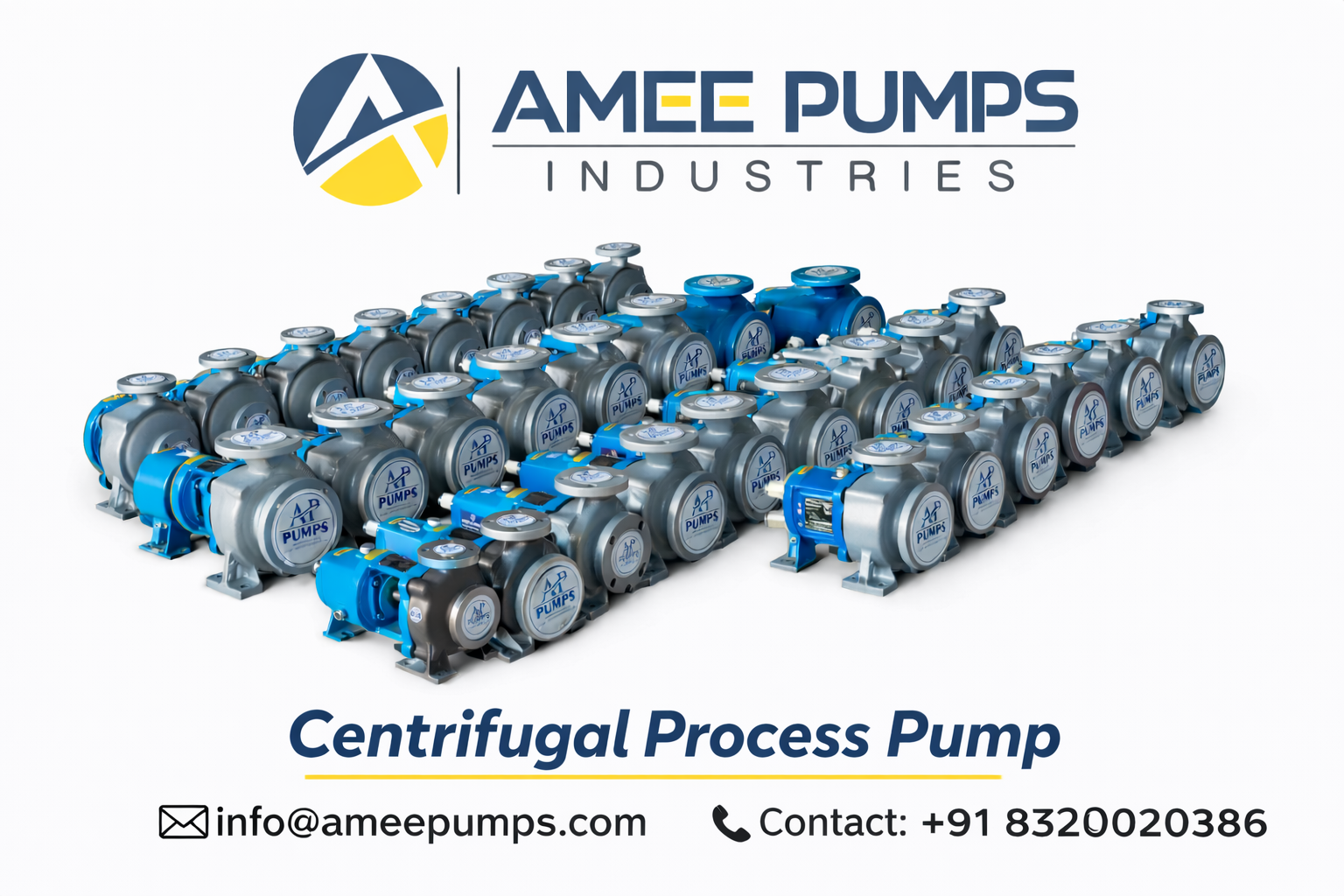
Centrifugal Process Pump

Centrifugal Process Pump | Amee Pumps Industries

Industrial Equipment

Centrifugal Process Pump

A centrifugal process pump plays a vital role in modern industrial operations where controlled fluid movement is essential for maintaining efficiency and consistency. These pumps are designed to handle a wide range of liquids, including chemicals, solvents, and process fluids, across different stages of manufacturing and processing. Their ability to deliver stable flow and pressure makes them a dependable component in industries that require precision and reliability in fluid handling systems.

Industrial processes often involve continuous fluid movement under varying conditions such as temperature, pressure, and chemical composition. A centrifugal process pump is engineered to perform reliably under these demanding environments while maintaining consistent output. Its design focuses on minimizing downtime, ensuring smooth operation, and supporting uninterrupted production cycles.

01
Working Principle

Understanding the Working Principle of a Centrifugal Process Pump

A centrifugal process pump operates on the principle of centrifugal force, where mechanical energy is converted into kinetic energy to move fluids efficiently. The process begins when liquid enters the pump through the suction inlet. The rotating impeller then accelerates the fluid outward, increasing its velocity and pressure.

As the fluid passes through the pump casing, the kinetic energy is converted into pressure energy, allowing it to flow through pipelines to the required destination. This continuous process ensures a steady and controlled flow, making the pump suitable for applications where consistent fluid transfer is essential.

The simplicity of this working mechanism contributes to its widespread use in industrial environments. With fewer moving parts compared to other pump types, centrifugal process pumps are easier to operate and maintain, which enhances their reliability over long-term use.

02
Design Features

Key Design Features of Centrifugal Process Pumps

The design of a centrifugal process pump focuses on efficiency, durability, and compatibility with different types of fluids. Each component is engineered to support stable operation while minimizing wear and operational stress.

  • Robust impeller design for efficient fluid movement
  • Strong casing construction to withstand pressure variations
  • Precision shaft alignment for smooth and stable operation
  • Compatibility with various sealing options
  • Capability to handle different fluid viscosities

These design features ensure consistent performance even in complex industrial conditions. The use of appropriate materials also helps resist corrosion and chemical reactions, which is critical in process industries.

03
Applications

Industrial Applications of Centrifugal Process Pumps

Centrifugal process pumps are widely used across various industries due to their adaptability and performance efficiency. Their ability to handle different fluid types makes them suitable for a broad range of operational requirements.

  • Chemical processing and transfer operations
  • Water treatment and circulation systems
  • Pharmaceutical manufacturing processes
  • Food and beverage production lines
  • Petrochemical and refinery applications

In these industries, the pump plays a crucial role in maintaining process continuity. Whether transferring raw materials or circulating fluids within a system, it ensures smooth and efficient operations.

04
Performance

Performance Advantages in Industrial Operations

The performance of a centrifugal process pump directly influences the efficiency of industrial systems. Its ability to maintain consistent flow rates and pressure levels helps optimize overall process performance.

One of the key advantages is its ability to handle high flow rates with relatively low energy consumption, making it suitable for large-scale operations. Additionally, its design supports continuous operation with minimal interruptions, enabling longer production cycles.

Another important benefit is its adaptability to different operating conditions. Whether handling clean liquids or mildly corrosive fluids, the pump can be configured to meet specific process requirements. This flexibility makes it a preferred choice across multiple industries.

05
Material Selection

Material Selection and Durability Considerations

Material selection plays a critical role in determining the durability and performance of a centrifugal process pump. Since these pumps often handle aggressive or corrosive fluids, materials must offer strong resistance to chemical reactions and wear.

Common materials include cast iron, stainless steel, and specialized alloys, selected based on the fluid properties and operating conditions. Proper material selection not only extends the service life of the pump but also ensures safe and efficient operation.

The durability of the pump is further supported by its design, which minimizes mechanical stress and reduces the likelihood of component failure. This results in lower maintenance requirements and improved long-term reliability.

06
Installation

Installation and Operational Considerations

Proper installation and operation are essential to achieve optimal performance from a centrifugal process pump. Factors such as alignment, suction conditions, and system design significantly influence efficiency.

  • Ensure proper alignment between pump and motor
  • Maintain adequate suction conditions to prevent cavitation
  • Use appropriate piping design for smooth fluid flow
  • Monitor operating parameters regularly
  • Follow recommended maintenance schedules

By following these practices, industries can enhance pump efficiency, extend service life, and reduce the risk of operational issues.

07
Maintenance

Maintenance and Long-Term Reliability

Maintenance is a key factor in ensuring the long-term reliability of a centrifugal process pump. Regular inspection and timely servicing help identify potential issues before they lead to major failures.

Routine maintenance includes checking component wear, monitoring vibration levels, and ensuring proper lubrication. These measures help maintain consistent performance and reduce unexpected downtime.

The relatively simple design of centrifugal process pumps makes maintenance more manageable compared to more complex pumping systems. This ease of maintenance contributes to their widespread use in industrial applications.

08
Process Efficiency

Role in Enhancing Process Efficiency

A centrifugal process pump contributes significantly to improving process efficiency by ensuring smooth and uninterrupted fluid movement. Its ability to maintain consistent flow and pressure supports stable production conditions, which are essential for achieving reliable output quality.

In automated systems, these pumps integrate effectively with control mechanisms, allowing precise regulation of fluid flow. This improves process control and reduces the risk of inconsistencies.

By enabling efficient fluid handling, centrifugal process pumps play an important role in optimizing industrial workflows and enhancing overall productivity.

09
Selection Guide

Choosing the Right Centrifugal Process Pump

Selecting the right centrifugal process pump requires careful evaluation of several factors, including fluid characteristics, operating conditions, and system requirements. Each application has specific demands that must be considered for optimal performance.

Key factors include flow rate, pressure requirements, temperature conditions, and material compatibility. Understanding these parameters helps in selecting a pump that aligns with the process requirements.

Proper selection not only improves efficiency but also reduces maintenance needs and enhances equipment longevity.

Frequently Asked Questions

FAQ
A centrifugal process pump is used to transfer fluids in industrial processes where consistent flow and pressure are required. It is commonly applied in chemical processing, water treatment, and manufacturing operations.
It works by using a rotating impeller to generate centrifugal force, which moves fluid through the pump and into the system with controlled pressure and flow.
These pumps can handle a wide range of fluids, including water, chemicals, solvents, and other process liquids, depending on the material construction and design.
Yes, centrifugal process pumps are designed for continuous operation and are widely used in industries that require uninterrupted fluid movement.
Regular inspection, proper lubrication, and monitoring of key components are necessary to ensure consistent performance and prevent potential issues.
Choosing the right pump involves evaluating factors such as flow rate, pressure, fluid type, and operating conditions to ensure compatibility with the application.

Conclusion

A centrifugal process pump remains an essential component in industrial fluid handling systems, offering a strong balance of efficiency, reliability, and operational stability. Its straightforward working principle enables consistent flow and pressure across various processes, supporting smooth and uninterrupted production.

With its adaptability to different fluids, durability under demanding conditions, and ease of maintenance, a centrifugal process pump supports long-term performance across a wide range of industrial applications. By selecting the appropriate configuration and following proper operating practices, industries can achieve improved efficiency, reduced downtime, and dependable system performance over time.

Get In Touch

#

Relevant Tags

Our Blogs