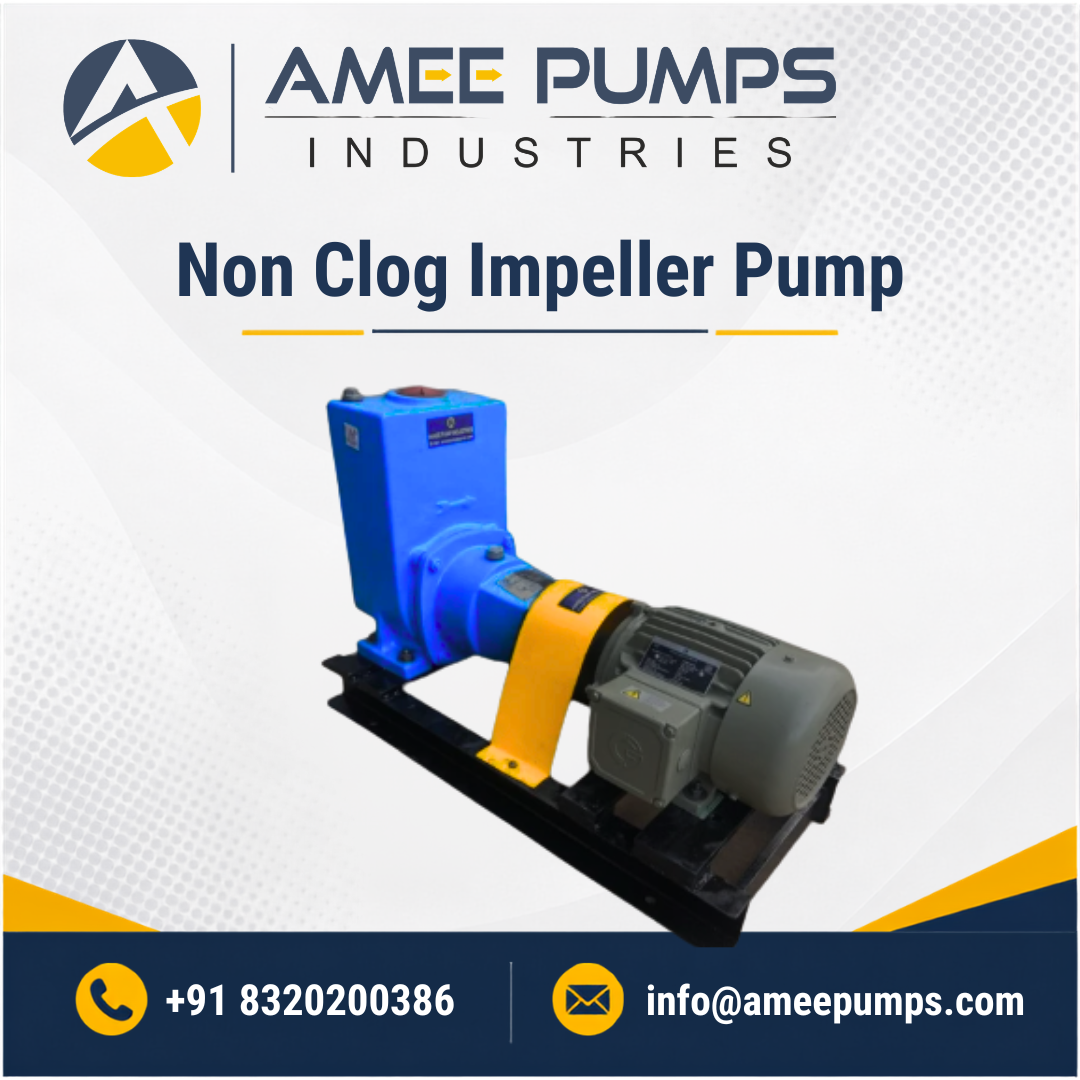
Non Clog Impeller Pump
Discover reliable Non Clog Impeller Pumps in Ahmedabad. Amee Pumps Industries offers efficient, durable solutions for demanding industrial applications.
What is a Non Clog Impeller Pump? — Overview
A non clog impeller pump is a type of centrifugal pump designed to handle fluids containing large solids, fibrous materials, or viscous substances without becoming blocked. Unlike conventional pumps that use tightly toleranced impellers which can easily snag or become obstructed, these pumps feature impellers with wider passages and specific vane designs. These designs allow solids to pass through the pump casing and discharge without causing a blockage. The impeller's geometry is optimized for efficient fluid movement while minimizing the risk of clogging, making them ideal for applications involving wastewater, slurries, and other challenging media.
Key Features and Technical Specifications
- Open or Semi-Open Impeller Design: Features wider flow passages to accommodate solids.
- Robust Construction Materials: Typically made from cast iron, stainless steel, or specialized alloys for corrosion and abrasion resistance.
- Heavy-Duty Shaft and Bearings: Designed to withstand the stresses of handling solids and viscous fluids.
- Large Casing Volute: Provides ample space for solids to pass through without obstruction.
- Wear-Resistant Components: Impellers and casings often feature hardened surfaces or replaceable wear plates.
- Sealing Options: Available with mechanical seals or packing glands suitable for abrasive and corrosive fluids.
- Various Mounting Configurations: Can be supplied in close-coupled, frame-mounted, or submersible designs.
Industrial Applications and Use Cases
- Wastewater Treatment: Pumping raw sewage, sludge, and effluent containing rags and debris.
- Chemical Processing: Transferring slurries, viscous chemicals, and process fluids with suspended solids.
- Pulp and Paper Industry: Moving pulp stock, white water, and waste streams containing fibers.
- Food and Beverage: Handling fruit pulps, vegetable slurries, and other viscous food products.
- Mining and Minerals: Pumping slurries, tailings, and abrasive mineral suspensions.
- Textile Industry: Transferring dye liquors, wastewater, and effluent containing fibers and solids.
- General Industrial Transfer: Moving abrasive or solids-laden liquids in various manufacturing settings.
How to Choose the Right Non Clog Impeller Pump
Selecting the appropriate non clog impeller pump requires careful consideration of your specific application. Here’s a checklist to guide your decision:
- Fluid Characteristics: Accurately determine the type of fluid, its viscosity, the size and concentration of solids, and any abrasive or corrosive properties.
- Flow Rate and Head Requirements: Define the required discharge rate (LPM/GPM) and the total dynamic head (TDH) the pump needs to overcome.
- Solids Handling Capacity: Ensure the pump's impeller design and passage size are rated to handle the maximum expected solid particle size.
- Material Compatibility: Select pump materials that are resistant to the chemical composition and abrasive nature of the fluid.
- Operating Environment: Consider whether the pump will be used in a dry pit, wet pit, or submersible application, and the ambient conditions.
- Power Source and Efficiency: Evaluate motor efficiency and power requirements to ensure cost-effective operation.
- Manufacturer Reputation and Support: Choose a reputable manufacturer with a proven track record and reliable after-sales service.
- Certifications and Standards: Verify that the pump meets relevant industry standards and certifications for your application.
Quality Standards and Compliance
When selecting a non clog impeller pump, particularly for critical industrial applications in Ahmedabad, adherence to quality standards and compliance is non-negotiable. Reputable manufacturers will ensure their pumps meet national and international standards. This often includes compliance with standards like ISO 9001 for quality management systems, ensuring consistent manufacturing processes and product quality. Depending on the application, specific standards related to fluid handling, safety, and material certifications might be relevant. Buyers should always inquire about the certifications held by the manufacturer and the specific standards to which the pump is built, verifying that they align with regulatory requirements and industry best practices for their intended use.
Why Amee Pumps Industries' Experience and Capability Matters
At Amee Pumps Industries, our two decades of focused experience, led by industry veteran Mr. Amit Panchal, translate directly into superior non clog impeller pump solutions for Ahmedabad's industries. We leverage a technology-driven approach to design and manufacturing, which allows for greater precision and cost-effectiveness compared to traditional methods. Our team has honed its expertise in complex, fast-paced environments, resulting in a proven 100% project success rate. This capability means we understand the nuances of handling challenging fluids and can engineer pumps that deliver reliable performance.
Our manufacturing processes are meticulously controlled, ensuring that each non clog impeller pump is built to withstand demanding conditions. We prioritize robust construction, appropriate material selection, and precise assembly to guarantee longevity and minimize operational disruptions for our clients. When you partner with Amee Pumps Industries, you are choosing a team dedicated to providing efficient, durable, and cost-effective fluid transfer solutions tailored to your specific industrial needs.
Installation, Maintenance, and Care Tips
Proper installation and regular maintenance are key to maximizing the lifespan and performance of your non clog impeller pump.
- Installation: Ensure the pump is installed on a solid, level foundation. Verify proper alignment if it's a frame-mounted unit. For submersible pumps, ensure secure mounting and proper discharge piping. Always follow the manufacturer's specific installation guidelines.
- Priming: For non-submersible units, ensure the pump is correctly primed before starting to prevent dry running, which can damage seals and bearings.
- System Checks: Before startup, check that all piping is secure, valves are in the correct position, and the motor rotation direction is correct.
- Regular Inspections: Periodically inspect the pump for leaks, unusual noises, or vibrations. Check bearing lubrication levels and mechanical seal condition.
- Solids Management: Monitor the fluid being pumped to ensure it remains within the pump's specified solids handling capacity. Clogged pumps often result from exceeding these limits.
- Preventative Maintenance: Establish a schedule for routine maintenance, including impeller clearance checks, seal inspections, and motor servicing.
- Cleaning: If the pump is removed for maintenance, thoroughly clean the impeller and casing to remove any accumulated debris.
Frequently Asked Questions
The primary advantage is its ability to handle fluids containing large solids, fibrous materials, or viscous substances without becoming blocked. Standard centrifugal pumps have tighter tolerances and impeller designs that are easily obstructed by such media, leading to downtime.
You need to accurately define your required flow rate and total dynamic head. Additionally, you must know the maximum size and concentration of solids present in the fluid, as this dictates the necessary impeller passage size and pump design.
Common materials include cast iron for general use, stainless steel for corrosive applications, and specialized alloys for highly abrasive or aggressive media. The choice depends on the chemical compatibility and wear resistance needed for the specific fluid being pumped.
While they can pump clean water, it's generally not the most efficient or cost-effective choice. Their specialized design is optimized for challenging fluids, and standard centrifugal pumps are usually better suited for clean water applications.
The lifespan varies significantly based on the application, fluid characteristics, operating hours, and maintenance practices. Pumps handling abrasive slurries will have a shorter lifespan than those pumping less aggressive materials, but with proper selection and maintenance, they can last many years.
Inspection frequency depends on the severity of the application. For highly abrasive or demanding services, monthly or quarterly checks might be necessary. For less severe applications, annual inspections may suffice, but always refer to the manufacturer's recommendations.
Conclusion
For industries in Ahmedabad and the surrounding regions that regularly face the challenges of pumping fluids containing solids, fibers, or viscous materials, a non clog impeller pump is not just an option, but a necessity. Understanding the specific design features, application suitability, and selection criteria is vital for ensuring operational efficiency and preventing costly disruptions. By partnering with experienced manufacturers like Amee Pumps Industries, businesses can gain access to robust, reliable, and cost-effective pump solutions engineered to meet the demands of their unique industrial processes. Careful consideration of fluid characteristics, performance requirements, and manufacturer expertise will lead to the selection of a pump that delivers consistent performance and long-term value.
Get In Touch
Amee Pumps Industries
