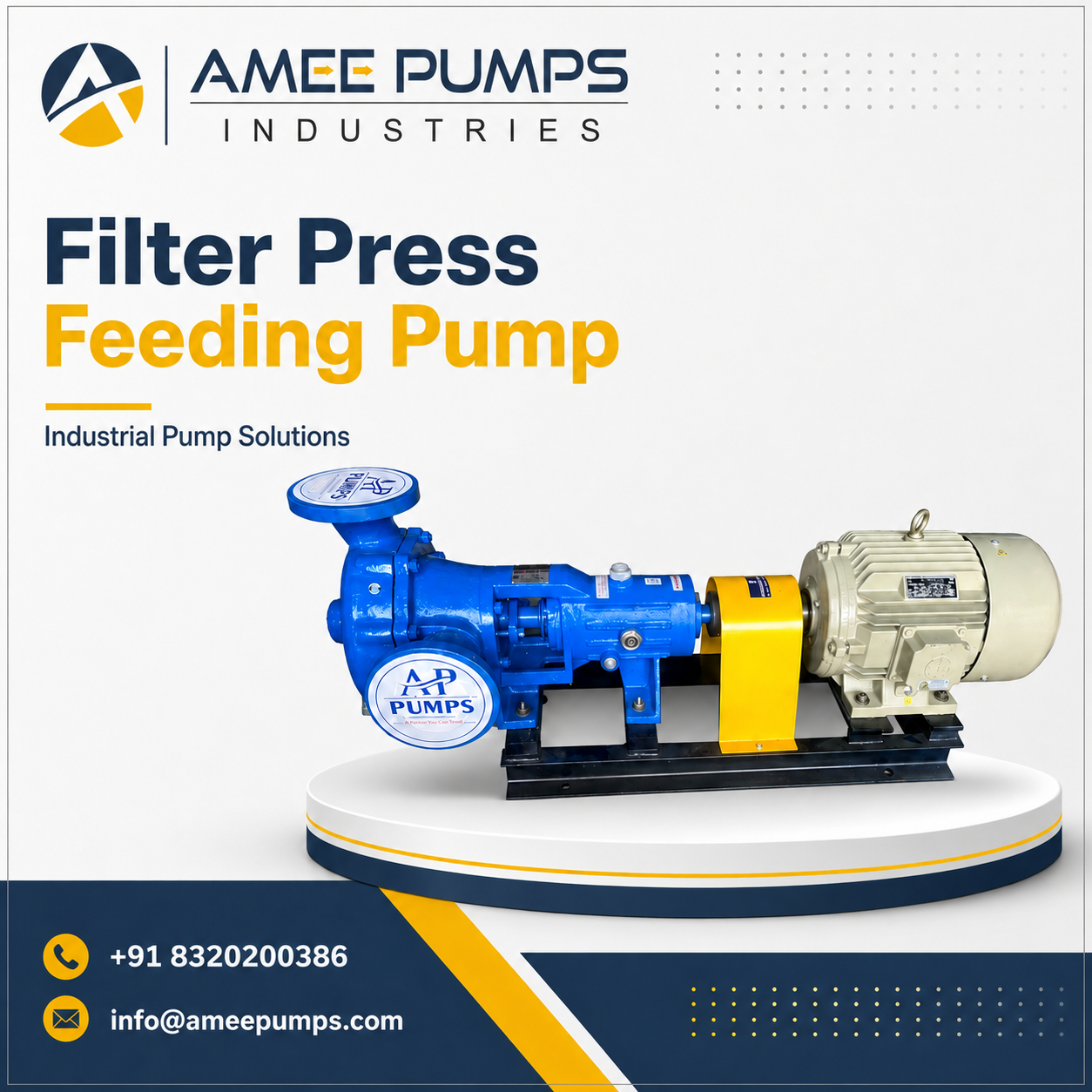
Filter Press Feeding Pump
Reliable Filter Press Feeding Pumps in Ahmedabad. Discover high-performance, cost-effective solutions from Amee Pumps Industries for your industrial needs.
What is a Filter Press Feeding Pump? — Overview
A filter press feeding pump is specifically designed to deliver slurry or liquid containing suspended solids to a filter press at a controlled pressure and flow rate. Unlike standard centrifugal pumps, these specialized units are engineered to handle abrasive, viscous, or shear-sensitive materials without significant damage or degradation. They must be capable of building sufficient pressure to overcome the resistance of the filter medium and the accumulating solids cake, ensuring effective dewatering. The pump’s ability to manage varying slurry consistencies and its durability in harsh environments are key functional attributes.
Key Features and Technical Specifications
When evaluating a filter press feeding pump, several technical aspects are crucial for ensuring optimal performance and longevity:
- Diaphragm or Piston Design: Often utilizing positive displacement mechanisms like diaphragms or pistons to provide consistent flow and pressure.
- Material of Construction: Employing wear-resistant materials such as hardened cast iron, stainless steel, or specialized alloys for wetted parts to combat abrasion and corrosion.
- Sealing Arrangements: Robust sealing systems to prevent leakage of slurry and protect internal components.
- Variable Speed Drive Compatibility: Ability to integrate with VFDs for precise control over flow and pressure adjustments.
- High Solids Handling Capacity: Designed to pass solids up to a specified size without clogging.
- Pressure Capabilities: Capable of generating pressures required for effective filtration, typically ranging from a few bar to over 20 bar.
- Low Shear Operation: Minimizing mechanical stress on the fluid to preserve particle integrity and prevent foaming.
- Ease of Maintenance: Designed for straightforward access to wear parts for routine servicing.
Industrial Applications and Use Cases
Filter press feeding pumps are indispensable across a multitude of industrial sectors:
- Chemical Processing: Transferring chemical slurries, precipitates, and catalyst suspensions to filter presses for separation.
- Pharmaceutical Manufacturing: Handling sensitive drug intermediates and active pharmaceutical ingredients (APIs) during filtration.
- Mining and Mineral Processing: Pumping tailings, concentrates, and mineral slurries for dewatering.
- Wastewater Treatment: Moving sludge and biosolids for dewatering in municipal and industrial treatment plants.
- Ceramics and Clay Production: Feeding clay slurries and glazes to filter presses for dewatering and preparation.
- Food and Beverage Industry: Transferring fruit pulps, yeast slurries, and other food-grade suspensions.
- Paint and Pigment Manufacturing: Pumping pigment slurries and waste streams for solid separation.
- Metal Finishing: Handling spent plating baths and sludge for waste reduction.
How to Choose the Right Filter Press Feeding Pump
Selecting the appropriate pump is a critical decision that impacts your entire filtration process. Consider these factors:
- Slurry Characteristics: Analyze the solids content, particle size distribution, abrasiveness, viscosity, and temperature of the slurry.
- Required Flow Rate and Pressure: Determine the volume of slurry to be processed per cycle and the pressure needed to achieve efficient filtration.
- Filter Press Size and Type: Match the pump's capacity to the requirements of your specific filter press model.
- Material Compatibility: Ensure all wetted parts are resistant to the chemical and physical properties of the slurry.
- Duty Cycle and Reliability: Assess the pump's suitability for continuous or intermittent operation and its expected lifespan.
- Maintenance and Serviceability: Evaluate the ease of access for repairs and the availability of spare parts.
- Energy Efficiency: Consider the power consumption of the pump, especially for high-volume applications.
- Supplier Support: Look for a manufacturer with proven expertise, good after-sales service, and technical assistance.
Quality Standards and Compliance
For industrial applications, particularly in sectors like pharmaceuticals and chemicals, adherence to quality standards and regulatory compliance is non-negotiable. Manufacturers should demonstrate a commitment to quality through certifications like ISO 9001 for quality management systems. Pumps intended for specific industries may also need to meet standards related to material safety, explosion-proof designs (ATEX directives if applicable), or hygienic standards (e.g., FDA compliance for food and beverage). Verifying that the pump’s materials and construction meet relevant industry standards ensures safety, reliability, and regulatory adherence.
Why Amee Pumps Industries' Experience and Capability Matters
At Amee Pumps Industries, our two decades of experience, led by Mr. Amit Panchal, have been dedicated to understanding and solving complex fluid transfer challenges. We leverage a technology-driven approach to design and manufacture filter press feeding pumps that are not only efficient but also cost-effective. Our manufacturing processes are honed for precision, ensuring each pump meets stringent quality controls. We focus on building robust, reliable equipment capable of handling demanding industrial applications.
Our team possesses deep technical expertise, allowing us to offer tailored solutions and support. We pride ourselves on a proven track record of delivering pumps that perform consistently, minimizing downtime and maintenance costs for our clients. This commitment to engineering excellence and customer satisfaction is what drives our reputation as a trusted pump manufacturer.
Installation, Maintenance, and Care Tips
Proper installation and regular maintenance are key to maximizing the lifespan and performance of your filter press feeding pump.
- Installation: Ensure the pump is installed on a solid, level foundation, with adequate clearance for maintenance. Correctly align the pump with any connected piping to avoid undue stress. Follow the manufacturer’s guidelines for initial priming and startup procedures.
- Regular Inspections: Periodically check for leaks, unusual noises, or vibrations. Monitor operating pressures and flow rates for any deviations from normal parameters.
- Lubrication: Adhere to the recommended lubrication schedule for bearings and other moving parts. Use only the specified types and grades of lubricants.
- Seal and Diaphragm Checks: For diaphragm pumps, regular inspection of diaphragms and valves for wear or damage is crucial. Prompt replacement of worn seals prevents more significant issues.
- Cleaning: Keep the pump exterior clean. If handling abrasive materials, ensure any accessible internal components are flushed and cleaned as per the manual.
- Spare Parts: Maintain a stock of critical spare parts, such as diaphragms, valves, and seals, to minimize downtime during unexpected failures.
Frequently Asked Questions
A filter press feeding pump's main role is to deliver slurry containing solids to a filter press at a controlled pressure and flow rate. This controlled delivery is essential for efficient dewatering, achieving desired cake dryness, and optimizing the overall filtration cycle time.
Filter press feeding pumps are typically positive displacement types (like diaphragm or piston pumps) designed to handle abrasive, viscous, or shear-sensitive materials and build high pressures. Standard centrifugal pumps are better suited for clear liquids and lower pressures, and can be damaged by solids or high viscosity.
Wetted parts of these pumps are often made from highly durable materials to withstand abrasion and corrosion. Common materials include hardened cast iron, various grades of stainless steel, duplex stainless steel, and sometimes specialized alloys or rubber linings depending on the application.
Yes, many filter press feeding pumps are specifically engineered to handle slurries with high concentrations of solids. Their design often includes features to prevent clogging and ensure consistent pumping of dense mixtures.
Precise pressure control is vital. Too low a pressure results in inefficient dewatering and long cycle times. Too high a pressure can damage the filter cloth, the press components, or even cause leaks, leading to operational issues and increased maintenance costs.
Maintenance frequency depends heavily on the pump's application, the nature of the slurry being pumped, and the operating hours. A general guideline is to perform visual inspections daily, check critical components weekly, and conduct more in-depth servicing as recommended by the manufacturer, often based on operating hours or specific performance indicators.
Conclusion
Selecting the right filter press feeding pump is a strategic decision that directly influences the efficiency, reliability, and cost-effectiveness of your solid-liquid separation processes. In Ahmedabad's competitive industrial environment, partnering with an experienced manufacturer like Amee Pumps Industries ensures you receive robust, high-performance solutions tailored to your specific needs. By considering slurry characteristics, operational requirements, and the supplier's expertise, you can secure a pump that not only meets but exceeds your expectations, contributing to smoother operations and enhanced productivity.
Get In Touch
Amee Pumps Industries
