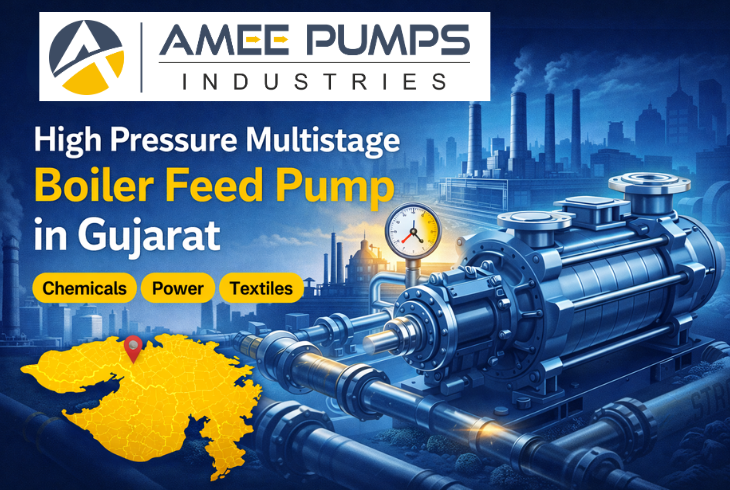
Understanding high pressure multistage boiler feed pumps
A high pressure multistage boiler feed pump is designed to deliver water at elevated pressures by passing it through multiple impeller stages arranged in series. Each stage gradually increases pressure, allowing the pump to achieve high discharge heads while maintaining hydraulic efficiency and mechanical stability.
These pumps are widely used in boiler feed water systems where water must be delivered at pressures significantly above atmospheric levels. They are engineered for continuous operation and can handle high temperatures, making them suitable for both industrial and utility-scale boiler installations.
In Gujarat's industrial environment, where uninterrupted production is essential, multistage boiler feed pumps are preferred for their consistent performance and reliability under varying operating conditions.
Why Gujarat has strong demand for boiler feed pumps
Gujarat is one of India's most industrialized states, with major industrial hubs in Ahmedabad, Vadodara, Surat, Vapi, Ankleshwar, and Rajkot. Sectors such as chemicals, pharmaceuticals, textiles, paper, food processing, and thermal power rely heavily on boilers for process heating, steam generation, and energy management.
As boiler systems operate at higher pressures to improve fuel efficiency, the need for reliable high pressure feed pumps increases. Water availability challenges in Gujarat also encourage industries to adopt efficient pumping systems that minimize losses and ensure precise water delivery.
This combination of industrial growth, efficiency-driven boiler design, and operational reliability continues to drive demand for high pressure multistage boiler feed pumps across the state.
Design and construction characteristics
High pressure multistage boiler feed pumps are built with robust construction to withstand continuous mechanical and thermal stress. The pump casing is commonly designed in barrel type or segmental construction, depending on pressure requirements. Barrel type designs offer superior pressure containment and structural strength, making them suitable for high pressure applications.
Impellers are typically closed-type, single suction designs that maintain hydraulic efficiency while limiting internal leakage. Axial thrust, a key concern in multistage pumps, is managed using balancing devices such as balancing drums, which help ensure smooth operation and extended bearing life.
Material selection depends on water quality, temperature, and operating conditions. Stainless steel, cast steel, cast iron, and bronze alloys are commonly used, allowing the pumps to handle treated boiler feed water, condensate, and mildly aggressive fluids.
Bearings are designed for heavy-duty operation and are usually grease lubricated to handle axial and radial loads during high-speed service. Shaft sealing is achieved using soft packing or stuffing boxes, with optional cooling arrangements for higher temperature applications.
Key functional features for industrial use
High pressure multistage boiler feed pumps are designed to meet demanding industrial requirements. Important functional features include:
- Consistent delivery of high-pressure water
- Stable performance across varying operating ranges
- High efficiency to reduce energy consumption
- Reliable sealing to prevent leakage at elevated temperatures
- Compatibility with electric motor drives using flexible couplings
These features are critical in boiler applications, where any interruption in feed water supply can result in overheating, equipment damage, or unplanned shutdowns.
Applications across industries in Gujarat
High pressure multistage boiler feed pumps are used across a wide range of industries in Gujarat, supporting both primary boiler operations and auxiliary systems.
Common applications include:
- Boiler feed water service in industrial and power boilers
- High pressure water supply in pulp and paper mills
- Condensate extraction from main and auxiliary systems
- Water supply for high-rise industrial and commercial buildings
- Filter press washing operations
- Sprinkler and fire-fighting systems
- Dewatering and descaling in mining-related activities
These applications demonstrate the pump's ability to handle continuous duty cycles and challenging operating environments.
Operating range and performance considerations
Selecting the correct high pressure multistage boiler feed pump requires a clear understanding of operating parameters. These pumps are generally designed for moderate flow rates combined with high discharge heads. Factors such as capacity, head, operating temperature, pressure, and rotational speed must align with system requirements.
In Gujarat's industrial settings, pumps often operate in high ambient temperatures and variable water quality conditions. Proper sizing helps ensure operation near the best efficiency point, reducing energy losses and mechanical wear.
Future expansion should also be considered during selection, allowing the pump to handle increased load demands without premature replacement.
Importance of proper installation and alignment
Even a well-designed boiler feed pump can underperform if installation practices are not followed correctly. Proper foundation design, precise alignment with the driving motor, and adequate piping support are essential for long-term reliability.
Misalignment can lead to vibration, bearing wear, and seal damage, while poor suction conditions may cause cavitation. In Gujarat, where many industrial plants operate continuously, adherence to correct installation procedures helps reduce downtime and maintenance costs.
Maintenance practices for long-term reliability
Although high pressure multistage boiler feed pumps are designed for durability, routine maintenance remains critical. Regular inspection of bearings, seals, and balancing components helps detect issues early.
Monitoring vibration, noise levels, and operating temperatures allows maintenance teams to take preventive action before failures occur. Periodic checks of alignment and lubrication further support consistent performance.
Industries that follow structured maintenance schedules typically achieve longer pump service life and improved operational efficiency, which is especially important in boiler-driven processes.
Choosing a reliable manufacturer in Gujarat
Selecting the right manufacturer is as important as choosing the correct pump design. A reliable manufacturer provides quality products along with technical support, documentation, and service assistance.
Manufacturers based in Gujarat offer advantages such as faster response times, familiarity with regional operating conditions, and easier access to spare parts. Those with experience in complex industrial applications are better positioned to recommend pump configurations suited to specific site requirements.
A manufacturer with a proven track record ensures each pump is engineered with careful attention to materials, hydraulic performance, and mechanical integrity.
Role of engineering expertise and experience
Pump performance is closely linked to engineering expertise. Accurate hydraulic design, correct stage configuration, and effective balancing mechanisms are essential in high pressure applications.
Engineering-focused manufacturers emphasize precision manufacturing, controlled tolerances, and thorough testing before dispatch. This approach reduces commissioning issues and helps ensure reliable performance under actual operating conditions.
Across Gujarat's industries, such engineering-driven pump solutions contribute to smoother operations and lower lifecycle costs.
Environmental and efficiency considerations
Energy efficiency is increasingly important in industrial pumping systems, especially for high pressure boiler feed pumps that consume significant power. Efficient pump design reduces internal losses and optimizes flow paths.
Improved efficiency lowers operating costs and supports sustainability goals by reducing overall energy consumption. With Gujarat placing growing emphasis on industrial efficiency and responsible resource use, energy-efficient pumping solutions align well with long-term operational strategies.
Conclusion
High pressure multistage boiler feed pumps are integral to Gujarat's industrial infrastructure. Their ability to deliver reliable, high-pressure water supply makes them essential for boiler systems across multiple industries. A clear understanding of their design, applications, and operating requirements enables informed decisions that support efficiency, safety, and long-term performance.
By selecting well-engineered pump solutions and following proper installation and maintenance practices, industries in Gujarat can ensure consistent boiler operation, minimize downtime, and support sustained industrial growth.
