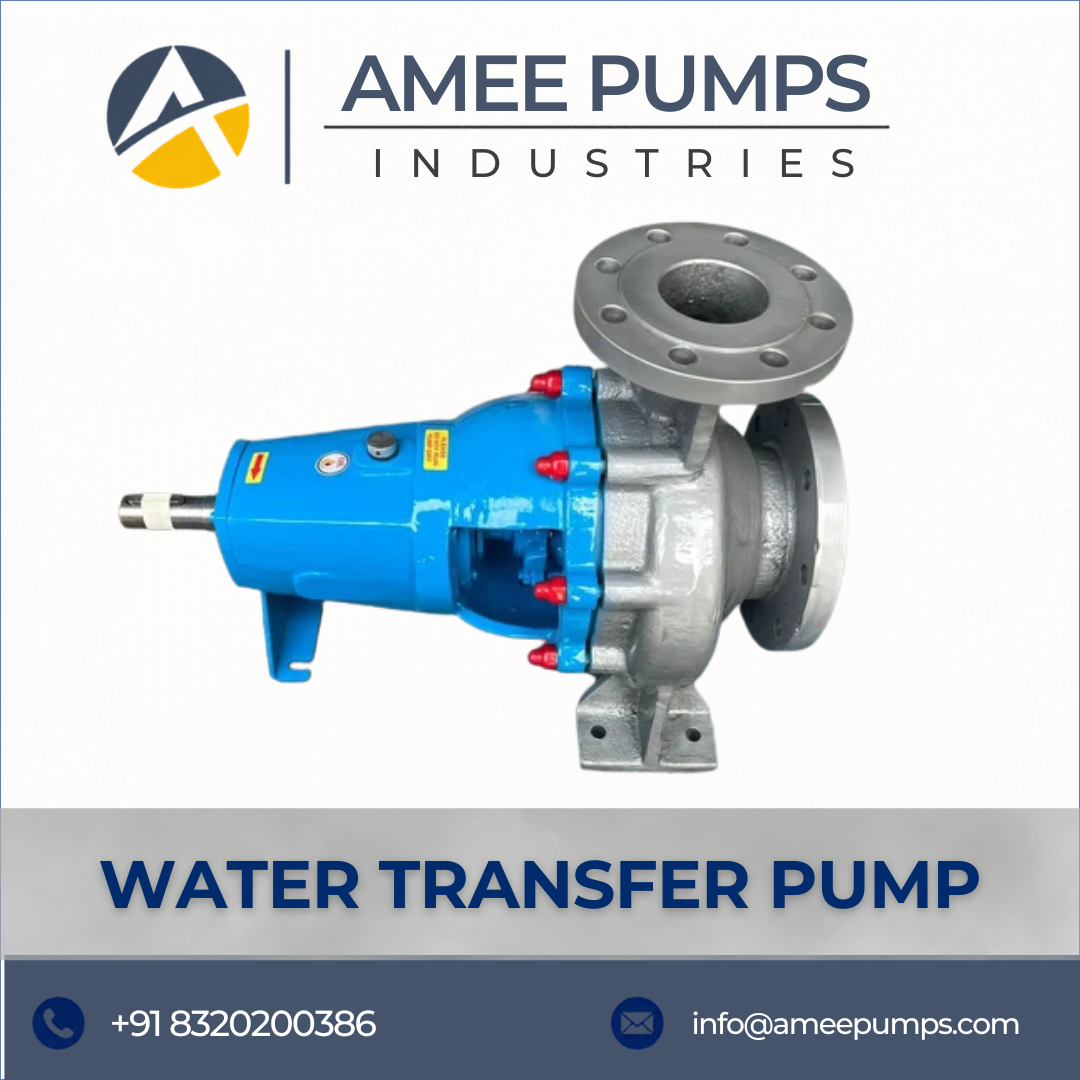
Water Transfer Pump
Reliable water transfer pumps for industrial needs in Ahmedabad. Explore Amee Pumps Industries' efficient and durable solutions, designed for optimal performanc
Key Features and Technical Specifications
- Flow Rate: Measured in liters per minute (LPM) or cubic meters per hour (m³/hr), indicating the volume of water the pump can move per unit of time.
- Head: The maximum vertical height or pressure the pump can overcome, crucial for applications involving elevation changes or resistance.
- Motor Power: Typically ranging from fractional horsepower to several hundred horsepower, determining the pump's overall capacity and performance.
- Suction Lift: The maximum vertical distance the pump can draw water from a source below its operating level.
- Discharge Pressure: The pressure at which the pump delivers water, important for overcoming system resistance.
- Materials of Construction: Options include cast iron, stainless steel, or specialized alloys, selected based on fluid corrosivity and abrasion resistance.
- Sealing Mechanism: Mechanical seals or gland packing to prevent leakage where the shaft enters the pump casing.
- Impeller Type: Designs vary (e.g., closed, open, vortex) to suit different fluid viscosities and solids content.
Industrial Applications and Use Cases
- Process Water Supply: Delivering water for manufacturing processes in chemical plants, food and beverage facilities, and textile mills.
- Wastewater Management: Pumping effluent and wastewater from industrial sites to treatment facilities or discharge points.
- Cooling Systems: Circulating water for cooling towers and heat exchangers in power plants and manufacturing operations.
- Irrigation: Supplying water for agricultural needs in surrounding rural areas or for landscaping at industrial complexes.
- Dewatering: Removing water from construction sites, mines, or flooded areas.
- Fire Fighting Systems: Providing a reliable water source for industrial fire suppression systems.
- General Fluid Transfer: Moving water between tanks, reservoirs, or different process stages within a facility.
How to Choose the Right Water Transfer Pump
Selecting the appropriate water transfer pump is a critical decision that impacts operational efficiency and longevity. Consider these factors:
- Application Requirements: Clearly define the required flow rate and head for your specific task.
- Fluid Characteristics: Assess the water's temperature, viscosity, and presence of solids or corrosive elements.
- Power Source Availability: Determine if an electric motor, diesel engine, or other power source is most suitable.
- Installation Environment: Consider space constraints, ambient temperature, and potential exposure to elements.
- Material Compatibility: Ensure pump materials can withstand the fluid being handled and the operating conditions.
- Efficiency and Energy Consumption: Look for pumps designed for optimal energy efficiency to reduce operating costs.
- Reliability and Durability: Prioritize robust construction and proven performance for long-term service.
- Supplier Support: Evaluate the availability of technical assistance, spare parts, and after-sales service.
Quality Standards and Compliance
For industrial water transfer pumps, adherence to recognized quality standards is non-negotiable. Buyers should verify that the pumps meet relevant national and international standards. This includes checking for compliance with specifications set by the Bureau of Indian Standards (BIS) for pumps intended for use in India, such as IS 1520/IS 14220 for centrifugal pumps. International standards like ISO 9001 for quality management systems are also indicators of a manufacturer's commitment to quality.
Compliance ensures that the pump has undergone rigorous testing for performance, safety, and durability, providing assurance that it will operate reliably under demanding industrial conditions and meet regulatory requirements.
Why Amee Pumps Industries' Experience and Capability Matters
At Amee Pumps Industries, our two decades of experience, led by Mr. Amit Panchal, have been dedicated to mastering the intricacies of pump design and manufacturing. Our approach is rooted in a deep understanding of industrial fluid dynamics and a commitment to practical, efficient engineering. We leverage technology-driven processes to ensure precision in every pump we build, allowing us to deliver solutions that are both highly effective and cost-efficient.
Our manufacturing facility in Ahmedabad is equipped to handle diverse requirements, from standard models to customized configurations. We focus on robust quality control at every stage, from material selection to final testing, ensuring each water transfer pump meets stringent performance benchmarks. This dedication to engineering excellence and customer satisfaction is why industries in Ahmedabad and beyond trust Amee Pumps for their critical fluid transfer needs.
Installation, Maintenance, and Care Tips
Proper installation is the first step to ensuring your water transfer pump performs optimally. Ensure the pump is securely mounted on a solid foundation to minimize vibration. Connect piping with proper support to avoid undue stress on the pump casing. For electric pumps, ensure the power supply is correctly rated and protected.
Regular maintenance is key to extending the pump's lifespan. This includes periodic checks of lubrication levels, seals, and bearings. Monitor for any unusual noises or vibrations, which could indicate a developing issue. Keep the pump and surrounding area clean, free from debris that could obstruct airflow or clog intake screens. Follow the manufacturer's recommended service intervals for more in-depth inspections and part replacements.
Frequently Asked Questions
The primary function is to efficiently move water from a source to a destination, supporting various industrial processes such as supplying process water, managing wastewater, or facilitating cooling systems.
You need to analyze your specific process requirements, including the volume of water needed per hour and the total vertical distance or pressure the pump must overcome to deliver the water effectively.
Standard pumps are typically designed for clean or lightly contaminated water. For fluids with significant solids, abrasives, or corrosive properties, specialized pump designs and materials of construction are necessary.
The material of construction is crucial as it determines the pump's resistance to corrosion and abrasion from the fluid being handled, directly impacting its durability and lifespan in specific industrial environments.
Maintenance frequency depends on the pump's usage and operating conditions. However, regular visual inspections should be conducted weekly, with more detailed checks and lubrication performed monthly or quarterly as per the manufacturer's guidelines.
First, check for common issues like clogged intake screens, air leaks in the suction line, or low voltage. If the problem persists, consult the pump's manual or contact a qualified service technician for diagnosis and repair.
Conclusion
Selecting the right water transfer pump in Ahmedabad is a decision that requires careful consideration of your specific industrial needs, from flow and head requirements to fluid characteristics and operating conditions. Amee Pumps Industries brings two decades of expertise and a commitment to quality and efficiency to help you find a reliable solution. By focusing on robust engineering, durable materials, and practical design, we ensure our pumps contribute to the smooth and uninterrupted operation of your critical processes.
Get In Touch
Amee Pumps Industries
