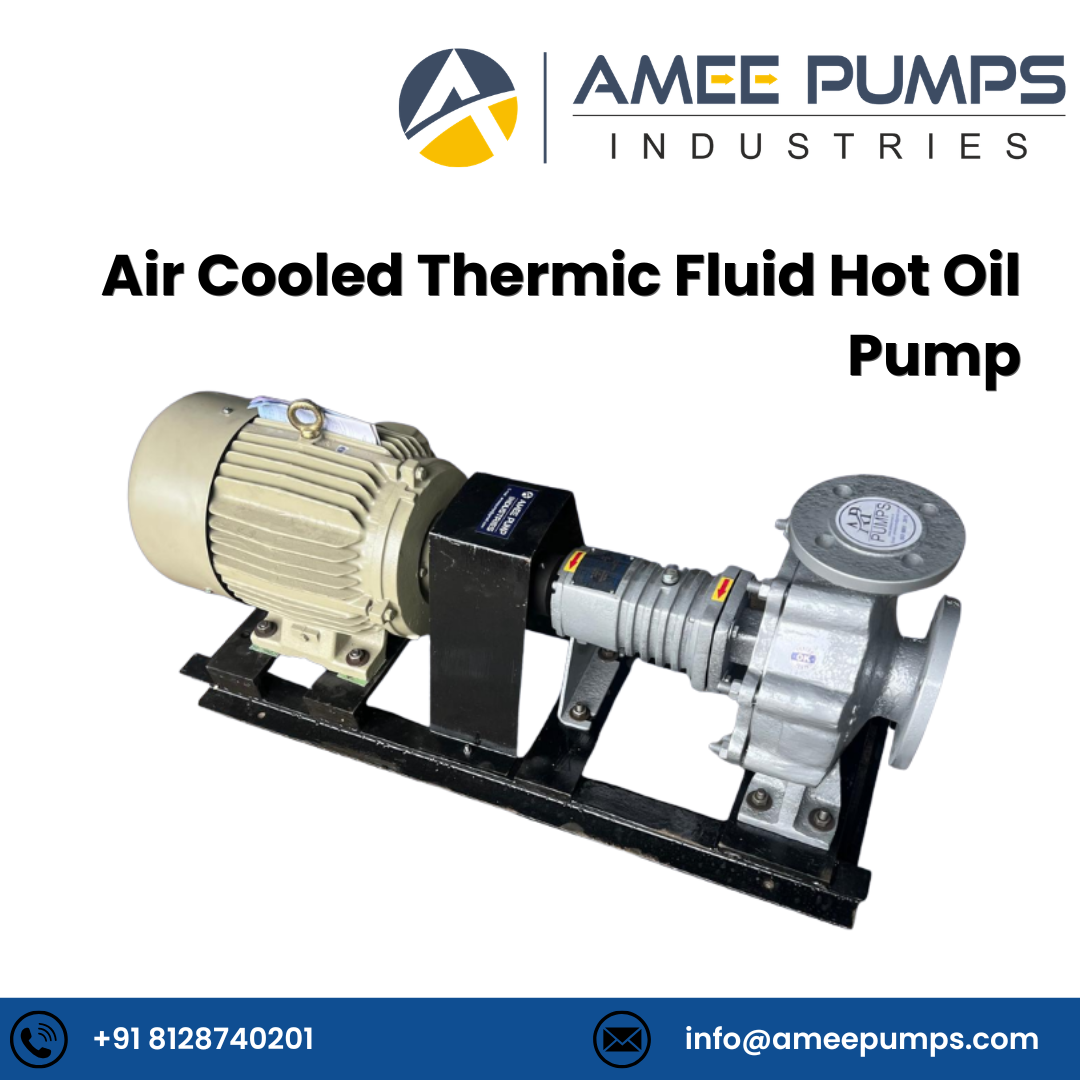
Air Cooled Thermic Fluid Hot Oil Pump
Expertly designed Air Cooled Thermic Fluid Hot Oil Pumps for industrial heating applications in Ahmedabad. Reliable, efficient, and cost-effective solutions fro
What is an Air Cooled Thermic Fluid Hot Oil Pump? — Overview
An air-cooled thermic fluid hot oil pump is a specialized piece of equipment designed to circulate synthetic thermal fluids or mineral oils at high temperatures, typically ranging from 150°C to 300°C (and sometimes higher). Unlike standard pumps, these units are engineered to withstand extreme heat and the specific properties of thermic fluids, which often have higher viscosity and different lubrication characteristics than water.
The "air-cooled" aspect refers to the pump's design, which often incorporates features like extended shafts, glandless construction (like magnetic drive or mechanical seals specifically designed for high temperatures), and sometimes external cooling fins or fans to manage the heat generated by the fluid and the motor. This design minimizes the risk of thermal shock to the pump components and ensures reliable operation without the need for a separate water cooling system, making them ideal for many industrial environments.
Key Features and Technical Specifications
When evaluating an air-cooled thermic fluid hot oil pump, several key features and specifications are crucial for ensuring optimal performance and longevity:
- High-Temperature Seals: Utilizes specialized mechanical seals or magnetic drives designed to prevent leakage of hot oil and withstand extreme operating temperatures.
- Robust Casing Material: Constructed from materials like cast iron or stainless steel capable of handling high temperatures and the chemical properties of thermic fluids.
- Extended Shaft Design: Often features an extended shaft between the pump and motor to isolate the motor from the pump's heat, reducing thermal stress.
- Efficient Cooling Mechanism: Incorporates air-cooling fins, a fan, or an extended bearing housing to dissipate heat effectively.
- Back Pull-Out Design: Facilitates easy maintenance by allowing the pump's rotating assembly to be removed without disturbing the casing or piping.
- API 610 Compliance (where applicable): Adherence to industry standards ensures a high level of design integrity and reliability for critical applications.
- Specific Flow and Head Ratings: Designed to meet the precise volumetric flow rate and pressure head requirements of the heating system.
- Flange Connections: Standardized flange sizes and ratings (e.g., ANSI/ASME) for seamless integration into existing piping systems.
Industrial Applications and Use Cases
Air-cooled thermic fluid hot oil pumps are vital components across a wide spectrum of industrial applications where precise temperature control at high levels is a necessity:
- Chemical Processing: Circulating hot oil for reactors, distillation columns, and heating jackets in chemical synthesis.
- Pharmaceutical Manufacturing: Providing controlled heating for drying ovens, sterilization equipment, and reaction vessels.
- Textile Industry: Supplying heat for dyeing machines, stenters, and fabric finishing processes.
- Food and Beverage Production: Heating for cooking kettles, pasteurizers, and industrial ovens.
- Plastic and Rubber Industries: Maintaining precise temperatures in extruders, molding machines, and calendering processes.
- Wood Processing: Heating for plywood manufacturing, particleboard production, and drying kilns.
- Oil and Gas Sector: Used in refineries for heating various process streams and in offshore applications.
- Automotive Manufacturing: Heating for paint curing ovens and component testing.
How to Choose the Right Air Cooled Thermic Fluid Hot Oil Pump
Selecting the correct air-cooled thermic fluid hot oil pump is critical for operational success. Consider these factors:
- System Requirements: Accurately determine the required flow rate (LPM/GPM) and total head (meters/feet) for your specific heating loop.
- Fluid Type and Temperature: Identify the exact thermic fluid used and its maximum operating temperature, ensuring the pump materials and seals are compatible.
- Operating Pressure: Confirm the maximum system pressure the pump will encounter.
- Motor Specifications: Select a motor with appropriate power (HP/kW), voltage, and enclosure type (e.g., TEFC) suitable for the industrial environment.
- Seal Type: Decide between mechanical seals (single or double, depending on fluid and pressure) or a magnetic drive for leak-free operation.
- Material Compatibility: Ensure all wetted parts (casing, impeller, shaft) are made of materials resistant to the thermic fluid and operating temperatures.
- Cooling Method: Verify the air-cooling mechanism is adequate for the ambient conditions and operating duty.
- Supplier Reputation and Support: Choose a manufacturer with a proven track record in thermic fluid pumps and strong after-sales service.
- Certifications and Standards: Look for pumps that meet relevant industry standards for safety and performance.
Quality Standards and Compliance
For air-cooled thermic fluid hot oil pumps, adherence to stringent quality standards and compliance with relevant regulations is non-negotiable. These pumps operate under demanding conditions, and failure can have significant consequences. Buyers should verify that the pumps meet or exceed standards such as:
ISO 9001: Indicates a robust quality management system in place at the manufacturing facility.
API 610: While primarily for petroleum, petrochemical, and gas industries, its principles of robust design, material selection, and testing are highly relevant for high-temperature, critical service pumps.
ASME Standards: For pressure vessel design and flange connections, ensuring mechanical integrity.
Local Indian Standards (IS): Where applicable, ensuring compliance with national safety and performance benchmarks.
A reputable manufacturer will readily provide documentation and certifications to demonstrate their commitment to quality and compliance, ensuring the pump is safe, reliable, and built to last.
Why Amee Pumps Industries' Experience and Capability Matters
At Amee Pumps Industries, our two decades of dedicated experience, led by seasoned professionals like Mr. Amit Panchal, have shaped our approach to designing and manufacturing air-cooled thermic fluid hot oil pumps. We understand that these systems are critical to your operations, not just components. Our manufacturing process is driven by a commitment to precision engineering and a deep understanding of thermal fluid dynamics.
We leverage technology not just for efficiency in design but to ensure each pump is built for reliability under high-temperature conditions. Our team's expertise allows us to tackle complex application challenges, ensuring that the pumps we deliver are perfectly suited to your specific industrial needs in Ahmedabad and beyond. This focus on technical capability, rigorous quality control, and a proven track record of successful project delivery makes us a trusted partner for your high-temperature fluid circulation requirements.
Installation, Maintenance, and Care Tips
Proper installation and consistent maintenance are key to maximizing the lifespan and performance of your air-cooled thermic fluid hot oil pump.
Installation
Ensure the pump is installed on a solid, level foundation to minimize vibration.
Align the pump and motor shafts precisely to prevent premature bearing and seal wear.
Connect piping carefully, avoiding any strain on the pump casing.
Purge the system thoroughly to remove air and contaminants before initial startup.
Follow the manufacturer's specific startup procedures, especially regarding initial heating rates.
Maintenance
Regularly inspect seals for any signs of leakage.
Check bearing housing temperatures and lubrication levels.
Monitor pump performance (pressure, flow, vibration) for deviations from normal operating parameters.
Periodically inspect the air-cooling fins or fan for blockages or damage.
Adhere to the recommended schedule for thermic fluid analysis and replacement.
Never operate the pump dry or with insufficient fluid.
Care:
Avoid rapid temperature changes, as they can cause thermal shock.
Ensure the thermic fluid is kept clean and free from moisture and air.
- Always follow the recommended shutdown procedures to cool the system gradually.
Frequently Asked Questions
The primary function is to circulate specialized thermal fluids at high temperatures (typically 150°C to 300°C) within industrial heating systems. This ensures precise temperature control for various manufacturing processes that require heat beyond the capabilities of water-based systems.
An air-cooled design utilizes ambient air, often with the aid of fins, fans, or extended shafts, to dissipate heat from the pump and motor. This eliminates the need for a separate water cooling circuit, simplifying installation and reducing operational complexity, especially in environments where water is scarce or undesirable.
Thermic fluid systems offer more precise temperature control, operate at lower pressures for equivalent temperatures, reduce scaling and corrosion issues common with steam, and can achieve higher temperatures more efficiently. They also avoid the risks associated with high-pressure steam leaks.
Industries such as chemical processing, pharmaceuticals, textiles, food and beverage, plastics, rubber, and oil and gas frequently utilize these pumps for heating reactors, drying ovens, molding machines, and various other high-temperature applications.
Longevity is ensured through proper selection based on system requirements, correct installation, adherence to recommended operating procedures (avoiding rapid temperature changes, never running dry), regular maintenance checks on seals and bearings, and maintaining the quality of the thermic fluid itself.
Typical maintenance includes regular inspection of mechanical seals for leaks, monitoring bearing temperatures and lubrication, checking the effectiveness of the air-cooling system, and periodic analysis of the thermic fluid. Following the manufacturer's specific maintenance schedule is crucial.
Conclusion
For industries in Ahmedabad requiring reliable high-temperature fluid circulation, the air-cooled thermic fluid hot oil pump is an essential piece of equipment. Its ability to handle extreme temperatures efficiently and safely makes it indispensable for processes in chemical, pharmaceutical, textile, and many other manufacturing sectors. Choosing the right pump involves a careful assessment of system requirements, fluid characteristics, and critical technical specifications.
Partnering with an experienced manufacturer like Amee Pumps Industries, with a proven track record in specialized pump design and a commitment to quality, ensures you receive a solution tailored to your operational needs. Proper installation, diligent maintenance, and adherence to best practices will guarantee the longevity and optimal performance of your investment, keeping your critical industrial processes running smoothly and efficiently.
---
Get In Touch
Amee Pumps Industries
