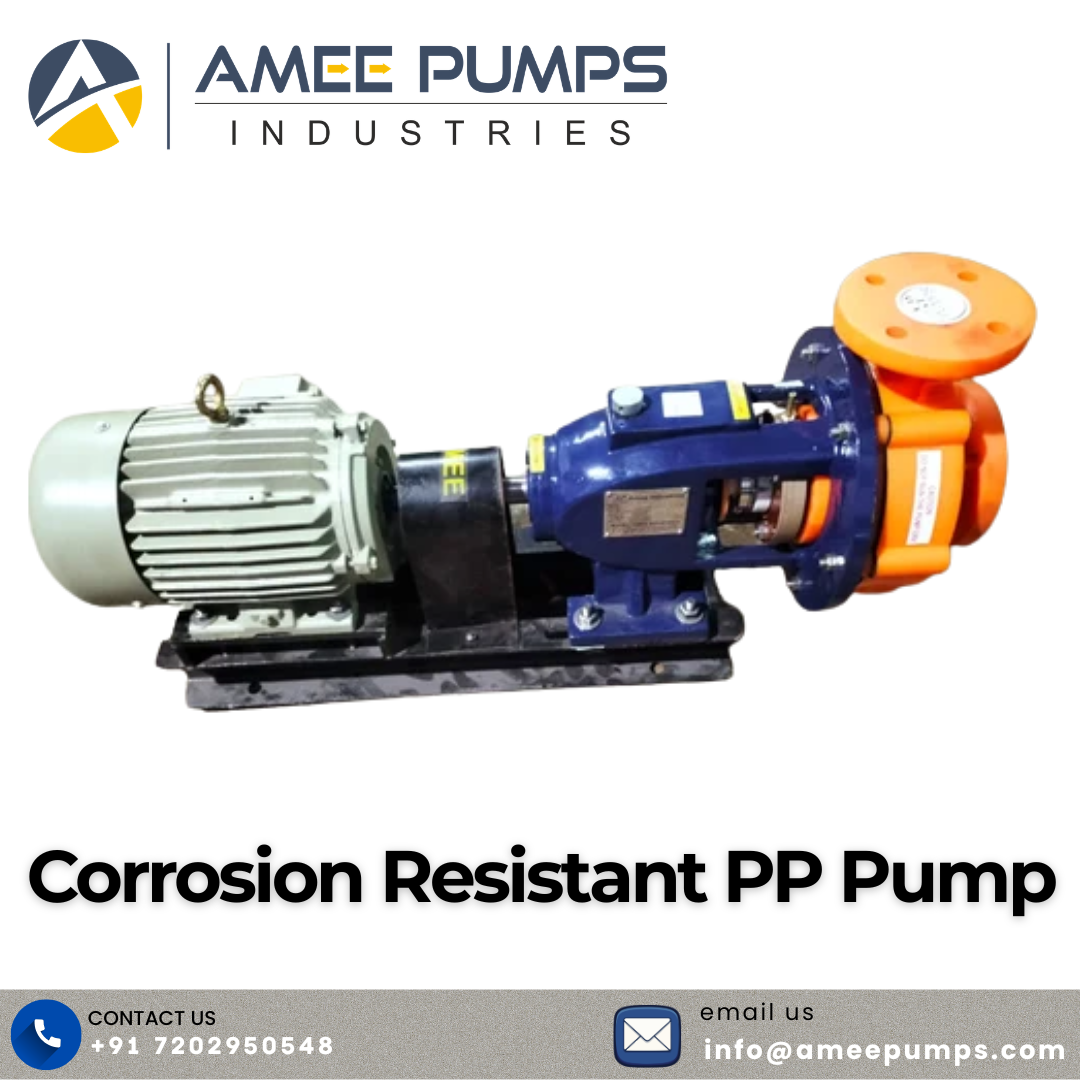
Corrosion Resistant PP Pump
Discover durable Corrosion Resistant PP Pumps in Ahmedabad. Amee Pumps Industries offers reliable, high-performance solutions for chemical and industrial applic
What is a Corrosion Resistant PP Pump? — Overview
A corrosion resistant PP pump is a type of centrifugal pump specifically designed for handling aggressive or corrosive liquids. The key differentiator is its construction material: polypropylene (PP). This thermoplastic polymer offers excellent resistance to a wide spectrum of chemicals, including strong acids, bases, and solvents, which would rapidly corrode conventional metal pumps. The pump's casing, impeller, shaft sleeve, and other wetted parts are typically made from high-grade polypropylene, ensuring that the fluid only comes into contact with chemically inert materials.
Key Features and Technical Specifications
- Material Construction: All wetted parts are made from virgin, high-density polypropylene for superior chemical resistance.
- Sealing Options: Available with various mechanical seal configurations (e.g., SiC/SiC, Ceramic/Carbon) to suit different chemical compatibility and operational needs.
- Flow Rate Capacity: Designed to handle flow rates typically ranging from 10 GPM to over 500 GPM, depending on the model.
- Head Pressure: Capable of generating heads from 20 feet up to 150 feet, suitable for various transfer and circulation duties.
- Temperature Resistance: Suitable for continuous operation at temperatures up to 80-90°C (176-194°F), depending on the specific PP grade and application.
- Design Standard: Often designed to meet international standards like ISO 2858 or DIN 24256 for interchangeability and performance.
- Motor Options: Can be coupled with standard electric motors, including explosion-proof (flameproof) options for hazardous environments.
- Compact Design: Generally features a back-pull-out design for easy maintenance without disturbing piping.
Industrial Applications and Use Cases
- Chemical Processing: Transferring acids (sulfuric, hydrochloric, nitric), alkalis, and solvents in chemical plants.
- Pharmaceutical Manufacturing: Handling purified water, process chemicals, and waste streams where purity and inertness are crucial.
- Electroplating and Metal Finishing: Circulating plating baths and rinse water containing corrosive chemicals.
- Wastewater Treatment: Pumping acidic or alkaline effluents and chemical treatment solutions.
- Textile Dyeing and Finishing: Transferring dyes, bleaching agents, and other process chemicals.
- Food and Beverage: Handling mild acids or cleaning solutions where non-contamination is vital.
- Water Purification: Dosing chemicals like chlorine or pH adjusters.
- Laboratory and Research: Moving various chemical reagents in research facilities.
How to Choose the Right Corrosion Resistant PP Pump
Selecting the appropriate corrosion resistant PP pump requires careful consideration of several factors to ensure optimal performance and longevity.
- Chemical Compatibility: Verify the specific chemical(s) to be pumped, their concentration, and operating temperature against the PP pump's material specifications.
- Flow Rate and Head Requirements: Determine the exact volume of liquid to be moved per unit time and the total dynamic head the pump needs to overcome.
- Operating Temperature: Ensure the pump's maximum operating temperature exceeds the highest expected fluid temperature.
- Solids Handling: If the fluid contains suspended solids, assess if the pump design can handle them without clogging or excessive wear.
- Seal Material: Choose mechanical seal materials compatible with the pumped fluid and operating conditions to prevent leakage.
- Motor Specifications: Select a motor with appropriate power, voltage, phase, and any necessary certifications (e.g., explosion-proof).
- Installation Environment: Consider space constraints, power availability, and whether the pump will be exposed to extreme conditions.
- Supplier Reputation and Support: Partner with a reputable manufacturer or supplier offering technical expertise and after-sales service.
Quality Standards and Compliance
When procuring corrosion resistant PP pumps, it's essential to ensure they meet recognized quality standards and compliance requirements. Look for pumps manufactured in accordance with international standards like ISO 2858 or DIN 24256, which dictate dimensions and performance characteristics for chemical process pumps. Certifications such as ISO 9001 for quality management systems indicate a manufacturer's commitment to consistent product quality. For specific applications, compliance with industry-specific regulations or material certifications (e.g., FDA compliance for certain food-grade applications) may be necessary. Verifying these aspects with the supplier ensures you receive a reliable and safe product.
Why Amee Pumps Industries' Experience and Capability Matters
At Amee Pumps Industries, our two decades of experience, led by Mr. Amit Panchal, have instilled a deep understanding of the challenges faced by industries in Ahmedabad and beyond when handling corrosive fluids. We leverage a technology-driven approach to design and manufacture corrosion resistant PP pumps that offer both precision and cost-effectiveness. Our manufacturing processes are honed for efficiency, allowing us to deliver reliable solutions without compromising on quality.
Our team's expertise ensures that each pump is engineered to meet stringent performance requirements and chemical resistance needs. We focus on robust quality control throughout the manufacturing cycle, from material selection to final testing. This dedication translates into pumps that provide dependable service, minimizing downtime and operational risks for our clients. Our commitment extends to providing comprehensive support, ensuring you receive a pump solution that truly fits your application.
Installation, Maintenance, and Care Tips
Proper installation and regular maintenance are crucial for maximizing the lifespan and performance of your corrosion resistant PP pump.
- Installation: Ensure the pump is installed on a solid, level foundation. Align the motor and pump shafts accurately if they are coupled. Connect piping carefully, avoiding undue stress on the pump casing. Ensure proper ventilation for the motor.
- Priming: For centrifugal pumps, ensure the pump casing is filled with liquid (primed) before starting to prevent dry running, which can damage seals and impellers.
- Seal Monitoring: Periodically check the mechanical seal for any signs of leakage. Minor weeping might be normal for some seal types, but significant leakage indicates a need for inspection or replacement.
- Vibration and Noise: Listen for unusual vibrations or noises during operation. These can be indicators of bearing issues, impeller imbalance, or cavitation.
- Cleaning: If the pumped fluid is prone to crystallization or fouling, periodic flushing or cleaning of the pump internals may be necessary.
- Temperature Checks: Monitor bearing housing temperatures if accessible; excessive heat can signal lubrication issues or bearing failure.
- Regular Inspections: Conduct visual inspections for any signs of wear, cracks, or corrosion on the pump casing or impeller, especially after prolonged use in aggressive media.
Frequently Asked Questions
Corrosion resistant PP pumps are highly effective for a broad range of chemicals, including most strong acids (like sulfuric, hydrochloric, nitric), alkalis (like sodium hydroxide), salts, and various organic solvents. However, it's crucial to consult specific chemical compatibility charts for extreme concentrations or specific solvent types, as some aggressive solvents can affect polypropylene over time.
Polypropylene offers an excellent balance of chemical resistance, mechanical strength, and cost-effectiveness compared to many other materials. While exotic alloys or lined pumps might offer broader resistance at higher temperatures or pressures, PP provides a robust and economical solution for many common corrosive fluids at moderate temperatures.
The lifespan of a PP pump can vary significantly based on the application, operating conditions, maintenance practices, and the specific chemical being handled. In ideal conditions with proper maintenance, these pumps can last for many years. However, exposure to extreme temperatures, abrasive solids, or incompatible chemicals can shorten their service life considerably.
While PP pumps are excellent for chemical resistance, their suitability for abrasive slurries depends on the pump design and the nature of the solids. Standard PP pumps with tight tolerances may not be ideal for highly abrasive media, as it can lead to rapid wear of the impeller and casing. Specialized designs or materials might be required for such applications.
Routine maintenance typically involves checking for leaks at the mechanical seal, monitoring for unusual vibrations or noise, ensuring proper lubrication of motor bearings, and periodic visual inspections of the pump's exterior. Depending on the application, internal inspections and cleaning might also be recommended.
Yes, polypropylene has a defined upper-temperature limit, generally around 80-90°C (176-194°F) for continuous operation, depending on the specific grade of PP and the mechanical stress on the material. Operating above this limit can lead to softening, deformation, and loss of structural integrity.
Conclusion
For industries in Ahmedabad and the wider Gujarat region that regularly handle corrosive chemicals, investing in a corrosion resistant PP pump is a strategic decision. These pumps offer a reliable, cost-effective solution that safeguards operations from the damaging effects of aggressive media. By understanding the specific requirements of your application, carefully selecting the right pump based on chemical compatibility, flow, and head, and ensuring proper installation and maintenance, you can achieve optimal performance and longevity. Partnering with experienced manufacturers like Amee Pumps Industries ensures you receive not just a product, but a durable solution backed by expertise.
Get In Touch
Amee Pumps Industries
