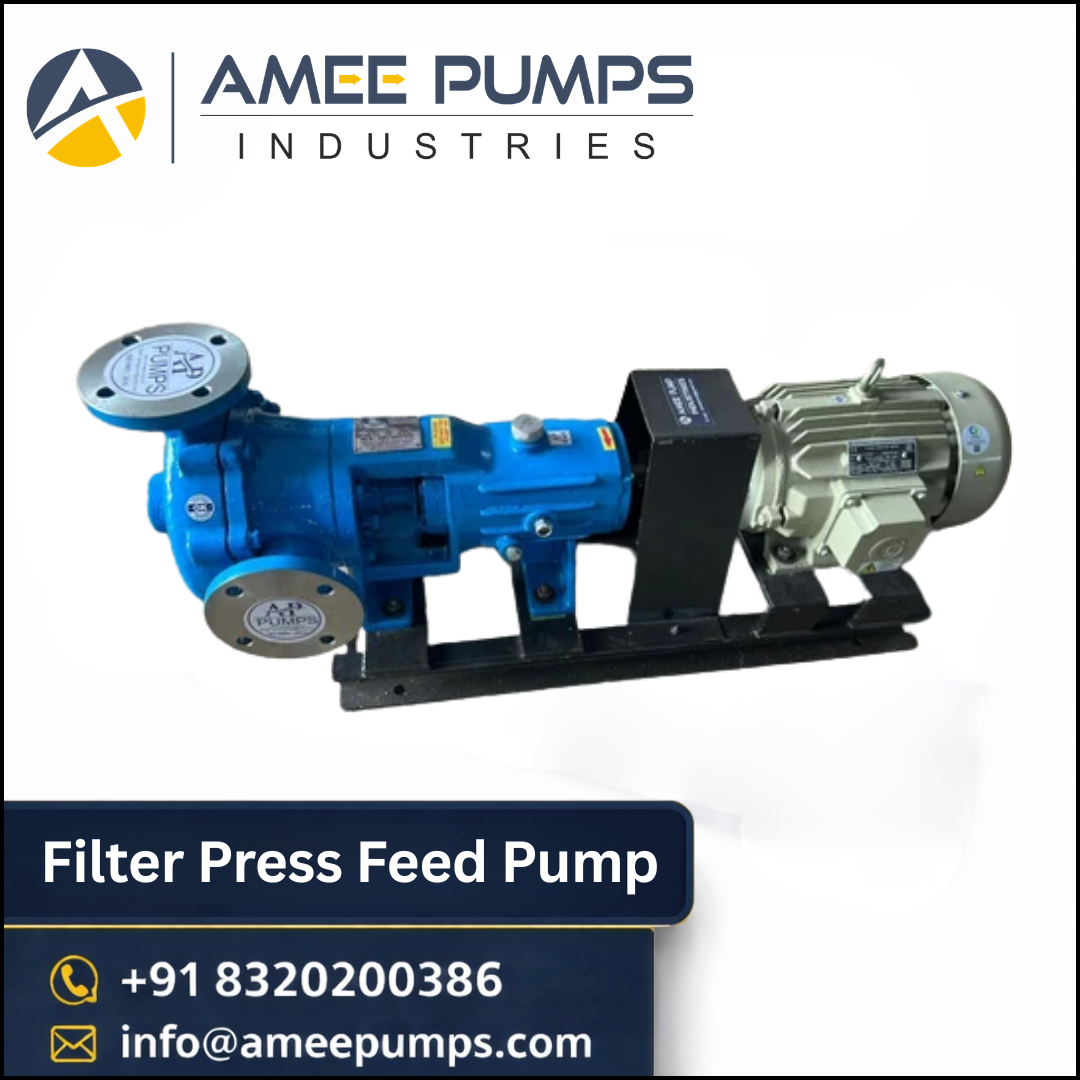
Filter Press Feed Pump
Reliable filter press feed pumps in Ahmedabad. Discover Amee Pumps Industries' expert solutions for efficient industrial fluid transfer and filtration.
What is a Filter Press Feed Pump? — Overview
A filter press feed pump is a specialized piece of equipment designed to deliver a slurry or suspension to a filter press at a controlled pressure and flow rate. Its primary function is to fill the filter press chambers evenly, allowing for efficient separation of solids from liquids. These pumps must be capable of handling varying viscosities, solids content, and potentially abrasive or corrosive media without compromising performance or longevity.
Key Features and Technical Specifications
When evaluating a filter press feed pump, several technical aspects are crucial for optimal performance and suitability for your specific application:
- Robust Construction: Materials like cast iron, stainless steel, or specialized alloys to withstand corrosive or abrasive media.
- Variable Flow and Pressure Control: Ability to adjust output to match filter press requirements and cake formation.
- High Solids Handling Capacity: Designed to pass suspended solids without clogging or excessive wear.
- Sealing Arrangements: Options for mechanical seals or gland packing to prevent leakage and ensure safety.
- Motor Efficiency: Energy-efficient motors to reduce operational costs.
- Impeller Design: Specific impeller types (e.g., open, semi-open, vortex) suited for slurry characteristics.
- Suction and Discharge Ports: Sized appropriately for the intended flow rate and media.
- Ease of Maintenance: Designed for straightforward access to wear parts for quick servicing.
Industrial Applications and Use Cases
Filter press feed pumps are indispensable across a wide array of industries that rely on solid-liquid separation:
- Chemical Processing: Transferring chemical slurries, pigments, and catalysts to filter presses for purification.
- Pharmaceuticals: Pumping active pharmaceutical ingredients (APIs) and intermediate slurries for sterile filtration.
- Food and Beverage: Handling fruit pulps, yeast slurries, and wastewater treatment sludge in food processing plants.
- Mining and Metallurgy: Moving mineral slurries, tailings, and metal concentrates for dewatering.
- Wastewater Treatment: Pumping sludge from primary and secondary treatment stages for dewatering.
- Textile Industry: Transferring dye slurries and wastewater for treatment in textile mills.
- Ceramics and Clay Processing: Pumping clay slips and glaze suspensions for filtration.
- Oil and Gas: Handling drilling muds and wastewater from exploration and refining processes.
How to Choose the Right Filter Press Feed Pump
Selecting the correct pump is vital for efficient filtration. Consider these factors:
- Slurry Characteristics: Viscosity, solids content, particle size, abrasiveness, and chemical composition.
- Required Flow Rate and Pressure: Determine the volume of slurry to be pumped and the pressure needed to fill the filter press effectively.
- Filter Press Size and Type: Match pump capacity to the filter press's operational parameters.
- Material Compatibility: Ensure pump materials are resistant to the chemicals and abrasives in the slurry.
- Operating Environment: Consider temperature, ambient conditions, and any hazardous area classifications.
- Power Source Availability: Ensure compatibility with available electrical supply.
- Maintenance and Support: Availability of spare parts and technical assistance from the manufacturer.
- Manufacturer's Expertise: Proven track record and understanding of filtration applications.
Quality Standards and Compliance
For any industrial pump, adherence to quality standards and compliance with relevant regulations is paramount. In India, this often includes certifications like ISI (Indian Standards Institution) or adherence to ISO (International Organization for Standardization) quality management systems. Manufacturers should be able to demonstrate rigorous quality control processes throughout their manufacturing cycle, from raw material inspection to final product testing. Buyers should verify that the pump's design and materials meet industry-specific requirements and any local environmental or safety regulations applicable in Ahmedabad and Gujarat. This ensures reliability, safety, and long-term performance.
Why Amee Pumps Industries' Experience and Capability Matters
With over a decade of experience since 2009, Amee Pumps Industries, led by Mr. Amit Panchal, brings a deep understanding of industrial fluid dynamics and pump engineering. Our tech-driven approach allows for precision in design and manufacturing, often reducing costs compared to traditional methods without compromising quality. We have a proven track record of delivering reliable solutions in complex industrial settings.
Our manufacturing facility in Ahmedabad is equipped to handle diverse requirements, ensuring that each filter press feed pump is built to perform. We focus on robust construction, efficient operation, and ease of maintenance, backed by a team with extensive technical expertise. This commitment to quality and customer satisfaction makes us a trusted partner for your filtration needs.
Installation, Maintenance, and Care Tips
Proper installation and regular maintenance are key to maximizing the lifespan and performance of your filter press feed pump.
Installation
Ensure the pump is installed on a solid, level foundation to minimize vibration.
Align the pump and motor shaft accurately if they are coupled.
Connect suction and discharge piping securely, avoiding excessive stress on the pump casing.
Prime the pump before initial startup if it is not self-priming.
Maintenance
Regularly inspect seals and packing for signs of wear or leakage.
Check lubrication levels for bearings and motor.
Listen for unusual noises or vibrations, which can indicate potential issues.
Clean strainers or filters on the suction line to prevent blockages.
Periodically inspect the impeller for wear or damage, especially when handling abrasive slurries.
Follow the manufacturer's recommended service intervals for bearing replacement or seal checks.
Care:
Avoid running the pump dry, as this can damage seals and bearings.
Do not operate the pump against a closed discharge valve for extended periods.
Flush the pump with clean water after handling corrosive or sticky materials to prevent buildup.
Store the pump properly if it will be out of service for an extended period.
Frequently Asked Questions
The primary role of a filter press feed pump is to deliver the slurry or suspension to the filter press chambers at a consistent and controlled rate and pressure. This ensures even cake formation and efficient separation of solids from liquids, which is critical for the overall filtration process.
Sizing involves considering the required flow rate to fill the filter press within an optimal timeframe, the operating pressure needed to overcome filter media resistance and achieve desired cake density, and the slurry's characteristics like viscosity and solids content. Consulting with the pump manufacturer is recommended.
Yes, many filter press feed pumps are specifically designed to handle abrasive materials. They are constructed with wear-resistant materials such as hardened alloys, rubber linings, or specialized coatings, and often feature designs like vortex impellers that minimize contact with abrasive particles.
Typical maintenance includes regular inspection of seals and bearings, checking lubrication, cleaning suction strainers, and monitoring for unusual noises or vibrations. Depending on the application, periodic checks of the impeller and casing for wear are also necessary.
Higher viscosity slurries require pumps with greater power and specific impeller designs to maintain flow without excessive energy consumption or cavitation. The pump's ability to handle shear-sensitive fluids is also a consideration, as some pump types can degrade the slurry.
Material selection is crucial to prevent corrosion, erosion, and premature wear caused by the pumped fluid. Choosing appropriate materials like stainless steel, cast iron, or specialized alloys ensures the pump's longevity, maintains fluid purity, and prevents contamination of the process stream.
Conclusion
For industries in Ahmedabad and across Gujarat, selecting the right filter press feed pump is a critical decision that directly impacts filtration efficiency, operational costs, and overall productivity. Understanding the specific demands of your slurry, the operational parameters of your filter press, and the technical capabilities of the pump manufacturer is essential. Amee Pumps Industries, with its deep-rooted expertise and commitment to quality, offers reliable and cost-effective solutions tailored to meet these precise industrial needs, ensuring your filtration processes run smoothly and efficiently.
Get In Touch
Amee Pumps Industries
