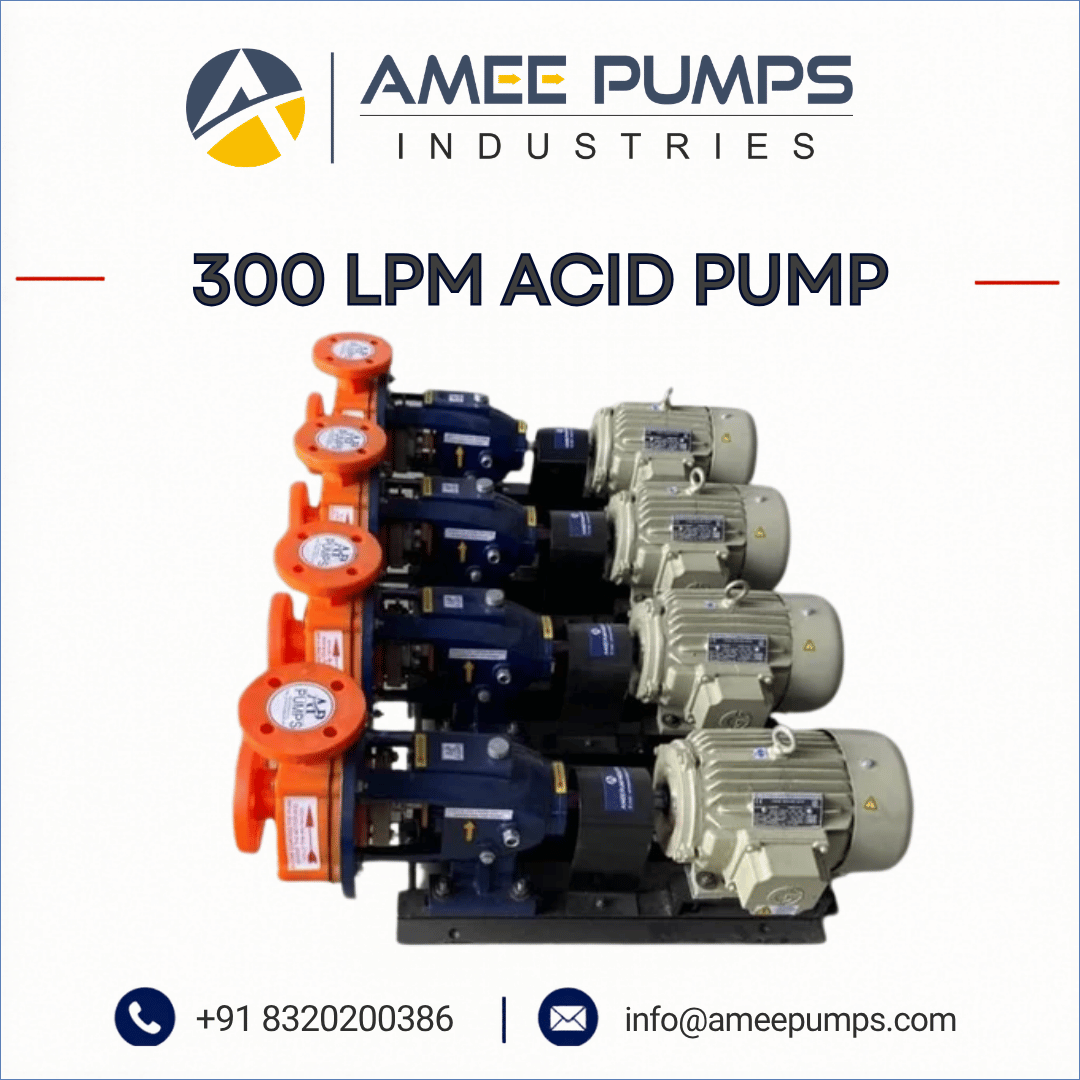
300 LPM Acid Pump
The safe and efficient transfer of corrosive acids is a paramount concern across numerous industries. A specialized 300 LPM acid pump is engineered to meet this challenge, providing reliable fluid handling solutions where standard pumps would fail. Understanding the capabilities and applications of these pumps is crucial for maintaining operational integrity, ensuring personnel safety, and preventing environmental contamination. This guide delves into the specifics of 300 LPM acid pumps, their construction, benefits, and how to select the right one for your demanding industrial needs.
Understanding the 300 LPM Acid Pump
An acid pump is designed with specific materials and construction techniques to withstand the highly corrosive nature of acids. The designation "300 LPM" refers to its volumetric flow rate capacity – 300 Liters Per Minute. This specific flow rate makes it suitable for a range of medium-duty industrial applications requiring a consistent and substantial volume of acid to be moved. These pumps are not generic; they are purpose-built for environments where chemical aggression is a constant factor, ensuring longevity and preventing leaks or failures that could have severe consequences.
The core principle behind an effective acid pump lies in its material compatibility. Common materials like standard metals can quickly degrade when exposed to strong acids, leading to contamination, pump failure, and safety hazards. Therefore, acid pumps are typically constructed from advanced polymers such as Polypropylene (PP) and Polyvinylidene Fluoride (PVDF), or specialized corrosion-resistant alloys. These materials are chosen for their inertness and ability to maintain structural integrity even in the presence of aggressive chemicals.
AMEE PUMPS INDUSTRIES, a manufacturer with a tech-driven approach since 2009, understands the critical nature of reliable fluid handling in chemical environments. They leverage their expertise to design and manufacture pumps that offer precision and cost-effectiveness, ensuring that industries have access to equipment that can safely manage challenging media like acids.
Key Applications for a 300 LPM Acid Pump
The versatility and robust design of a 300 LPM acid pump make it indispensable in various industrial sectors. Its ability to handle corrosive liquids safely and efficiently opens up numerous application possibilities:
Chemical Processing
Essential for transferring acids used in synthesis, reactions, and formulation processes within chemical plants.
Water & Effluent Treatment
Used for dosing acids in pH control, neutralization processes, and treatment of industrial wastewater.
Pharmaceuticals
Applicable in processes where acids are utilized for purification, extraction, or synthesis of pharmaceutical compounds.
Fertilizer Manufacturing
Facilitates the transfer of acids in the production of fertilizers and other agricultural chemicals.
Electroplating & Metal Finishing
Used in pickling, etching, and cleaning baths where acids are a key component.
Acid Circulation
Suitable for recirculating acids in industrial processes to maintain concentration or temperature.
Advantages of Using a 300 LPM Acid Pump
Investing in a properly designed 300 LPM acid pump offers significant operational and safety advantages:
Corrosion Resistance
Constructed from materials like PP and PVDF, offering superior resistance to a wide range of aggressive acids, ensuring pump longevity.
Enhanced Safety
Minimizes the risk of leaks and failures associated with incompatible materials, protecting personnel and the environment.
Operational Efficiency
Provides a consistent flow rate of 300 LPM, enabling predictable and efficient process operations.
Low Maintenance
Durable construction and robust materials reduce the frequency of maintenance and replacements, lowering operational costs.
Long Operational Life
Engineered for durability in harsh environments, offering a reliable service life even under continuous use.
Selecting the Right 300 LPM Acid Pump
Choosing the appropriate 300 LPM acid pump requires careful consideration of several factors to ensure optimal performance and safety. AMEE PUMPS INDUSTRIES emphasizes a meticulous approach to pump selection, aligning with their tech-driven design philosophy.
Crucial Selection Criteria:
Buyer Insight:
Always verify the exact type and concentration of the acid being pumped, as well as the operating temperature. These factors critically influence material selection and pump performance. Consult with experienced pump manufacturers like AMEE PUMPS INDUSTRIES to ensure compatibility.
- Material Compatibility: Confirm that the pump's wetted parts (impeller, casing, seals, shaft) are made from materials like PP or PVDF that are resistant to the specific acid being handled.
- Flow Rate & Pressure: While the target is 300 LPM, ensure the pump can maintain this flow under your system's specific operating pressure and head requirements.
- Seal Type: Decide between sealed or seal-less (magnetic drive) pumps based on your application's needs for leak prevention and maintenance.
- Motor & Power Supply: Ensure the motor is suitable for the environment and connected to a compatible power source.
- Installation & Maintenance: Consider the pump's footprint, ease of installation, and accessibility for routine maintenance.
Questions to Ask Before Buying:
What specific acids and concentrations can this pump handle effectively?
This is paramount. A pump rated for one acid may not be suitable for another. Always confirm compatibility with your specific chemical medium and its concentration.
What is the maximum operating temperature the pump can withstand?
Temperature significantly affects material properties and chemical aggressiveness. Ensure the pump's material and design can handle your process temperatures.
Does the pump meet safety standards for handling hazardous chemicals?
Look for pumps designed with safety as a priority, minimizing leak risks and ensuring robust construction for hazardous environments.
What is the expected lifespan and maintenance schedule for this pump?
Understanding maintenance requirements and projected service life helps in operational planning and cost assessment.
AMEE PUMPS INDUSTRIES: Your Partner in Acid Transfer Solutions
Founded in 2009 and led by Mr. Amit Panchal, AMEE PUMPS INDUSTRIES is dedicated to providing high-quality, reliable pumping solutions from their base in Ahmedabad, Gujarat, India. With a firm belief in a tech-driven approach, the company focuses on precision engineering and cost-effectiveness to deliver pumps that meet rigorous industrial demands.
AMEE PUMPS INDUSTRIES offers a comprehensive range of pumps, including specialized Acid Transfer Pumps designed to handle corrosive fluids safely. Their commitment to a 100% success rate on projects is a testament to their dedication to quality and customer satisfaction. By choosing AMEE PUMPS INDUSTRIES, you are partnering with a manufacturer that prioritizes robust design, material integrity, and efficient performance for your critical acid transfer applications.
Frequently Asked Questions about 300 LPM Acid Pumps
What makes a pump suitable for handling acids?
Pumps suitable for acids are constructed from chemically resistant materials like Polypropylene (PP) and PVDF, which do not react with or degrade when exposed to corrosive substances. They also feature designs that minimize potential leak points.
Can a 300 LPM acid pump be used for acids other than those it was initially specified for?
It is highly recommended to confirm compatibility for each specific acid and its concentration. Material compatibility is critical, and using a pump outside its specified chemical resistance range can lead to failure and safety hazards.
How does AMEE PUMPS INDUSTRIES ensure the quality of their acid pumps?
AMEE PUMPS INDUSTRIES employs a tech-driven approach, focusing on precision in design and manufacturing. They utilize appropriate corrosion-resistant materials and adhere to quality checks to ensure reliable performance for their acid pump offerings.
What are the benefits of using a Polypropylene (PP) pump for acid transfer?
Polypropylene offers excellent resistance to a wide range of acids and chemicals, is cost-effective, and provides good durability. PP pumps are a common choice for many industrial acid handling applications.
Ready to Secure Your Acid Transfer Operations?
Ensure the safety and efficiency of your chemical handling processes. Discover how AMEE PUMPS INDUSTRIES' specialized 300 LPM acid pumps can meet your unique operational requirements. Contact us today to discuss your project and find the perfect pumping solution.
Request a Consultation