Acid Transfer Pump Manufacturer in India
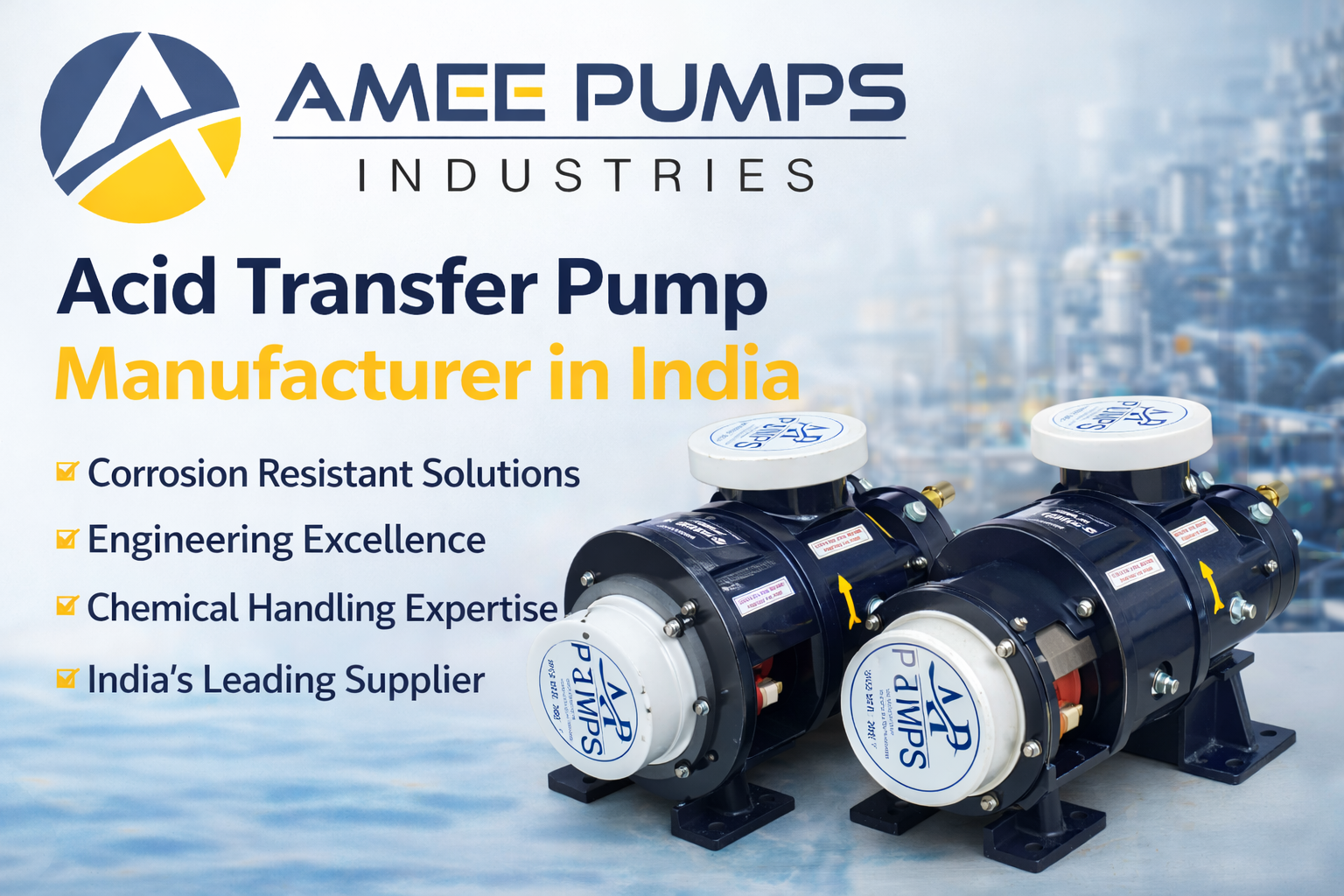
Acid Transfer Pump Manufacturer in India
Industrial operations involving corrosive liquids demand equipment engineered for safety, chemical compatibility, and long-term reliability. Acid transfer pumps play a critical role in moving aggressive acids across manufacturing, processing, and treatment systems without leakage, material degradation, or operational risk. As an established acid transfer pump manufacturer in India, AMEE Pumps Industries focuses on designing pumps that meet real-world industrial requirements rather than relying on generic performance claims.
With India's expanding chemical, pharmaceutical, and process industries, the demand for dependable acid handling solutions continues to rise. This content explains how acid transfer pumps function, where they are used, the engineering factors that matter most, and how Indian manufacturers support safe and efficient fluid transfer.
Understanding acid transfer pumps and their role in industry
An acid transfer pump is designed to safely move corrosive fluids such as sulfuric acid, hydrochloric acid, nitric acid, phosphoric acid, and other chemical solutions within controlled systems. Unlike standard water or oil pumps, these units must withstand chemical attack, temperature variations, and continuous-duty cycles without compromising structural integrity.
The design emphasis extends beyond flow and pressure to include material selection, sealing mechanisms, and operational stability. Acid transfer pumps are commonly integrated into pipelines, tanks, reactors, dosing systems, and effluent handling setups, where even minor leakage can create safety hazards or cause equipment damage.
Why acid handling requires specialized pump engineering
Acids react aggressively with many metals and elastomers, making conventional pump designs unsuitable for chemical transfer. Incorrect material selection can lead to corrosion, erosion, contamination, or sudden failure. For this reason, acid transfer pump manufacturing requires application-specific engineering rather than off-the-shelf solutions.
Key design challenges include chemical resistance, thermal stability, seal integrity, and vibration control. Pumps must also be designed to prevent vapor lock, minimize cavitation, and handle viscosity changes caused by varying acid concentrations. Manufacturers experienced in chemical pump engineering address these challenges from the initial design stage.
Core materials used in acid transfer pumps
Material compatibility forms the foundation of a reliable acid transfer system. Selection depends on the acid type, concentration, operating temperature, and flow conditions.
Seal and gasket elastomers must also be chosen carefully to avoid swelling, cracking, or loss of elasticity over time. An experienced acid transfer pump manufacturer in India evaluates these factors during design and testing to ensure long-term stability in demanding industrial environments.
Applications of acid transfer pumps across industries
Acid transfer pumps are used across multiple sectors where chemical handling is essential to operations. Their application extends well beyond chemical plants.
They are used in chemical processing units to transfer raw acids between storage tanks and reactors.
In pharmaceutical manufacturing, they handle acids used in synthesis and cleaning processes under strict hygiene and safety requirements.
Surface treatment and electroplating facilities rely on acid transfer pumps for bath circulation and controlled chemical dosing.
Water treatment and effluent plants use these pumps to manage acidic waste streams and neutralization processes.
Fertilizer and agrochemical industries depend on them for handling phosphoric and nitric acids.
Battery manufacturing units use acid transfer pumps for electrolyte handling during production and maintenance.
How acid transfer pumps are manufactured in India
India has developed into a strong manufacturing base for industrial pumps due to skilled engineering resources, advanced fabrication capabilities, and growing domestic demand. Acid transfer pump manufacturers in India generally follow a structured process that balances performance, durability, and adherence to industrial standards.
Manufacturing begins with a clear understanding of application-specific requirements such as flow rate, head, temperature, and chemical composition. This is followed by detailed design calculations, material selection, and component fabrication using precision machining or molding processes. Pumps are assembled with controlled tolerances to ensure proper sealing and mechanical alignment.
Before dispatch, pumps undergo performance testing, pressure verification, and leakage inspection to confirm reliability under simulated operating conditions. This approach supports consistent quality and predictable field performance.
Key design features that improve operational safety
Safety remains a critical consideration when transferring acids. Well-engineered acid transfer pumps incorporate features that reduce risk and enhance operational control.
For certain applications, pumps may also be designed to tolerate brief dry running or sudden flow changes without damage. These factors are addressed during design by manufacturers experienced in chemical-duty pumping systems.
Selecting the right acid transfer pump for your application
Selecting the correct pump is essential for safe and efficient acid handling. The process should always be based on accurate application data rather than generic specifications.
Key considerations include the type of acid, concentration level, operating temperature, required flow rate, discharge head, and installation layout. Environmental factors such as ambient temperature and exposure conditions also influence material and design decisions.
Buyers should assess manufacturer experience, testing practices, and technical support capabilities before finalizing a pump. A manufacturer that understands process conditions can recommend configurations that reduce maintenance issues and extend service life.
Why Indian manufacturers are preferred for acid transfer pumps
Indian pump manufacturers are increasingly trusted in domestic and export markets for delivering engineered solutions instead of standardized products. Their familiarity with diverse industrial operating conditions enables them to design pumps that perform reliably in real-world environments.
Manufacturing in India also supports customization, shorter lead times, and effective communication during project execution. Many manufacturers emphasize continuous improvement in design and production practices, helping maintain consistent quality across product ranges.
As an acid transfer pump manufacturer in India, AMEE Pumps Industries aligns its engineering approach with industrial process needs, ensuring pumps are designed for function, safety, and durability rather than promotional appeal.
Maintenance considerations for acid transfer pumps
Regular maintenance is essential to maintain performance and prevent unplanned downtime. Acid transfer pumps should be inspected periodically for seal condition, bearing wear, and casing integrity.
Manufacturers typically provide maintenance guidelines specific to pump design and application, supporting safe and efficient operation throughout the pump's service life.
Compliance and quality standards in acid pump manufacturing
Industrial buyers increasingly expect pumps to meet defined quality and safety benchmarks. Acid transfer pump manufacturers in India generally follow standardized manufacturing practices and structured quality control processes.
These include dimensional inspection, material verification, and performance testing under controlled conditions. Supporting documentation related to materials, test results, and operating instructions enhances transparency and builds trust.
Such practices help ensure compliance with industrial expectations and contribute to long-term confidence in pump reliability.
Frequently Asked Questions
Acid transfer pumps can handle a wide range of acids, including sulfuric, hydrochloric, nitric, phosphoric, and various organic acids, depending on material compatibility and pump design.
Material selection is based on the acid type, concentration, operating temperature, and service conditions, guided by compatibility data and application experience.
When designed correctly, acid transfer pumps can operate continuously within specified limits without compromising safety or performance.
Chemical processing, pharmaceuticals, water treatment, surface finishing, fertilizers, batteries, and agrochemical industries commonly rely on acid transfer pumps.
Seal design is critical because it prevents leakage, protects personnel, and maintains system safety when handling corrosive fluids.
Many manufacturers offer customization based on flow requirements, installation constraints, and chemical properties.
Get in Touch
Conclusion
Acid transfer pumps are essential components in industries that depend on safe and efficient chemical handling. Their design, material selection, and manufacturing quality have a direct impact on operational safety and reliability. As industrial activity in India continues to expand, the need for dependable acid handling solutions remains strong.
Selecting an experienced acid transfer pump manufacturer in India ensures that pumps are engineered with a clear understanding of chemical behavior, process conditions, and long-term performance requirements. Through precision engineering and practical design, manufacturers such as AMEE Pumps Industries contribute to safer and more efficient industrial fluid transfer systems across the country.
Our Blogs
- Acids Transfer PVDF Chemical Pump
- Air Cooled Pump Set
- Thermic Fluid Hot Oil Air Cooled Pump
- Air Operated Double Diaphragm SS 316 Pump
- AODD Pump PVDF MOC
- Centrifugal End Suction Pump
- High Pressure Centrifugal Pump
- Vertical Centrifugal Pump
- Hygienic Centrifugal Pump
- Petroleum Industry Centrifugal Process Pump
- Self Priming Boiler Feed Pump
- Bare Shaft PP Pump
- Self Priming Monoblock Mud Pump
- Hot Oil Centrifugal Pump
- Horizontal Centrifugal Back Pull Out Bare Shaft Coupled Pump
- Teflon Line Centrifugal Process Pump
- Corrosion Resistant Pump
- Semi Open Impeller Centrifugal Pump
- Corrosion Resistant Polypropylene Pump
- Boiler Feed Pump
- 20 LPM Oil Gear Pump
- PVDF Loading Unloading Centrifugal Pump
- Vertical Extended Shaft Slurry Pump
- Pneumatic Air Operated Double Diaphragm Pump
- CF Series Stainless Steel Centrifugal Pump
- Oil Transfer Rotary Gear Pump
- High Temperature Pump
- Horizontal Centrifugal End Suction Pump
- Sewage Plants Self Priming Mud Pump
- Caustic Vertical Pump
- Polypropylene Gland Less Pump
- 300 LPM Acid Pump
- Single Stage Centrifugal Back Pull Out Pump
- Water Treatment Centrifugal Back Pull Out Pump
- Vertical Extended Shaft Sump Pump
- Horizontal Slurry Pump
- Mechanical Diaphragm Dosing Pump
- 2 HP Centrifugal Pump
- Vertical Long Shaft Sump Pump
- Stainless Steel Pump
- Centrifugal Circulation Process Pump
- Thermic Fluid Hot Oil Pump
- Self Priming Non Clog SS 316 Mud Pump
- Vertical Long Shaft Submerged Centrifugal Pump
- High Pressure Multi Stage Boiler Feed Pump
- Vertical Sump Pump
- Side Suction Pump
- Polypropylene Descaling Pump
- Non Clog Impeller Pump
- High Discharge Pump
- Filter Press Feeding Pump
- Polypropylene Chemical Process Pump
- Magnetic Drive Polypropylene Pump
- Water Circulation Pump
- Non Metallic Pump
- Side Suction Bare Shaft Pump
- SS 304 Centrifugal Fabricated Pump
- SS316 Rotary Gear Pump
- Centrifugal Flameproof Pump
- Corrosion Resistant PVDF Chemical Pump
- Centrifugal Pump Closed Impeller
- Stainless Steel Centrifugal Pump
- Corrosion Resistant PP Pump
- Heavy Duty Rotary Gear Pump
- External Gear Pump
- SS 316 AODD Pump
- Self Priming Non Clog Mud Pump
- Hot Oil Circulation Pump
- Internal Gear Pump
- Pneumatic Double Diaphragm Pump
- Thermic Fluid Boiler Feed Pump
- Magnetic Chemical Pump
- ETP Slurry Pump
- Filter Press Feed Pump
- Water Transfer Pump
- PVDF Lined Chemical Process Pump
- Industrial Chemical Process Pump
- SS Chemical Transfer Pump
- Vertical Single Stage Centrifugal Pump
- Hot Oil Circulation Pump in India
- Centrifugal Pump Manufacturers & Suppliers in India
- Chemical Process Pump Manufacturer in India
- Horizontal Single Stage Centrifugal Pump
- Self Priming Stainless Steel Pump
- Rotary Gear SS 316 Pump
- PVDF Chemical Pump in India
- PP AODD Pump
- PP Chemical Process Pump
- Vertical Long Shaft Sump Pump
- Air Cooled Thermic Fluid Hot Oil Pump
- Centrifugal Chemical Process Pump
- Air Operated Diaphragm Pneumatic Pump
- Industrial AODD Pump
- SS Air Operated Diaphragm Pump
- Air Cooled Pump Manufacturer & Supplier in India
- AIR COOLED HOT OIL PUMP
- PP Air Operated Double Diaphragm Pumps
- Vertical Inline Single Stage Centrifugal Pump
- Magnetic Drive Acid Handling Pump
- PVDF LINED CENTRIFUGAL PUMP
- Horizontal Single Stage Centrifugal Pumps
- SS 316 Pumps Centrifugal Chemical Transfer
- Pvdf Chemical Process Pump
- Self Priming Stainless Steel Pump in india
- SS TWIN LOBE PUMP
- SS ROTARY GEAR PUMP
- HOT OIL AIRCOOLED PUMP
- SS CENTRIFUGAL PUMPS IN INDIA
- SS GEAR PUMP IN INDIA
- PVDF MAGNATIC DRIVE PUMP
- Filter Press Side Suction Pump
- CHEMICAL PROCESS PUMP
- CENTRIFUGAL COUPLED PUMP
- THERMIC FLUIED AIR COOLED PUMP
- Lobe Pump in India
- SS Self Priming Mud Pump in Gujarat
- Solvent Transfer Pump in Gujarat
- PVDF Centrifugal Pump in Ahmedabad
- Rotary Lobe Pump in Ahmedabad
- End Suction Pumps Gujarat
- SS Centrifugal Pump in Gujarat
- Solvent Transfer Pump in Ahmedabad
- Vertical Seal Less Gland Less PP Pump in Ahmedabad
- VERTICAL SEAL LESS GLAND LESS PP PUMP
- PP SELF PRIMING PUMP
- SOLVENT TRANSFER PUMP
- SS CENTRIFUGAL PUMP
- ROTARY GEAR PUMP
- CENTRIFUGAL PP PUMP
- CHEMICAL PROCESS CENTRIFUGAL PUMP
- ROTARY LOBE PUMP
- Filter Press Side Suction Pump in Gujarat
- Air Cooled Thermic Fluid Pump in India
- SS Centrifugal Monoblock Pump in Ahmedabad
- MAGNATIC DRIVE CENTRIFUGAL PUMP
- ACID APPLICATION PUMP
- AIR OPERATED DOUBLE DIAPHRAGAM PUMP
- LOBE PUMP
- HORIZONTAL CENTRIFUGAL PUMP
- SS GEAR PUMP
- FIRE FIGHITING PUMPS
- FILLTER PRESS PUMP
- BACK PULL OUT SS CENTRIFUGAL PUMP
- PP SELF PRIMING PUMP
- Horizontal Back Pull Out End Suction Pumps in India
- Hot Oil Pump in Gujarat
- PVDF Centrifugal Pump in Gujarat
- Centrifugal Pump
- Thermic Fluid Air Cool Pump
- PP Pump
- PVDF Centrifugal Pump Manufacturers in Gujarat
- End Suction Pumps in Ahmedabad
- Bentonite Pumps in Gujarat
- SS SELF PRIMING MUD PUMP
- PP MONOBLOCK PUMP
- SS CENTRIFUGAL MONOBLOCK PUMP
- LOBE PUMP
- FILLTER PRESS SIDE SUCTION PUMP
- HOT OIL PUMP
- AIR COOLED THERMIC FLUID PUMP
- PVDF CENTRIFUGAL PUMP MANUFACTURERS IN AHMEMDABAD
- Magnetic Drive PP Pump
- Horizontal Back Pull Out End Suction Pumps in Gujarat
- Bentonite Pumps in Gujarat
- AIR OPERATED DIAPHRAGAM PUMP
- MAGNATIC DRIVE PP PUMP
- Rotary Gear Pumps
- PVDF CENTRIFUGAL PUMP
- End Suction Pumps in Gujarat
- Centrifugal Process Pump in Ahmedabad
- Horizontal Back Pull Out End Suction Pumps Manufacturer in Ahmedabad
- Bentonite Pumps Manufacturer in Ahmedabad
- Chemical Process Centrifugal Pump Supplier in Ahmedabad
- End Suction Pumps
- Centrifugal Process Pump
- Horizontal Back Pull Out End Suction Pumps
- Chemical Process Centrifugal Pump
- BENTONITE PUMPS
- Pp Centrifugal Acidic Liquid Transfer Pump
- Centrifugal Process Pump For Evaporators
- Polypropylene Aodd Pump
- PP Centrifugal Monoblock Pump
- Self Priming Mud Pump in Ahmedabad
- Rotary Gear Pump Supplier in Ahmedabad
- AODD Pump in Ahmedabad
- PP Monoblock Pump in Ahmedabad
- Centrifugal Couple Drive Chemical Process Pump
- SS 316 Pumps Centrifugal Chemical Transfer in Ahmedabad
- Eva Operation Pump
- Air Operated Double Diaphragm Pump Manufacturer in Ahmedabad
- Industrial Mud Pump Manufacturer in Ahmedabad
- AODD Pump Supplier in Gujarat
- Self Priming Mud Pump in Gujarat
- PP Monoblock Pump Supplier in Ahmedabad
- PP Centrifugal Pump Manufacturer in India
- Chemical Transfer Pump Supplier in Gujarat
- End Suction Pump Manufacturer in Ahmedabad
- Centrifugal Back Pull Out Pump Manufacturer in India
- SS Centrifugal Pump Manufacturing Company in Gujarat
- SS Gear Pump Supplier in Ahmedabad
- Rotary Gear Pump Manufacturer in India
- Flange Mounted Rotary Gear Pump Manufacturer in India
- Horizontal Centrifugal Pump Supplier in Gujarat
- Acid Transfer Pump Manufacturer in India
- Multistage Boiler Feed Pump Manufacturing in Gujarat
- Polypropylene Pump in India
- Chemical Process Pump in Ahmedabad
- High Pressure Multistage Boiler Feed Pump in Gujarat
- Vertical Inline Centrifugal Pump in Ahmedabad
- Magnetic Drive Pumps in Ahmedabad
- Lobe Pump in Ahmedabad
- PP Monoblock Pump Supplier in India
- PP Centrifugal Pump Manufacturer in Ahmedabad
- Chemical Transfer Pump Supplier in India
- End Suction Pump Manufacturer in Gujarat
- Centrifugal Back Pull Out Pump in Gujarat
- SS Centrifugal Pump Manufacturer in India
- SS Gear Pump Manufacturer in Gujarat
- Hot Oil Pump in ahemdabad
- Air Cooled Thermic Fluid Pump Manufacturer in Gujarat
- Air Cooled Pump Manufacturer in Gujarat
- Rotary Gear Pump Manufacturer in Ahmedabad
- Bentonite Pump Manufacturer in India
- Centrifugal Back Pull Out Pump Manufacturer in Ahmedabad
