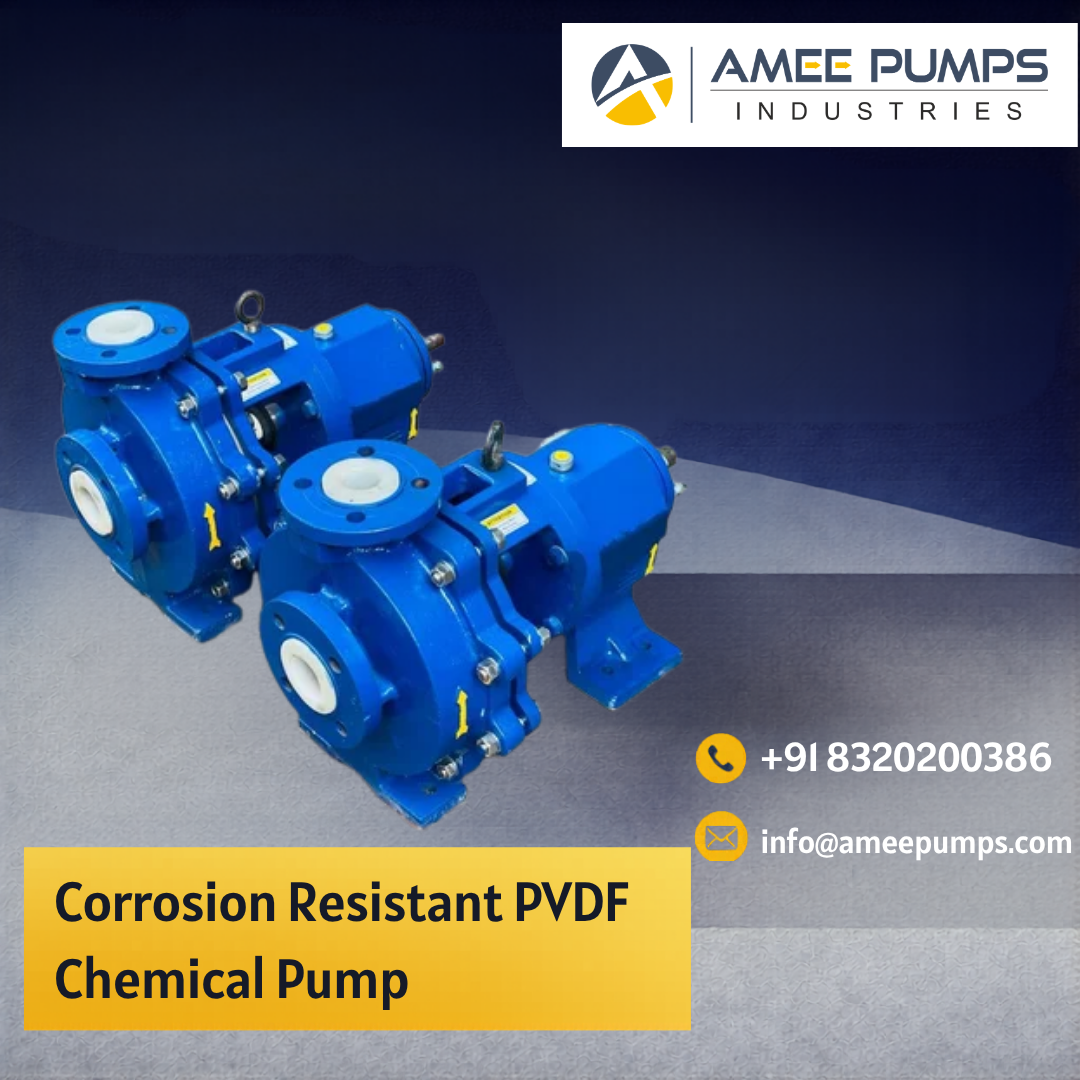
Corrosion Resistant PVDF Chemical Pump
Expertly engineered PVDF chemical pumps for corrosive fluids in Ahmedabad. Discover reliable, efficient, and durable solutions from Amee Pumps Industries.
Key Features and Technical Specifications
- Exceptional Chemical Inertness: PVDF offers outstanding resistance to a vast range of aggressive chemicals, preventing material degradation and contamination.
- High Mechanical Strength: Despite its chemical resistance, PVDF maintains good rigidity and tensile strength, allowing for robust pump construction.
- Wide Temperature Range: Capable of operating effectively across a broad temperature spectrum, typically from -40°C to 150°C, depending on the specific formulation and application.
- Low Permeability: PVDF exhibits low permeability to most gases and liquids, minimizing the risk of leakage or permeation of hazardous substances.
- Abrasion Resistance: Offers good resistance to abrasive slurries and particles, extending service life in mixed-service applications.
- UV and Radiation Resistance: Exhibits excellent stability when exposed to ultraviolet light and various forms of radiation.
- Non-Contaminating: Ideal for high-purity applications in pharmaceuticals and food processing where product integrity is critical.
Industrial Applications and Use Cases
- Chemical Processing: Transferring strong acids (e.g., sulfuric, hydrochloric, nitric), bases, and solvents in manufacturing plants.
- Pharmaceuticals: Handling high-purity chemicals, intermediates, and active pharmaceutical ingredients (APIs) without contamination.
- Water Treatment: Pumping aggressive chemicals used in water purification, desalination, and wastewater treatment processes.
- Electroplating and Metal Finishing: Circulating corrosive plating baths and cleaning solutions.
- Food and Beverage: Transferring acidic food products, cleaning agents, and sanitizers where hygiene and chemical resistance are key.
- Semiconductor Manufacturing: Handling ultra-pure chemicals and etchants in cleanroom environments.
- Oil and Gas: Pumping corrosive additives, chemicals for enhanced oil recovery, and process fluids.
- Pulp and Paper: Transferring bleaching agents and chemicals used in paper production.
How to Choose the Right PVDF Chemical Pump
Selecting the correct PVDF chemical pump is crucial for ensuring operational efficiency and safety. Consider the following factors:
- Fluid Compatibility: Verify the specific chemical composition, concentration, and temperature of the fluid to be pumped against PVDF's known resistance data.
- Flow Rate and Head Requirements: Determine the necessary flow rate (LPM/GPM) and total dynamic head (meters/feet) to ensure the pump is adequately sized for the application.
- Operating Temperature and Pressure: Ensure the pump's material and design can withstand the maximum expected operating temperature and system pressure.
- Solids Handling: If the fluid contains abrasive particles, assess the pump's design for its ability to handle solids without premature wear.
- Seal Type: Choose appropriate mechanical seals or sealless designs (like magnetic drive pumps) based on the fluid's properties and leakage tolerance.
- Certifications and Standards: Look for pumps that meet relevant industry standards (e.g., ISO, API) and have necessary certifications for hazardous environments if applicable.
- Manufacturer's Expertise and Support: Partner with a reputable manufacturer with proven experience in PVDF pump technology and strong after-sales support.
- Customization Needs: Assess if the application requires specific modifications to the pump's configuration, materials, or performance characteristics.
Quality Standards and Compliance
When procuring corrosion-resistant PVDF chemical pumps, it is vital to ensure they adhere to stringent quality standards and relevant compliance regulations. Manufacturers should demonstrate a commitment to quality through certifications like ISO 9001, which signifies a robust quality management system. For specific applications, adherence to standards such as ISO 14001 (environmental management) or ATEX directives (for potentially explosive atmospheres) might be necessary. Buyers should inquire about material traceability, testing procedures (hydrostatic, performance), and compliance with chemical handling safety regulations to guarantee the pump's reliability and safety in demanding industrial environments.
Why Amee Pumps Industries' Experience and Capability Matters
At Amee Pumps Industries, our two decades of experience, under the guidance of Mr. Amit Panchal, have been dedicated to mastering the intricacies of pump design and manufacturing, particularly for challenging chemical applications. We leverage a technology-driven approach to ensure precision and cost-effectiveness in every unit we produce. Our manufacturing processes are honed for efficiency and accuracy, allowing us to deliver PVDF chemical pumps that meet rigorous performance demands.
Our team possesses deep technical expertise in material science and fluid dynamics, enabling us to provide tailored solutions that precisely match your operational needs. We maintain strict quality control throughout the production cycle, from material selection to final testing, ensuring each pump is built for durability and reliability. This commitment to quality, combined with our proven track record in delivering dependable pumping solutions, makes Amee Pumps Industries a trusted partner for your critical chemical transfer requirements.
Installation, Maintenance, and Care Tips
Proper installation and regular maintenance are key to maximizing the lifespan and performance of your PVDF chemical pump.
- Installation: Ensure the pump is installed on a solid, level foundation to prevent vibration and misalignment. Connect piping carefully, avoiding stress on the pump casing. For systems with significant pressure fluctuations, consider installing pulsation dampeners.
- Priming: Most chemical pumps require priming before startup. Ensure the pump casing is filled with the process fluid to prevent dry running, which can damage seals and impellers.
- Seal Lubrication: If your pump uses external lubrication for mechanical seals, ensure the lubrication system is functioning correctly and the lubricant is replenished as per the manufacturer's schedule.
- Regular Inspections: Periodically check for leaks around seals, flanges, and connections. Listen for unusual noises or vibrations that could indicate wear or a developing problem.
- Performance Monitoring: Keep track of flow rates and pressures. A significant drop in performance could signal impeller wear, blockage, or seal issues.
- Cleaning: After prolonged use or when switching to a different chemical, thoroughly clean the pump internals to prevent cross-contamination or residue buildup. Follow manufacturer guidelines for disassembly and cleaning.
- Spare Parts: Maintain a stock of critical spare parts, such as seals and O-rings, to minimize downtime in case of failure.
Frequently Asked Questions
PVDF pumps are highly versatile and can handle a wide array of aggressive chemicals, including strong acids like sulfuric acid, hydrochloric acid, and nitric acid, as well as bases, halogens, salts, and many organic solvents. Their resistance is excellent across a broad pH range.
Yes, PVDF offers good thermal stability and can typically operate effectively in temperatures ranging from -40°C up to 150°C, depending on the specific chemical and operating conditions. It's important to consult the manufacturer's temperature charts for precise limits.
While both PVDF and PTFE offer excellent chemical resistance, PVDF generally has higher mechanical strength and better abrasion resistance. PTFE is often used as a liner, whereas PVDF can be used as a solid material for pump components, offering a different balance of properties and cost-effectiveness.
Dry running can severely damage seals and impellers. Ensure the pump is always primed before startup. Implement level controls in tanks or use flow meters with automatic shut-off features to prevent operation when the fluid supply is depleted.
PVDF exhibits good abrasion resistance compared to some other plastics, making it suitable for mildly abrasive fluids. However, for highly abrasive slurries, specialized pump designs or materials might be more appropriate to ensure longevity.
Routine maintenance includes checking for leaks, monitoring performance (flow and pressure), listening for unusual noises, and inspecting seals. Depending on the application, periodic lubrication of seals and cleaning of internal components may also be necessary.
Conclusion
For industries in Ahmedabad and beyond that require the reliable transfer of corrosive chemicals, a Corrosion Resistant PVDF Chemical Pump represents a vital investment in operational safety, efficiency, and longevity. The inherent chemical inertness and robust mechanical properties of PVDF ensure that these pumps can withstand the harshest environments, minimizing downtime and maintenance costs. When selecting a supplier, prioritize manufacturers with proven expertise, a commitment to quality standards, and the capability to provide tailored solutions and comprehensive after-sales support. Amee Pumps Industries is dedicated to delivering precisely these qualities, ensuring your critical fluid handling needs are met with dependable, high-performance pumping technology.
Get In Touch
Amee Pumps Industries
