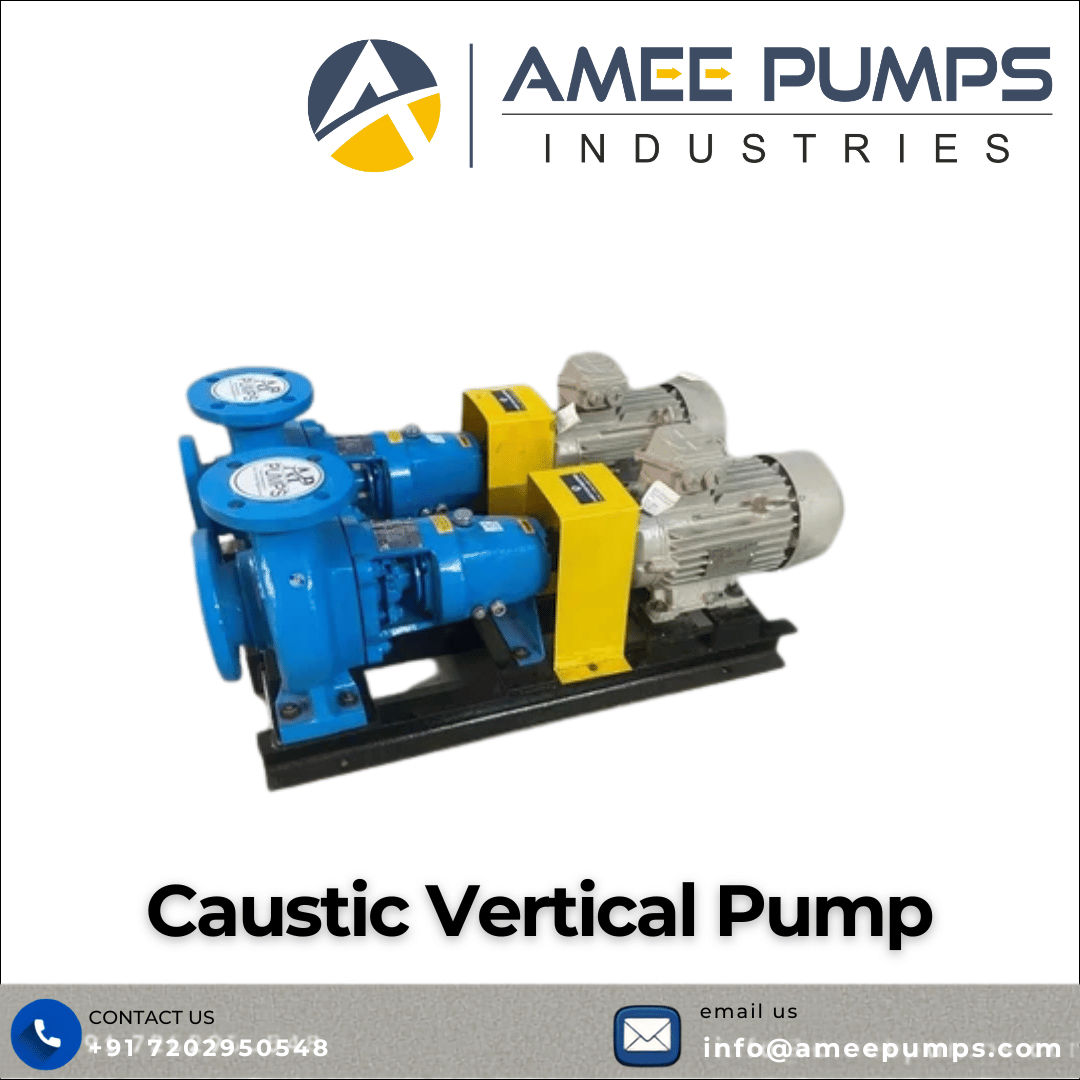
Caustic Vertical Pump
In the demanding landscape of chemical processing and industrial fluid management, the reliable transfer of highly corrosive substances is paramount. Caustic liquids, characterized by their strong alkaline nature and potential to degrade many materials, require specialized pumping solutions. This is where the caustic vertical pump emerges as a critical piece of equipment, offering a robust and efficient means to handle these challenging media. AMEE PUMPS INDUSTRIES, a dedicated manufacturer based in Ahmedabad, Gujarat, India, leverages its expertise to provide advanced vertical pump designs tailored for such demanding applications.
Understanding Caustic Vertical Pumps
A caustic vertical pump is engineered specifically to handle highly corrosive alkaline solutions, commonly referred to as caustics. These liquids, such as sodium hydroxide (caustic soda) and potassium hydroxide, are prevalent in numerous industrial processes, from chemical manufacturing and metal treatment to pulp and paper production. The 'vertical' aspect of the pump refers to its orientation, where the motor is typically mounted above the pump casing. This design offers several advantages, particularly in industrial settings where space can be a constraint or where the process requires the pump to be submerged or integrated directly into a pipeline system.
The core challenge in handling caustic liquids lies in their corrosive properties. They can attack and degrade standard pump materials, leading to premature failure, leaks, and potential safety hazards. Therefore, caustic vertical pumps are constructed from materials that offer high resistance to alkaline attack. Furthermore, their vertical configuration can offer benefits such as reduced space requirements, simplified maintenance (as some designs allow for "pull-out" of the pumping element without disturbing the motor or piping), and improved self-priming capabilities or sump-draining functions.
Applications of Caustic Vertical Pumps
The versatility and robust design of caustic vertical pumps make them indispensable in a wide array of industrial sectors. Their ability to safely and efficiently manage corrosive alkaline fluids ensures operational continuity and protects both personnel and equipment.
Chemical Processing
Essential for transferring raw materials, intermediates, and finished products in chemical manufacturing plants, including the handling of caustic soda and other alkaline solutions used in synthesis and purification.
Textile and Paper Industry
Used in processes like mercerization (textiles) and pulping (paper), which involve strong alkaline solutions for treating fibers and preparing pulp.
Effluent Treatment
Crucial for pH adjustment and chemical dosing in wastewater treatment plants, where caustic solutions are used to neutralize acidic effluents or aid in precipitation processes.
Electroplating and Metal Treatment
Employed in cleaning, etching, and plating baths that often utilize alkaline solutions to prepare metal surfaces or facilitate electrochemical processes.
Food and Beverage
In CIP (Clean-In-Place) systems for cleaning tanks and pipelines where caustic solutions are used for sanitation and residue removal.
Loading and Unloading
Facilitating the safe transfer of bulk caustic liquids to and from storage tanks, railcars, or ships.
Key Benefits of Vertical Pump Design
AMEE PUMPS INDUSTRIES specializes in vertical pump designs that address specific operational challenges. Their vertical configurations, particularly the "Vertical Seal/Gland Less Pump," offer distinct advantages:
- Space Efficiency: The vertical footprint requires significantly less floor space compared to horizontal counterparts, making them ideal for plants with limited area.
- Reduced Maintenance: Designs like the gland-less pump eliminate the need for mechanical seals, a common source of leakage and maintenance in traditional pumps, especially critical with corrosive fluids.
- Corrosion Resistance: Constructed with materials specifically chosen for their compatibility with aggressive alkaline media, ensuring longevity and operational integrity.
- Operational Versatility: Suitable for a range of capacities and heads, these pumps can be adapted for transfer, loading/unloading, and scrubbing corrosive gases, as well as handling various industrial liquids.
- Simplified Installation: Vertical inline pumps can be fitted directly into pipelines, reducing the need for extensive piping, supports, and foundation work.
Selecting the Right Caustic Vertical Pump
Choosing the appropriate caustic vertical pump is crucial for ensuring safety, efficiency, and system longevity. AMEE PUMPS INDUSTRIES emphasizes a practical approach to pump selection, considering several key factors:
💡 Buyer Insight:
Always verify the chemical compatibility of the pump's wetted parts with the specific caustic solution at its operating temperature and concentration. Material degradation is the most common cause of failure in corrosive fluid applications.
Key Selection Criteria:
- Chemical Composition and Concentration: Identify the exact caustic liquid (e.g., Sodium Hydroxide, Potassium Hydroxide) and its concentration.
- Temperature: Operating temperatures can significantly affect fluid viscosity and corrosivity. Ensure the pump is rated for the maximum expected temperature (up to 70°C for AMEE's specialized vertical pump).
- Flow Rate and Head: Determine the required flow rate (up to 55 m³/hr) and the total dynamic head (up to 45 Mtr) the pump needs to overcome.
- System Integration: Consider whether a submerged sump pump, a pipeline-mounted inline pump, or a tank-mounted pump is most suitable for your setup.
- Seal Requirements: For highly hazardous caustics, gland-less or seal-less designs are often preferred to prevent fugitive emissions and seal failures.
- Material of Construction: Select materials known for excellent resistance to the specific caustic solution, such as specific alloys or polymers.
Questions to Ask Before Buying:
- What materials are used in the pump's construction to ensure resistance to my specific caustic fluid?
- What is the pump's rated operating range for flow and head?
- Does the design minimize potential leak points, especially for hazardous caustics?
- What are the typical applications this pump model is designed for?
- What kind of maintenance is typically required, and how complex is it?
- Are there options for handling high-temperature caustic solutions?
AMEE PUMPS INDUSTRIES: Your Partner for Caustic Fluid Handling
Established in 2009 and based in Ahmedabad, Gujarat, India, AMEE PUMPS INDUSTRIES is committed to providing reliable pump solutions for challenging industrial environments. With a tech-driven approach to pump design and manufacturing, the company specializes in creating equipment that meets the rigorous demands of the chemical and process industries.
Their expertise is clearly demonstrated in their specialized offerings, such as the Vertical Seal/Gland Less Pump. This innovative design is specifically engineered for the safe and efficient transfer of corrosive liquids like HCL, Sulphuric Acid, Alkali, and Caustic Liquid. It is also highly effective for scrubbing corrosive gases and managing liquids in diverse sectors including textile, paper, sugar, and steel industries. The operational capabilities, including capacities up to 55 m³/hr and heads up to 45 Mtr, highlight the robust engineering behind their products.
Beyond specialized applications, AMEE PUMPS INDUSTRIES also offers Vertical Inline Single Stage Centrifugal Pumps, designed for seamless integration into existing pipeline systems. These pumps provide a space-saving and efficient solution for water supply, pressure boosting, HVAC systems, and general industrial fluid transfer.
AMEE PUMPS INDUSTRIES prides itself on delivering quality and performance, aiming to provide solutions that ensure operational continuity and safety for its clients. Their focus on design and manufacturing excellence makes them a valuable partner for industries requiring dependable handling of corrosive and challenging fluids.
Frequently Asked Questions
What makes a vertical pump suitable for caustic applications?
Vertical pumps are often chosen for caustic applications due to their space-saving design and the potential for seal-less configurations. Eliminating mechanical seals, a common failure point, is crucial when handling corrosive and hazardous chemicals like caustics, as it minimizes leak risks.
What materials are typically used for caustic vertical pumps?
Materials for caustic pumps are selected based on resistance to alkaline corrosion. Common choices include specialized stainless steel grades, high-nickel alloys, or specific polymers and elastomers. AMEE PUMPS INDUSTRIES selects appropriate materials to ensure longevity and compatibility with specific caustic solutions.
Can caustic vertical pumps handle high temperatures?
Yes, many caustic vertical pumps can be designed to handle elevated temperatures. For instance, AMEE PUMPS INDUSTRIES' Vertical Seal/Gland Less Pump is rated to handle temperatures up to 70°C, making it suitable for various process conditions.
What is the difference between a vertical inline pump and a sump pump?
A vertical inline pump is designed to be installed directly within a pipeline, acting as a component of the piping system. A sump pump, on the other hand, is designed to be partially or fully submerged in a pit or sump to pump out accumulated liquids.
Ready to Optimize Your Caustic Fluid Handling?
Ensure the safety, efficiency, and reliability of your operations with a high-performance caustic vertical pump. Explore the specialized solutions from AMEE PUMPS INDUSTRIES, designed to meet the rigorous demands of the chemical and process industries. Contact us to discuss your specific application and find the ideal pump for your needs.
Request a Solution