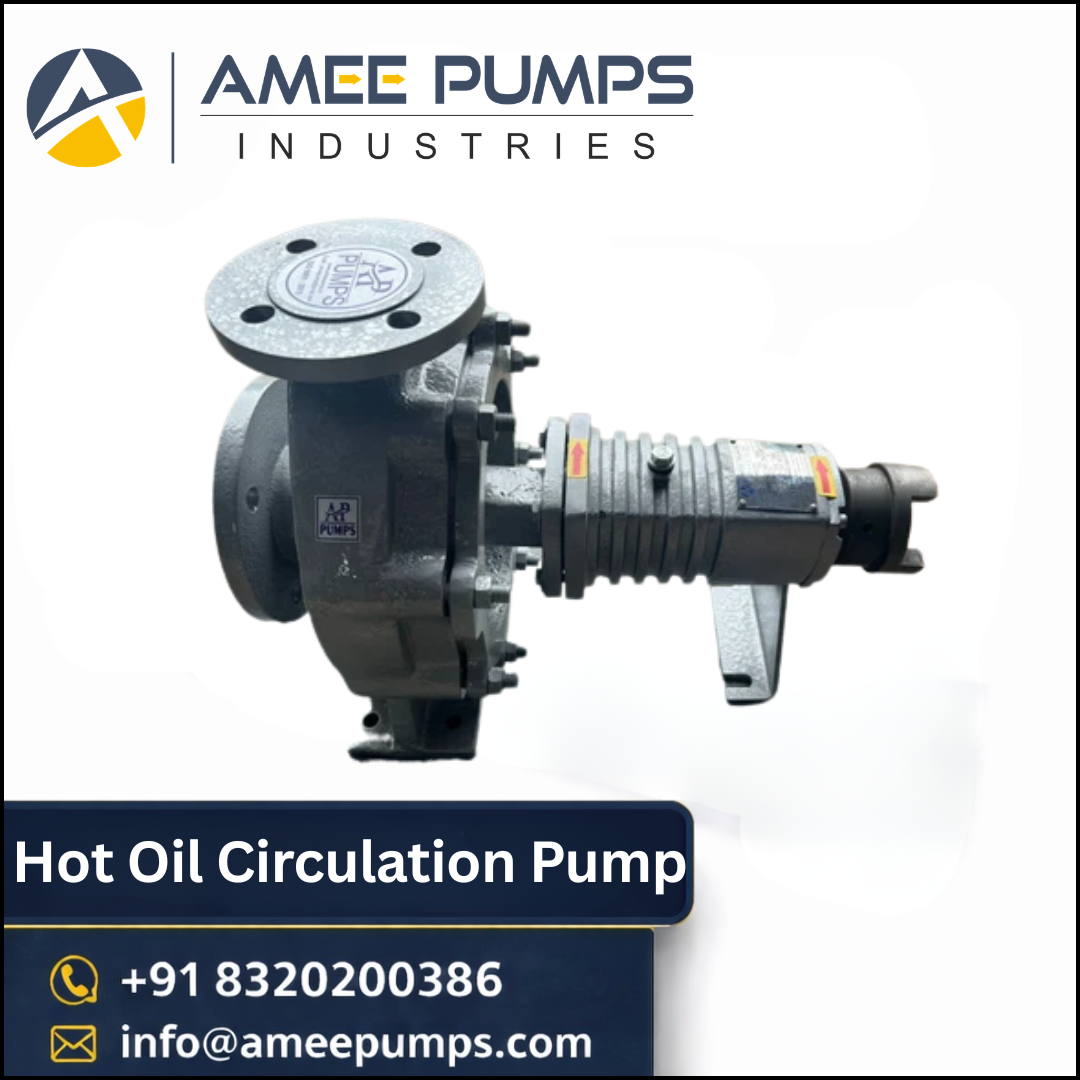
Hot Oil Circulation Pump
Expertly designed hot oil circulation pumps in Ahmedabad. Discover reliable, efficient solutions for industrial heating needs from Amee Pumps Industries.
What is a Hot Oil Circulation Pump? — Overview
A hot oil circulation pump, also known as a thermal fluid pump or heat transfer fluid pump, is specifically engineered to circulate specialized heat transfer fluids at high temperatures. Unlike standard water pumps, these units are built with materials and designs that can withstand extreme heat, often exceeding 200°C (392°F) and sometimes reaching up to 350°C (662°F). They operate by drawing the heated fluid from a boiler or heat exchanger and circulating it through a closed-loop system to deliver heat to various industrial equipment, then returning the cooled fluid for reheating.
Key Features and Technical Specifications
When evaluating hot oil circulation pumps, several technical specifications are paramount to ensure suitability for your application:
- Material Construction: Typically constructed from cast iron or stainless steel for durability and resistance to high temperatures.
- Sealing Mechanism: Features specialized mechanical seals designed for high-temperature fluids and to prevent leakage.
- Bearing Lubrication: Often employs oil-lubricated bearings or a separate cooling system to manage heat.
- Casing Design: Robust casing designed to withstand thermal expansion and high operating pressures.
- Shaft Design: Solid shaft construction to minimize vibration and ensure longevity.
- Impeller Type: Optimized impeller design for efficient fluid flow and minimal cavitation at elevated temperatures.
- Flange Connections: Standardized flange connections for easy integration into existing piping systems.
- Motor Compatibility: Designed to be coupled with standard industrial motors, often with specific considerations for ambient temperature.
Industrial Applications and Use Cases
Hot oil circulation pumps are vital across numerous industrial sectors for their ability to provide precise and uniform heating. Their applications include:
- Textile Dyeing and Finishing: Circulating hot oil to maintain consistent temperatures for dyeing vats and drying ovens.
- Pharmaceutical Manufacturing: Providing controlled heat for reactors, dryers, and sterilization processes.
- Chemical Processing: Heating reactors, distillation columns, and other process vessels in chemical plants.
- Food and Beverage Production: Heating cooking kettles, fryers, and pasteurization equipment.
- Plastic and Rubber Industries: Supplying heat to molds, extruders, and calendering machines.
- Wood Processing: Heating presses and drying kilns for veneer and particleboard production.
- Asphalt and Bitumen Heating: Circulating hot oil to maintain the fluidity of asphalt and bitumen for road construction and storage.
- Die Casting: Providing precise temperature control for die-casting machines.
How to Choose the Right Hot Oil Circulation Pump
Selecting the correct hot oil circulation pump is crucial for operational safety and efficiency. Consider these factors:
- Flow Rate and Head: Determine the required volume of fluid to be moved and the pressure needed to overcome system resistance.
- Operating Temperature: Ensure the pump's materials and seals are rated for your maximum operating temperature.
- Fluid Type: Confirm compatibility with the specific heat transfer fluid being used, as different fluids have varying properties.
- System Pressure: Verify the pump can handle the maximum pressure within your circulation loop.
- Motor Power: Select a motor with adequate power to drive the pump efficiently under load.
- Seal Type: Choose between single or double mechanical seals based on safety requirements and fluid characteristics.
- Manufacturer Reputation: Opt for a reputable manufacturer with a proven track record in thermal fluid systems.
- After-Sales Support: Inquire about availability of spare parts, maintenance services, and technical assistance.
Quality Standards and Compliance
When procuring hot oil circulation pumps, adherence to quality standards and compliance with relevant regulations is non-negotiable. Reputable manufacturers will ensure their products meet stringent industry benchmarks. Look for pumps that comply with standards such as ISO 9001 for quality management systems. While specific standards for hot oil pumps can vary by region and application, manufacturers often adhere to general industrial pump design principles that ensure safety and reliability. Verifying the manufacturer's quality control processes and certifications provides assurance of a robust and safe product.
Why Amee Pumps Industries' Experience and Capability Matters
At Amee Pumps Industries, our two decades of experience, led by seasoned professionals like Mr. Amit Panchal, have shaped our approach to designing and manufacturing hot oil circulation pumps. We leverage a technology-driven methodology that allows for precision engineering and cost-effective solutions without compromising on performance. Our manufacturing processes are honed for efficiency and reliability, ensuring each pump meets rigorous quality checks.
Our team possesses deep technical expertise in handling high-temperature fluid dynamics and material science, enabling us to offer pumps tailored to specific industrial needs. We understand the critical role these pumps play in your operations and are committed to delivering dependable equipment. Our focus on practical design, robust construction, and thorough testing ensures that Amee Pumps Industries' hot oil circulation pumps provide consistent performance and longevity, making us a trusted partner for businesses in Ahmedabad and beyond.
Installation, Maintenance, and Care Tips
Proper installation and regular maintenance are key to maximizing the lifespan and performance of your hot oil circulation pump.
Installation
Ensure the pump is installed on a solid, level foundation to minimize vibration.
Align the pump and motor shafts precisely during coupling.
Connect piping carefully, avoiding stress on the pump casing.
Purge the system thoroughly to remove air and contaminants before initial startup.
Follow the manufacturer's specific installation guidelines for your model.
Maintenance
Regularly inspect mechanical seals for any signs of leakage.
Check bearing lubrication levels and replenish as needed.
Monitor pump operating temperatures and pressures for any anomalies.
Periodically inspect the impeller and casing for wear or blockages.
Ensure the motor is functioning correctly and its cooling is adequate.
Follow a scheduled maintenance program based on operating hours and system conditions.
Care Tips
Always use the recommended heat transfer fluid and maintain its quality.
Avoid rapid temperature changes, which can stress pump components.
Ensure the system is properly vented to prevent air accumulation.
- Never run the pump dry; ensure it is always filled with fluid.
Frequently Asked Questions
The primary function is to circulate specialized heat transfer fluids at high temperatures through a closed-loop system. This ensures consistent and controlled heat delivery to industrial processes like chemical reactions, textile dyeing, or plastic molding.
Hot oil circulation pumps are designed to handle a wide range of temperatures, commonly from around 50°C up to 350°C (662°F), depending on the specific model and materials used.
Hot oil pumps are constructed with materials and sealing mechanisms specifically designed to withstand extreme temperatures and the properties of thermal fluids, whereas standard pumps are typically designed for water or less demanding fluids.
The mechanical seal is critical for preventing leakage of high-temperature, potentially hazardous fluids. Specialized high-temperature seals are essential for safety, reliability, and environmental protection.
While primarily designed for thermal oils, some models may be suitable for other specialized industrial fluids if their viscosity, temperature, and chemical properties fall within the pump's design parameters. Always consult the manufacturer.
Routine maintenance includes checking for leaks, monitoring bearing lubrication, inspecting seals and impellers for wear, and ensuring proper motor function. Scheduled inspections are vital for longevity.
Conclusion
For industries in Ahmedabad requiring precise and reliable heat transfer, a high-quality hot oil circulation pump is an essential component. Understanding the technical specifications, industrial applications, and crucial selection criteria ensures you invest in a solution that enhances operational efficiency and safety. Partnering with an experienced manufacturer like Amee Pumps Industries, with a proven track record in delivering robust and cost-effective thermal fluid pump solutions, provides the assurance needed to keep your critical processes running smoothly at elevated temperatures.
Get In Touch
Amee Pumps Industries
