Self Priming Mud Pump in Gujarat
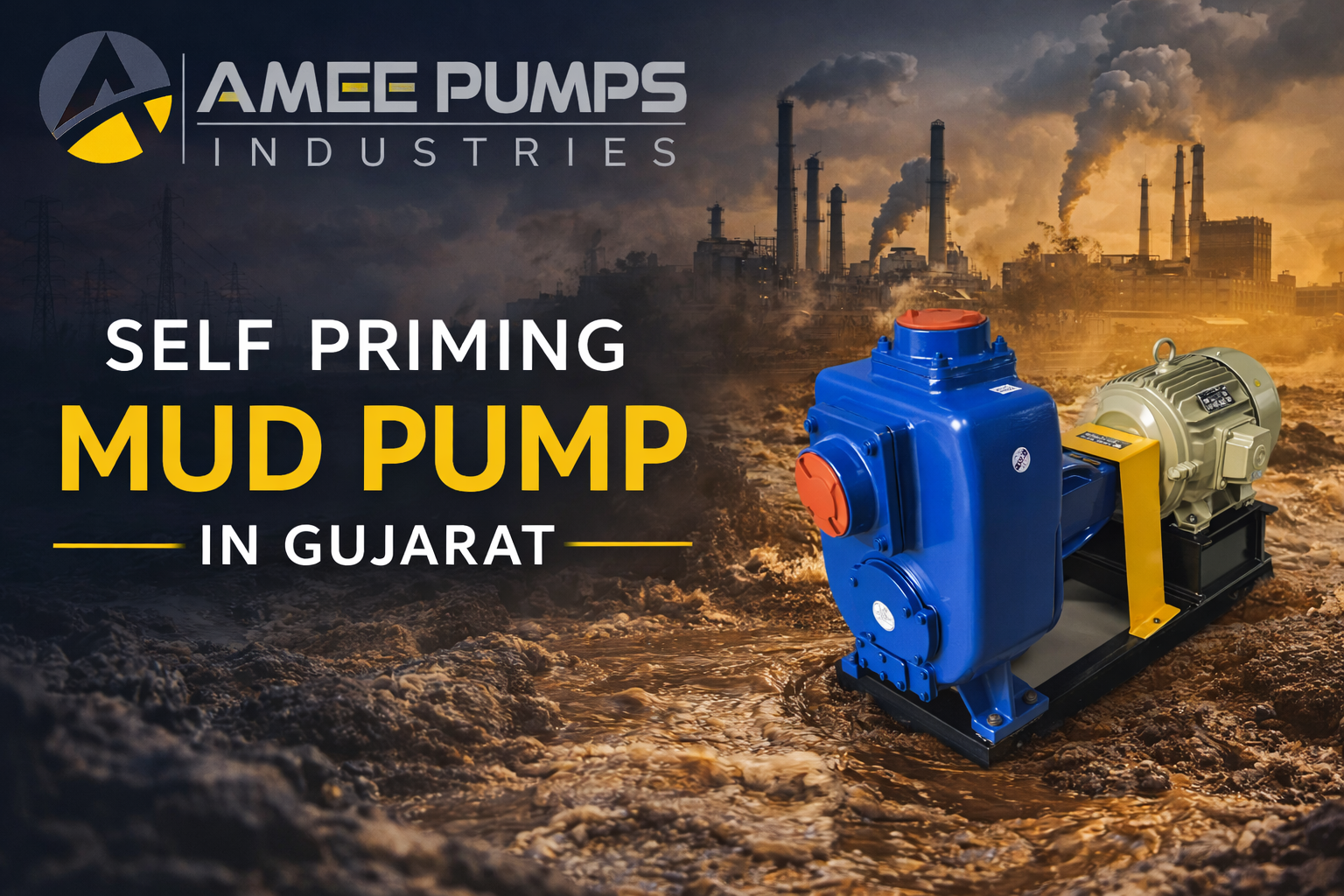
Self Priming Mud Pump
in Gujarat
Industrial fluid handling systems frequently manage demanding media such as mud, sewage, slurry, and effluent. In these conditions, conventional pumps often face priming difficulties, clogging, and inconsistent performance. A self priming mud pump in Gujarat is specifically engineered to operate reliably in such environments while maintaining stable suction and discharge performance.
AMEE Pumps Industries
AMEE Pumps Industries, based in Ahmedabad, Gujarat, manufactures self priming non-clog mud and sewage pumps designed for industrial, municipal, and commercial use. Operating from its manufacturing unit in Kathwada, Ahmedabad, the company supplies pump solutions for a wide range of fluid handling applications across the region.
Understanding Self Priming Mud Pump Technology
A self priming mud pump is designed to automatically evacuate air from the suction line and initiate pumping without manual priming. This feature is particularly important where the pump is installed above the liquid level or where intermittent operation allows air to enter the suction pipeline.
After the initial start, the pump casing retains a certain volume of liquid. During restart, this retained liquid mixes with incoming air and generates a vacuum effect, drawing fluid into the pump chamber. The system then releases air automatically and stabilizes flow, enabling smooth and continuous operation.
This mechanism reduces downtime, improves operational safety, and minimizes dependence on manual intervention. For industries in Gujarat handling mud, sludge, or sewage, self priming technology supports higher efficiency and system reliability.
Design Features of Self Priming Mud Pumps
Self priming mud pumps are built for demanding operating conditions. Their design emphasizes durability, effective sealing, and clog-resistant flow paths to ensure consistent performance.
Key construction characteristics include:
- Heavy-duty casing suitable for abrasive and semi-solid fluids
- Mechanical seal arrangement for leak control
- Option for gland fitted or mechanical sealing systems
- Non-clog impeller design to manage suspended particles
- Robust shaft and bearing assembly for extended service life
The material of construction (MOC) is selected based on application requirements. Common options include Cast Iron (CI), Stainless Steel 304, Stainless Steel 316, Stainless Steel 316L, and Mild Steel (M.S). This flexibility ensures compatibility with corrosive or abrasive media typically encountered in effluent treatment plants and process industries.
Technical Specifications and Performance Parameters
The performance of a self priming mud pump depends on head, discharge capacity, pressure rating, and material suitability. Typical specifications for models manufactured in Gujarat include:
These parameters make the pump suitable for medium-duty industrial applications that require reliable suction lift and consistent discharge.
Applications of Self Priming Mud Pumps in Gujarat
Gujarat's industrial landscape includes chemical plants, textile units, pharmaceutical facilities, food processing industries, and municipal infrastructure projects. Each of these sectors generates waste streams that require dependable pumping systems.
Common applications include:
- Mud and slurry transfer in construction and infrastructure projects
- Sewage and wastewater handling in municipal systems
- Effluent transfer in chemical and process industries
- Sludge movement in treatment plants
- Industrial drainage systems
- Loading and unloading of semi-solid waste materials
Due to their self priming capability, these pumps are particularly effective in locations where suction conditions vary or fluid levels fluctuate.
Importance of Self Priming Capability in Industrial Settings
In many industrial facilities across Gujarat, pumps are installed above the fluid source. In such cases, the pump must remove air from the suction line before fluid can be drawn in. Manual priming is time-consuming and can disrupt operations.
A self priming mud pump addresses this challenge efficiently. After the initial filling, it automatically primes during subsequent operations. This ensures faster startup, reduces operator involvement, and supports consistent production schedules.
When handling mud or sewage containing solids, pumping becomes more complex. A non-clog design combined with reliable sealing reduces maintenance frequency and minimizes unexpected interruptions.
Material Selection for Different Industrial Needs
Material compatibility significantly influences pump durability and performance. In Gujarat's chemical and processing industries, fluids may contain corrosive substances. Stainless Steel 304 or 316 provides enhanced corrosion resistance compared to cast iron.
For abrasive mud applications, cast iron or mild steel offers structural strength and cost-effective durability. Where higher corrosion resistance is required, SS316L is preferred for improved long-term performance.
Selecting the appropriate material of construction helps ensure:
- Longer service life
- Reduced maintenance intervals
- Stable hydraulic efficiency
- Improved resistance to chemical exposure
Installation and Operating Considerations
Proper installation directly impacts the performance of a self priming mud pump. The suction line must remain airtight to prevent excess air ingress. Pipe diameter should correspond to the pump discharge size, typically ranging from 25 mm to 80 mm depending on the selected model.
During initial commissioning, the pump casing must be filled with liquid to initiate the self priming cycle. Once started, the pump automatically expels trapped air and establishes stable flow.
Routine maintenance generally includes inspection of mechanical seals or gland packing, bearing lubrication, and monitoring impeller wear. Regular checks help maintain operational efficiency in industrial environments.
Industrial Demand for Mud Pumps in Gujarat
Rapid urbanization and industrial growth in Gujarat have increased the need for dependable sewage and effluent management systems. Municipal bodies, industrial estates, and private manufacturing units require pumps capable of handling mixed waste streams with minimal downtime.
Self priming mud pumps meet these requirements by combining suction flexibility with non-clog operation. Their adaptable material options and discharge sizes allow integration into varied industrial processes.
With Ahmedabad serving as a major industrial hub, pump manufacturing in Gujarat supports local industries with accessible technical assistance and service support.
How to Evaluate a Self Priming Mud Pump for Your Application
Before selecting a pump, operational requirements must be clearly defined. Key considerations include:
- Required head and discharge capacity
- Nature of fluid (mud, sewage, effluent, slurry)
- Solid content and particle size
- Chemical composition of the fluid
- Installation height relative to liquid level
- Continuous or intermittent operation
A detailed technical assessment based on these parameters ensures correct pump sizing and improved long-term performance.
Environmental and Operational Safety
Wastewater and mud handling systems must comply with environmental and safety standards. Reliable pumping ensures that sludge and effluent are transferred without leakage or spillage.
Mechanical sealing systems help prevent external contamination, while stable hydraulic performance reduces vibration and mechanical stress. This contributes to safer working conditions and consistent regulatory compliance.
In industrial settings across Gujarat, proper pump selection supports both operational efficiency and sustainable fluid management.
Frequently Asked Questions
The primary advantage is its ability to automatically remove air from the suction line and begin pumping without manual priming. This ensures reliable startup, particularly when the pump is installed above the liquid level.
Yes. These pumps are designed as non-clog units capable of handling mud, sewage, sludge, and effluent containing suspended solids. Their internal design supports smooth flow with reduced risk of blockage.
Common materials include Cast Iron, Stainless Steel 304, Stainless Steel 316, Stainless Steel 316L, and Mild Steel. Material selection depends on the fluid's chemical composition and abrasiveness.
Typical configurations offer up to 50 meters of head and up to 50 cubic meters per hour capacity, with pressure up to 5 Kg/cm². Exact performance depends on the selected model and operating conditions.
They are widely used in industrial estates, effluent treatment plants, construction sites, municipal sewage systems, and manufacturing facilities across Ahmedabad and other regions of Gujarat.
No. After the initial filling, the pump retains liquid within the casing and automatically primes itself during subsequent operations, reducing downtime and manual effort.
Self Priming Mud Pump in Gujarat
A self priming mud pump in Gujarat is essential for handling challenging fluids such as mud, sewage, and industrial effluent. Its automatic priming function, non-clog construction, and flexible material options make it well-suited for industrial and municipal applications.
For operations in Ahmedabad and across Gujarat, selecting the appropriate pump configuration based on head, capacity, and fluid characteristics ensures long-term reliability and stable performance. Proper evaluation, installation, and maintenance contribute to efficient and safe fluid handling systems.
Get in Touch
Our Blogs
- Acids Transfer PVDF Chemical Pump
- Air Cooled Pump Set
- Thermic Fluid Hot Oil Air Cooled Pump
- Air Operated Double Diaphragm SS 316 Pump
- AODD Pump PVDF MOC
- Centrifugal End Suction Pump
- High Pressure Centrifugal Pump
- Vertical Centrifugal Pump
- Hygienic Centrifugal Pump
- Petroleum Industry Centrifugal Process Pump
- Self Priming Boiler Feed Pump
- Bare Shaft PP Pump
- Self Priming Monoblock Mud Pump
- Hot Oil Centrifugal Pump
- Horizontal Centrifugal Back Pull Out Bare Shaft Coupled Pump
- Teflon Line Centrifugal Process Pump
- Corrosion Resistant Pump
- Semi Open Impeller Centrifugal Pump
- Corrosion Resistant Polypropylene Pump
- Boiler Feed Pump
- 20 LPM Oil Gear Pump
- PVDF Loading Unloading Centrifugal Pump
- Vertical Extended Shaft Slurry Pump
- Pneumatic Air Operated Double Diaphragm Pump
- CF Series Stainless Steel Centrifugal Pump
- Oil Transfer Rotary Gear Pump
- High Temperature Pump
- Horizontal Centrifugal End Suction Pump
- Sewage Plants Self Priming Mud Pump
- Caustic Vertical Pump
- Polypropylene Gland Less Pump
- 300 LPM Acid Pump
- Single Stage Centrifugal Back Pull Out Pump
- Water Treatment Centrifugal Back Pull Out Pump
- Vertical Extended Shaft Sump Pump
- Horizontal Slurry Pump
- Mechanical Diaphragm Dosing Pump
- 2 HP Centrifugal Pump
- Vertical Long Shaft Sump Pump
- Stainless Steel Pump
- Centrifugal Circulation Process Pump
- Thermic Fluid Hot Oil Pump
- Self Priming Non Clog SS 316 Mud Pump
- Vertical Long Shaft Submerged Centrifugal Pump
- High Pressure Multi Stage Boiler Feed Pump
- Vertical Sump Pump
- Side Suction Pump
- Polypropylene Descaling Pump
- Non Clog Impeller Pump
- High Discharge Pump
- Filter Press Feeding Pump
- Polypropylene Chemical Process Pump
- Magnetic Drive Polypropylene Pump
- Water Circulation Pump
- Non Metallic Pump
- Side Suction Bare Shaft Pump
- SS 304 Centrifugal Fabricated Pump
- SS316 Rotary Gear Pump
- Centrifugal Flameproof Pump
- Corrosion Resistant PVDF Chemical Pump
- Centrifugal Pump Closed Impeller
- Stainless Steel Centrifugal Pump
- Corrosion Resistant PP Pump
- Heavy Duty Rotary Gear Pump
- External Gear Pump
- SS 316 AODD Pump
- Self Priming Non Clog Mud Pump
- Hot Oil Circulation Pump
- Internal Gear Pump
- Pneumatic Double Diaphragm Pump
- Thermic Fluid Boiler Feed Pump
- Magnetic Chemical Pump
- ETP Slurry Pump
- Filter Press Feed Pump
- Water Transfer Pump
- PVDF Lined Chemical Process Pump
- Industrial Chemical Process Pump
- SS Chemical Transfer Pump
- Vertical Single Stage Centrifugal Pump
- Hot Oil Circulation Pump in India
- Centrifugal Pump Manufacturers & Suppliers in India
- Chemical Process Pump Manufacturer in India
- Horizontal Single Stage Centrifugal Pump
- Self Priming Stainless Steel Pump
- Rotary Gear SS 316 Pump
- PVDF Chemical Pump in India
- PP AODD Pump
- PP Chemical Process Pump
- Vertical Long Shaft Sump Pump
- Air Cooled Thermic Fluid Hot Oil Pump
- Centrifugal Chemical Process Pump
- Air Operated Diaphragm Pneumatic Pump
- Industrial AODD Pump
- SS Air Operated Diaphragm Pump
- Air Cooled Pump Manufacturer & Supplier in India
- AIR COOLED HOT OIL PUMP
- PP Air Operated Double Diaphragm Pumps
- Vertical Inline Single Stage Centrifugal Pump
- Magnetic Drive Acid Handling Pump
- PVDF LINED CENTRIFUGAL PUMP
- Horizontal Single Stage Centrifugal Pumps
- SS 316 Pumps Centrifugal Chemical Transfer
- Pvdf Chemical Process Pump
- Self Priming Stainless Steel Pump in india
- SS TWIN LOBE PUMP
- SS ROTARY GEAR PUMP
- HOT OIL AIRCOOLED PUMP
- SS CENTRIFUGAL PUMPS IN INDIA
- SS GEAR PUMP IN INDIA
- PVDF MAGNATIC DRIVE PUMP
- Filter Press Side Suction Pump
- CHEMICAL PROCESS PUMP
- CENTRIFUGAL COUPLED PUMP
- THERMIC FLUIED AIR COOLED PUMP
- Lobe Pump in India
- SS Self Priming Mud Pump in Gujarat
- Solvent Transfer Pump in Gujarat
- PVDF Centrifugal Pump in Ahmedabad
- Rotary Lobe Pump in Ahmedabad
- End Suction Pumps Gujarat
- SS Centrifugal Pump in Gujarat
- Solvent Transfer Pump in Ahmedabad
- Vertical Seal Less Gland Less PP Pump in Ahmedabad
- VERTICAL SEAL LESS GLAND LESS PP PUMP
- PP SELF PRIMING PUMP
- SOLVENT TRANSFER PUMP
- SS CENTRIFUGAL PUMP
- ROTARY GEAR PUMP
- CENTRIFUGAL PP PUMP
- CHEMICAL PROCESS CENTRIFUGAL PUMP
- ROTARY LOBE PUMP
- Filter Press Side Suction Pump in Gujarat
- Air Cooled Thermic Fluid Pump in India
- SS Centrifugal Monoblock Pump in Ahmedabad
- MAGNATIC DRIVE CENTRIFUGAL PUMP
- ACID APPLICATION PUMP
- AIR OPERATED DOUBLE DIAPHRAGAM PUMP
- LOBE PUMP
- HORIZONTAL CENTRIFUGAL PUMP
- SS GEAR PUMP
- FIRE FIGHITING PUMPS
- FILLTER PRESS PUMP
- BACK PULL OUT SS CENTRIFUGAL PUMP
- PP SELF PRIMING PUMP
- Horizontal Back Pull Out End Suction Pumps in India
- Hot Oil Pump in Gujarat
- PVDF Centrifugal Pump in Gujarat
- Centrifugal Pump
- Thermic Fluid Air Cool Pump
- PP Pump
- PVDF Centrifugal Pump Manufacturers in Gujarat
- End Suction Pumps in Ahmedabad
- Bentonite Pumps in Gujarat
- SS SELF PRIMING MUD PUMP
- PP MONOBLOCK PUMP
- SS CENTRIFUGAL MONOBLOCK PUMP
- LOBE PUMP
- FILLTER PRESS SIDE SUCTION PUMP
- HOT OIL PUMP
- AIR COOLED THERMIC FLUID PUMP
- PVDF CENTRIFUGAL PUMP MANUFACTURERS IN AHMEMDABAD
- Magnetic Drive PP Pump
- Horizontal Back Pull Out End Suction Pumps in Gujarat
- Bentonite Pumps in Gujarat
- AIR OPERATED DIAPHRAGAM PUMP
- MAGNATIC DRIVE PP PUMP
- Rotary Gear Pumps
- PVDF CENTRIFUGAL PUMP
- End Suction Pumps in Gujarat
- Centrifugal Process Pump in Ahmedabad
- Horizontal Back Pull Out End Suction Pumps Manufacturer in Ahmedabad
- Bentonite Pumps Manufacturer in Ahmedabad
- Chemical Process Centrifugal Pump Supplier in Ahmedabad
- End Suction Pumps
- Centrifugal Process Pump
- Horizontal Back Pull Out End Suction Pumps
- Chemical Process Centrifugal Pump
- BENTONITE PUMPS
- Pp Centrifugal Acidic Liquid Transfer Pump
- Centrifugal Process Pump For Evaporators
- Polypropylene Aodd Pump
- PP Centrifugal Monoblock Pump
- Self Priming Mud Pump in Ahmedabad
- Rotary Gear Pump Supplier in Ahmedabad
- AODD Pump in Ahmedabad
- PP Monoblock Pump in Ahmedabad
- Centrifugal Couple Drive Chemical Process Pump
- SS 316 Pumps Centrifugal Chemical Transfer in Ahmedabad
- Eva Operation Pump
- Air Operated Double Diaphragm Pump Manufacturer in Ahmedabad
- Industrial Mud Pump Manufacturer in Ahmedabad
- AODD Pump Supplier in Gujarat
- Self Priming Mud Pump in Gujarat
- PP Monoblock Pump Supplier in Ahmedabad
- PP Centrifugal Pump Manufacturer in India
- Chemical Transfer Pump Supplier in Gujarat
- End Suction Pump Manufacturer in Ahmedabad
- Centrifugal Back Pull Out Pump Manufacturer in India
- SS Centrifugal Pump Manufacturing Company in Gujarat
- SS Gear Pump Supplier in Ahmedabad
- Rotary Gear Pump Manufacturer in India
- Flange Mounted Rotary Gear Pump Manufacturer in India
- Horizontal Centrifugal Pump Supplier in Gujarat
- Acid Transfer Pump Manufacturer in India
- Multistage Boiler Feed Pump Manufacturing in Gujarat
- Polypropylene Pump in India
- Chemical Process Pump in Ahmedabad
- High Pressure Multistage Boiler Feed Pump in Gujarat
- Vertical Inline Centrifugal Pump in Ahmedabad
- Magnetic Drive Pumps in Ahmedabad
- Lobe Pump in Ahmedabad
- PP Monoblock Pump Supplier in India
- PP Centrifugal Pump Manufacturer in Ahmedabad
- Chemical Transfer Pump Supplier in India
- End Suction Pump Manufacturer in Gujarat
- Centrifugal Back Pull Out Pump in Gujarat
- SS Centrifugal Pump Manufacturer in India
- SS Gear Pump Manufacturer in Gujarat
- Hot Oil Pump in ahemdabad
- Air Cooled Thermic Fluid Pump Manufacturer in Gujarat
- Air Cooled Pump Manufacturer in Gujarat
- Rotary Gear Pump Manufacturer in Ahmedabad
- Bentonite Pump Manufacturer in India
- Centrifugal Back Pull Out Pump Manufacturer in Ahmedabad
