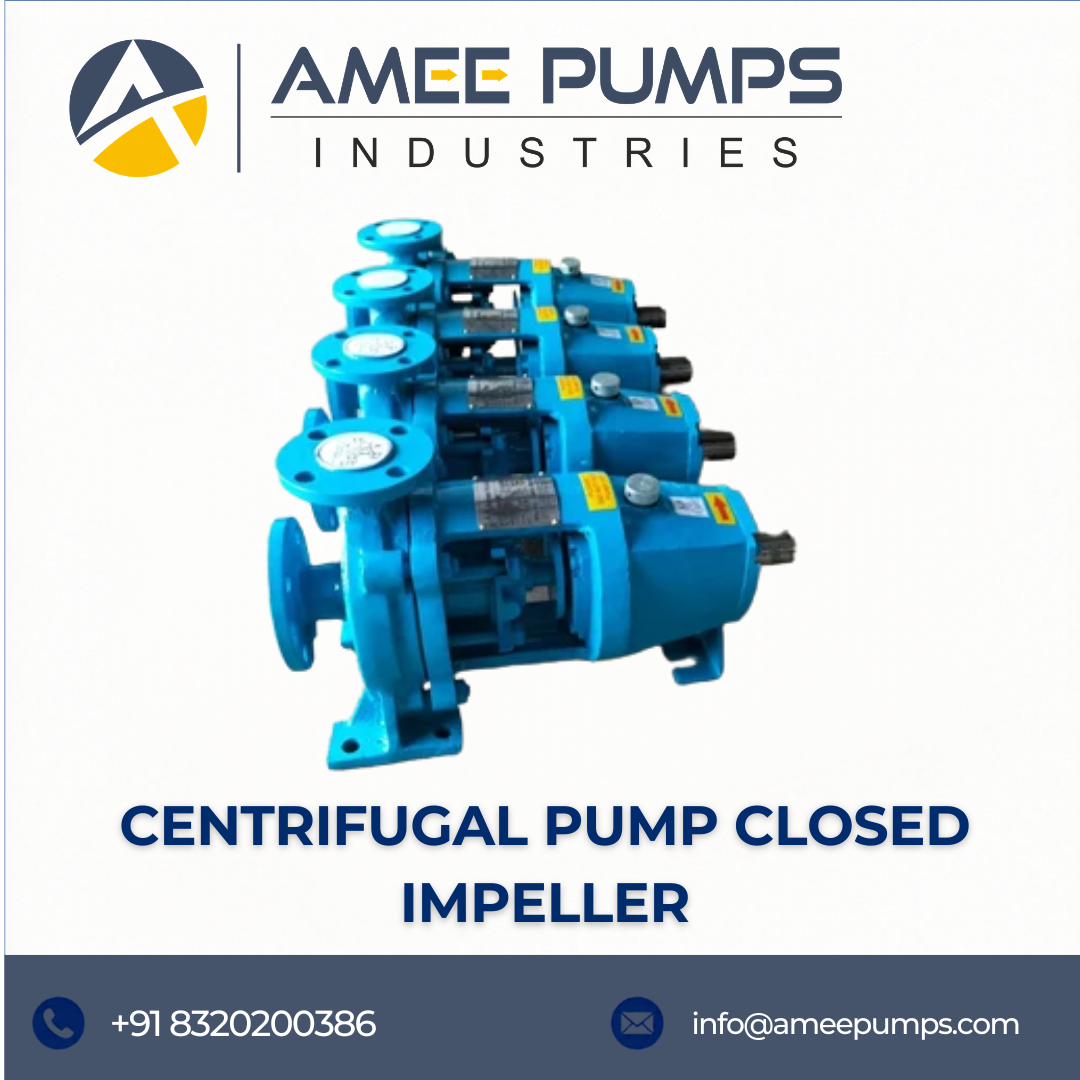
Centrifugal Pump Closed Impeller
Expertly engineered centrifugal pumps with closed impellers in Ahmedabad. Discover reliable, efficient, and cost-effective solutions from Amee Pumps Industries.
What is a Centrifugal Pump with a Closed Impeller? — Overview
A centrifugal pump is a type of rotodynamic pump that uses a rotating impeller to increase the pressure and flow rate of a fluid. In a closed impeller design, the impeller features vanes that are enclosed by two shrouds or plates. This configuration creates a sealed channel for the fluid to flow through as it is drawn into the pump's eye and then expelled tangentially by the impeller's rotation. The shrouds help to guide the fluid more effectively, reduce leakage from the discharge back to the suction side, and improve hydraulic efficiency, especially when handling cleaner liquids.
Centrifugal pumps with closed impellers are designed with several key features to ensure optimal performance and durability:
- Enclosed Vanes: Vanes are sandwiched between two shrouds, creating a closed passage for fluid.
- High Hydraulic Efficiency: Optimized shroud and vane design minimizes internal recirculation and leakage.
- Robust Construction: Typically built from materials like cast iron, stainless steel, or specialized alloys for corrosion and wear resistance.
- Shaft Sealing Options: Available with mechanical seals or gland packing to prevent leakage along the shaft.
- Bearing Assembly: Sturdy bearing housing ensures smooth rotation and longevity of the pump.
- Discharge and Suction Ports: Precisely machined for efficient fluid intake and output.
- Back Pull-Out Design: Many models offer a back pull-out feature for easier maintenance without disturbing piping.
- Impeller Balancing: Dynamically balanced impellers reduce vibration and extend bearing life.
Industrial Applications and Use Cases
The versatility of centrifugal pumps with closed impellers makes them indispensable across numerous industrial sectors:
- Chemical Processing: Transferring acids, alkalis, solvents, and other corrosive or non-corrosive chemicals.
- Water and Wastewater Treatment: Pumping raw water, treated water, and effluent in municipal and industrial plants.
- Petrochemical Industry: Handling crude oil, refined products, and various process fluids.
- Pharmaceutical Manufacturing: Transferring purified water, solvents, and intermediate products.
- Food and Beverage: Pumping clean water, syrups, oils, and other food-grade liquids where hygiene is critical.
- HVAC Systems: Circulating hot or chilled water for heating and cooling applications.
- General Industrial Services: Supplying process water, managing cooling systems, and dewatering operations.
- Power Generation: Circulating cooling water and managing boiler feed water.
How to Choose the Right Centrifugal Pump with Closed Impeller
Selecting the appropriate centrifugal pump is crucial for operational efficiency and longevity. Consider these factors:
- Fluid Properties: Viscosity, specific gravity, temperature, corrosiveness, and presence of solids.
- Flow Rate and Head Requirements: Determine the precise volume of fluid to be moved and the total dynamic head the pump must overcome.
- Material Compatibility: Ensure pump materials are resistant to the fluid being handled to prevent corrosion or degradation.
- Operating Environment: Consider ambient temperature, potential for hazardous atmospheres, and space constraints.
- Energy Efficiency: Look for pumps designed for high efficiency to minimize operating costs.
- Reliability and Durability: Assess the manufacturer's reputation for building robust and long-lasting equipment.
- Maintenance and Serviceability: Prefer designs that allow for easy access for inspection and repair.
- Compliance and Certifications: Verify that the pump meets relevant industry standards and safety regulations.
Quality Standards and Compliance
When procuring centrifugal pumps, adherence to quality standards is non-negotiable. Reputable manufacturers ensure their products comply with national and international standards. In India, this often includes certifications like ISI (Indian Standards Institution) for specific product categories, and adherence to ISO (International Organization for Standardization) quality management systems. For pumps used in critical applications, compliance with standards like IS 1520 (for centrifugal pumps for general purposes) or specific standards for chemical or process pumps is essential. Buyers should always verify the certifications and compliance documents provided by the manufacturer to ensure the pump meets the required performance and safety benchmarks for their intended application.
Why Amee Pumps Industries' Experience and Capability Matters
At Amee Pumps Industries, our two decades of experience, led by Mr. Amit Panchal, have been dedicated to the precise design and manufacturing of industrial pumps. We leverage a technology-driven approach that streamlines our design and production processes, allowing us to deliver cost-effective solutions without compromising on quality. Our manufacturing facility in Ahmedabad is equipped to handle complex engineering challenges, ensuring each centrifugal pump with a closed impeller we produce meets stringent performance criteria.
Our commitment extends beyond manufacturing; we focus on understanding the unique operational needs of our clients. This allows us to provide tailored solutions, robust quality control throughout production, and reliable after-sales support. We pride ourselves on a proven track record of delivering pumps that enhance operational efficiency and ensure long-term performance, making us a trusted partner for industries in Ahmedabad and beyond.
Installation, Maintenance, and Care Tips
Proper installation and regular maintenance are key to maximizing the lifespan and performance of your centrifugal pump with a closed impeller.
Installation
Ensure the pump is installed on a solid, level foundation to minimize vibration.
Align the pump and motor shaft precisely during installation.
Connect piping carefully, avoiding stress on the pump casing.
Prime the pump before starting to ensure it is filled with fluid.
Maintenance
Regularly inspect shaft seals for leaks and wear. Replace seals as needed.
Check bearing lubrication and replenish or replace grease as per manufacturer recommendations.
Listen for unusual noises or vibrations, which can indicate bearing wear or imbalance.
Periodically inspect the impeller for damage, erosion, or blockages.
Ensure strainers or filters in the suction line are clean to prevent debris from entering the pump.
Care:
Operate the pump within its specified flow and head range to avoid cavitation or overloading.
Protect the pump from extreme weather conditions if installed outdoors.
Keep the pump area clean and free from obstructions.
Frequently Asked Questions
A closed impeller design offers higher hydraulic efficiency due to reduced internal leakage and better fluid guidance. This makes it ideal for applications requiring precise flow control and energy savings, particularly with cleaner, less viscous fluids.
While primarily designed for cleaner liquids, some closed impeller designs can handle fluids with small, non-abrasive solids. However, for applications with significant solids or abrasive particles, specialized impeller designs or slurry pumps are typically recommended.
Sizing involves calculating the required flow rate and the total dynamic head (TDH) of your system. You will need to consider factors like elevation changes, friction losses in piping, and pressure requirements. Consulting with a pump engineer is often advisable.
Common materials include cast iron for general water applications, stainless steel for corrosive environments or hygienic processes, and various alloys for highly aggressive chemicals or high-temperature services. Material selection depends heavily on the fluid being pumped.
A back pull-out design allows the entire rotating assembly (impeller, shaft, bearings, and seal) to be removed from the pump casing without disturbing the motor or the connected piping. This significantly simplifies maintenance and reduces downtime.
Mechanical seals should be visually inspected for leakage during routine operational checks. Depending on the service and seal type, a more thorough inspection or replacement might be recommended every 6 to 12 months, or as indicated by increased leakage.
Conclusion
Choosing the right centrifugal pump with a closed impeller is a critical decision that impacts operational efficiency, cost-effectiveness, and system reliability. Understanding the specific requirements of your fluid, the necessary performance parameters, and the importance of quality manufacturing is essential. For businesses in Ahmedabad and the surrounding regions, partnering with an experienced and capable manufacturer like Amee Pumps Industries ensures access to expertly engineered solutions, robust construction, and dedicated support. By focusing on precision, efficiency, and customer needs, we help power your industrial processes with dependable fluid transfer technology.
Get In Touch
Amee Pumps Industries
