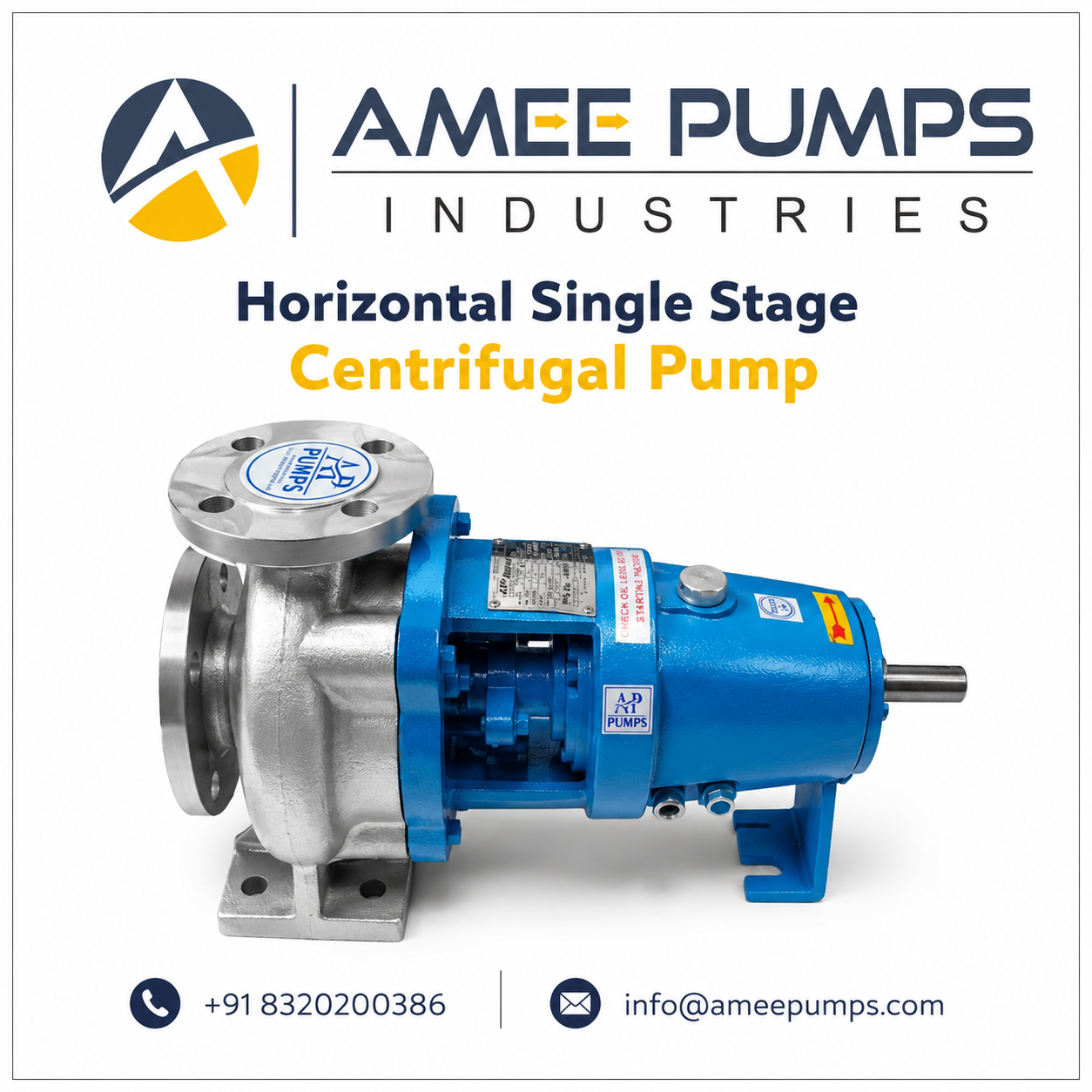
Horizontal Single Stage Centrifugal Pump
Expertly designed Horizontal Single Stage Centrifugal Pumps for industrial use in Ahmedabad. Discover reliable, efficient, and cost-effective solutions from Ame
What is a Horizontal Single Stage Centrifugal Pump? — Overview
A Horizontal Single Stage Centrifugal Pump is a type of dynamic pump that uses a rotating impeller to increase the pressure and flow rate of a liquid. The "horizontal" designation refers to the orientation of the pump shaft, which is parallel to the ground, making installation and maintenance often more straightforward. "Single stage" means the pump has only one impeller, which is suitable for applications requiring moderate head and flow. Fluid enters the impeller eye, is accelerated radially outward by the rotating vanes, and then collected in a volute casing, where its velocity is converted into pressure.
Key Features and Technical Specifications
- Robust Casing Construction: Typically made from cast iron, stainless steel, or other corrosion-resistant alloys to handle various fluid types and operating pressures.
- High-Efficiency Impeller Design: Varies based on application, including open, semi-open, or closed types, optimized for specific fluid viscosity and solids content.
- Standardized Mounting: Designed for horizontal installation, often with a baseplate for stable mounting and easy alignment with the motor.
- Shaft Sealing Options: Available with mechanical seals or gland packing to prevent leakage, chosen based on fluid properties and operating conditions.
- Back Pull-Out Design: Many models feature a back pull-out design, allowing for maintenance and repair without disturbing the pump casing or piping.
- Bearings: Equipped with reliable bearings, typically grease or oil lubricated, to ensure smooth rotation and long service life.
- Flanged Connections: Standardized flanged suction and discharge ports for secure and leak-free connection to the piping system.
Industrial Applications and Use Cases
- Water Supply and Distribution: Pumping raw water, treated water, and distribution in municipal and industrial facilities.
- Chemical Processing: Transferring acids, alkalis, solvents, and other process chemicals in chemical plants.
- Pharmaceutical Industry: Handling purified water, solvents, and intermediates in drug manufacturing.
- Food and Beverage: Pumping liquids like milk, juices, oils, and syrups where hygiene is paramount.
- Irrigation: Supplying water for agricultural purposes in large-scale farming operations.
- HVAC Systems: Circulating water for heating and cooling in commercial buildings and industrial complexes.
- General Industrial Services: Dewatering, general fluid transfer, and utility services across various manufacturing sectors.
How to Choose the Right Horizontal Single Stage Centrifugal Pump
Selecting the appropriate pump is crucial for optimal performance and longevity. Consider these factors:
- Flow Rate and Head Requirements: Accurately determine the volume of liquid to be moved per unit of time and the total pressure the pump must overcome.
- Fluid Properties: Identify the type of fluid, its temperature, viscosity, specific gravity, and whether it contains solids or corrosive elements.
- Material Compatibility: Ensure the pump's construction materials are compatible with the fluid being handled to prevent corrosion and premature wear.
- Operating Environment: Consider ambient temperature, humidity, and any potential for hazardous atmospheres.
- Power Source and Efficiency: Evaluate motor efficiency and power requirements to minimize operational costs.
- Maintenance and Serviceability: Look for designs that facilitate easy maintenance, such as back pull-out features.
- Supplier Reputation and Support: Choose a manufacturer with a proven track record and reliable after-sales service.
- Certifications and Standards: Verify that the pump meets relevant industry standards and certifications for your application.
Quality Standards and Compliance
For industrial applications, adherence to quality standards is non-negotiable. Reputable manufacturers of Horizontal Single Stage Centrifugal Pumps typically design and build their products in accordance with international and national standards. This often includes compliance with ISO 9001 for quality management systems, ensuring consistent product quality and manufacturing processes. Specific pump performance and construction might align with standards like IS (Indian Standards) or IEC (International Electrotechnical Commission) for electrical components. Buyers should always inquire about the specific standards the pump and its components adhere to and request relevant certifications to ensure reliability and safety.
Why Amee Pumps Industries' Experience and Capability Matters
At Amee Pumps Industries, our two decades of experience, led by seasoned professionals like Mr. Amit Panchal, have shaped our approach to pump design and manufacturing. We leverage a technology-driven methodology that allows for precision engineering while significantly reducing design costs compared to traditional methods. Our team has honed its skills in demanding, complex industrial environments, resulting in a reputation for delivering reliable and cost-effective solutions.
Our commitment extends beyond initial production. We focus on robust quality control throughout our manufacturing process, ensuring that each Horizontal Single Stage Centrifugal Pump leaving our facility meets stringent performance criteria. This dedication to engineering excellence, combined with our ability to offer customized solutions and dependable after-sales support, makes Amee Pumps Industries a trusted partner for your fluid handling needs in Ahmedabad and beyond.
Installation, Maintenance, and Care Tips
Proper installation and regular maintenance are key to maximizing the lifespan and performance of your Horizontal Single Stage Centrifugal Pump.
- Installation: Ensure the pump is installed on a solid, level foundation to prevent vibration. Align the pump and motor shafts precisely during installation, as misalignment is a common cause of premature bearing and seal failure. Connect piping securely, avoiding stress on the pump casing.
- Priming: Centrifugal pumps cannot pump air. Always ensure the pump casing and suction line are completely filled with liquid (primed) before starting the motor.
- Operation: Avoid running the pump dry, as this can damage seals and impellers. Do not operate the pump against a closed discharge valve for extended periods, as this can lead to overheating.
- Routine Checks: Regularly inspect for leaks around the shaft seal or packing. Listen for unusual noises that might indicate bearing wear or cavitation. Monitor operating temperatures and pressures.
- Lubrication: Follow the manufacturer's recommendations for bearing lubrication, using the correct type and amount of lubricant.
- Seal/Packing Maintenance: For pumps with gland packing, adjust the packing nuts periodically to achieve a slight drip for lubrication and cooling. For mechanical seals, monitor for excessive leakage.
Frequently Asked Questions
Its primary function is to transfer liquids by converting rotational kinetic energy into hydrodynamic energy. This is achieved through a rotating impeller that draws fluid into the pump and expels it at a higher pressure and flow rate, making it ideal for moderate head and flow applications.
These pumps can handle a wide range of clean or slightly contaminated liquids, including water, chemicals, oils, and slurries, provided the fluid's viscosity and solids content are within the pump's design specifications. Material selection for the pump's wetted parts is crucial for compatibility.
A single stage design means the pump has one impeller. This configuration is typically used for applications requiring moderate pressure (head) and flow rates. For higher pressures, multi-stage pumps are generally employed.
Reduced performance can stem from several issues, including insufficient priming, air leaks in the suction line, impeller wear, operating at a point far from its Best Efficiency Point (BEP), or blockages in the suction or discharge lines.
The back pull-out design allows the rotating assembly (impeller, shaft, bearings, and seal) to be removed from the pump casing without disturbing the motor or the connected piping. This greatly simplifies maintenance and reduces downtime.
Bearings and seals should be inspected regularly as part of a preventative maintenance schedule, typically during routine operational checks. Specific intervals depend on the operating conditions, fluid handled, and manufacturer recommendations, but monthly visual checks and annual detailed inspections are common.
Conclusion
For industries in Ahmedabad and the surrounding regions, the Horizontal Single Stage Centrifugal Pump remains a cornerstone of efficient fluid management. Its versatility, combined with a well-understood operational principle, makes it suitable for a vast array of applications. Choosing the right pump involves a careful consideration of your specific process requirements, fluid characteristics, and the operational environment. Partnering with an experienced manufacturer like Amee Pumps Industries ensures you receive not only a high-quality, reliable pump but also the technical expertise and support needed for seamless integration and long-term performance.
Get In Touch
Amee Pumps Industries
