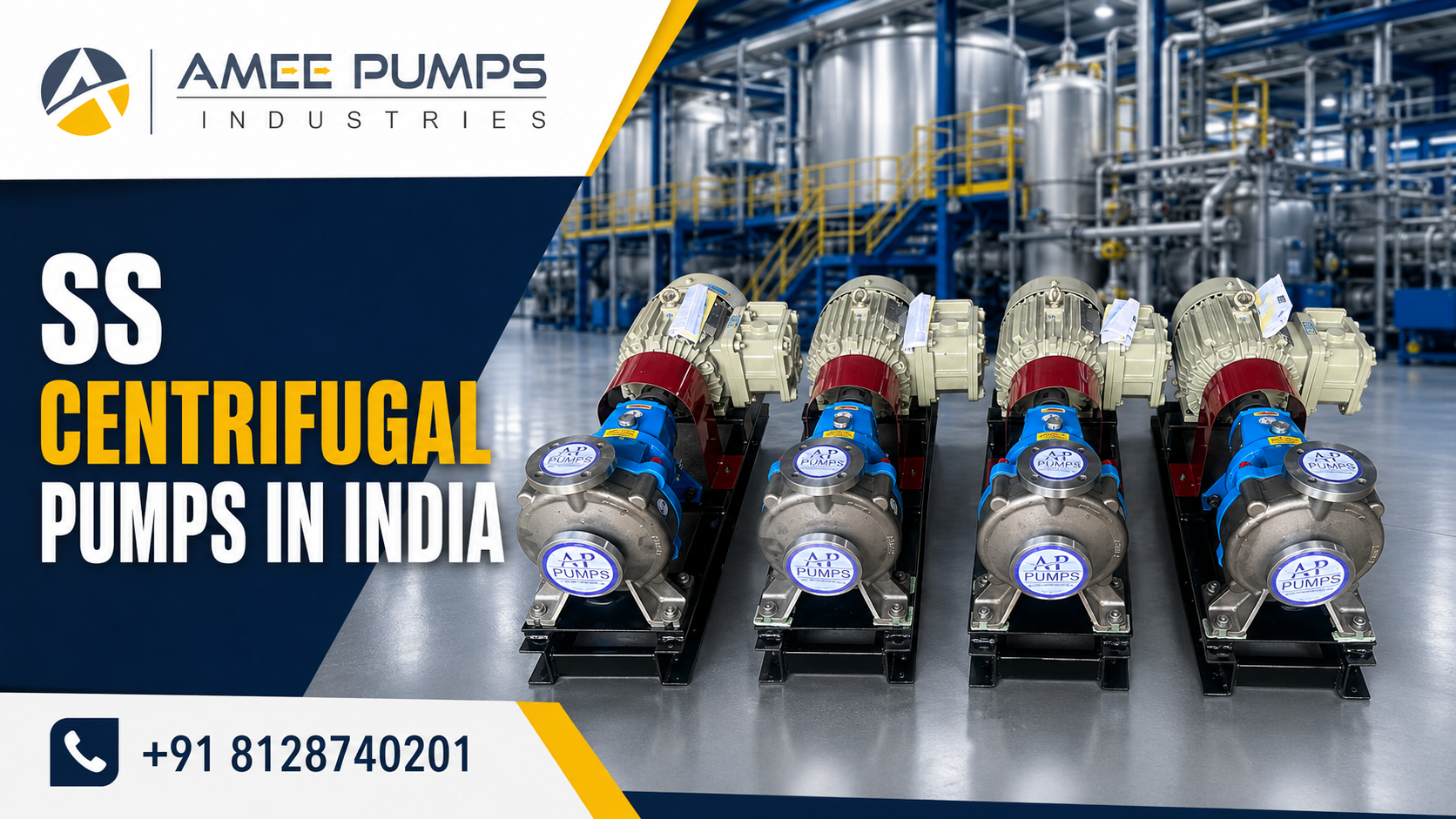
SS CENTRIFUGAL PUMPS IN INDIA
Discover high-quality SS centrifugal pumps in India. Amee Pumps Industries offers reliable, cost-effective solutions for diverse industrial needs in Ahmedabad a
What Are SS Centrifugal Pumps? An Overview
SS centrifugal pumps, constructed primarily from stainless steel alloys, are a type of dynamic pump. They operate by converting rotational kinetic energy, typically from an electric motor, into the hydrodynamic energy of the fluid being pumped. This is achieved through an impeller rotating within a casing. As the impeller spins, it draws fluid into the pump's eye and accelerates it outwards radially. The casing then guides this high-velocity fluid, converting its kinetic energy into pressure energy, which propels the fluid through the discharge outlet.
Key Features and Technical Specifications
- Material of Construction: Predominantly SS304, SS316, SS316L, or other specialized stainless steel alloys for superior corrosion resistance.
- Impeller Design: Available in various configurations (e.g., closed, semi-open) optimized for specific fluid viscosities and solids content.
- Sealing Arrangements: Options include mechanical seals (single or double) or gland packing, chosen based on fluid properties and operating conditions.
- Flange Connections: Standardized flange types (e.g., ANSI, DIN) for easy integration into existing piping systems.
- Motor Compatibility: Designed to couple with standard electric motors, offering flexibility in power source selection.
- Operating Temperature Range: Capable of handling fluids within a broad temperature spectrum, depending on the specific alloy and seal type.
- Flow Rate and Head Capacity: Engineered to meet a wide range of hydraulic performance requirements, from low flow/high head to high flow/low head applications.
- Surface Finish: Options for polished or electropolished internal surfaces for hygienic applications, minimizing bacterial growth and facilitating cleaning.
Industrial Applications and Use Cases
- Chemical Processing: Transferring corrosive acids, alkalis, solvents, and other aggressive chemicals.
- Pharmaceuticals: Handling purified water, active pharmaceutical ingredients (APIs), and sterile solutions where hygiene is critical.
- Food and Beverage: Pumping milk, juices, oils, syrups, and other food-grade liquids, maintaining product integrity and preventing contamination.
- Water and Wastewater Treatment: Circulating treated water, managing effluent, and handling various stages of water purification.
- Textile Industry: Used in dyeing, bleaching, and finishing processes involving various chemical solutions.
- Pulp and Paper: Transferring slurries, process water, and chemical additives.
- General Industrial: Applications requiring clean fluid transfer, cooling systems, and general fluid circulation.
- Marine Applications: Handling saltwater and other corrosive fluids in marine environments.
How to Choose the Right SS Centrifugal Pump
Selecting the appropriate SS centrifugal pump is crucial for optimal performance and longevity. Consider these factors:
- Fluid Properties: Identify the exact nature of the fluid, including its chemical composition, viscosity, temperature, and presence of solids. This dictates the required stainless steel grade and sealing type.
- Required Flow Rate and Head: Determine the precise volume of fluid to be moved per unit of time and the total pressure (head) the pump needs to overcome.
- Material Compatibility: Ensure the chosen stainless steel alloy is fully compatible with the pumped fluid to prevent corrosion or degradation.
- Operating Environment: Consider ambient temperature, potential for explosive atmospheres (ATEX compliance), and space constraints.
- Power Source: Verify compatibility with available electrical power supply (voltage, phase, frequency).
- Certifications and Standards: Look for pumps that meet relevant industry standards (e.g., IS, ISO, API) and have necessary certifications for your application.
- Supplier Reputation and Support: Choose a manufacturer with a proven track record, strong technical expertise, and reliable after-sales service.
- Customization Needs: Assess if standard models suffice or if specific modifications are required for your unique application.
Quality Standards and Compliance
For SS centrifugal pumps, adherence to quality standards is non-negotiable, especially in sensitive industries. Buyers should look for manufacturers who comply with national and international standards such as Indian Standards (IS) for pump design and performance, ISO certifications (e.g., ISO 9001 for quality management), and specific industry standards like those from the American Petroleum Institute (API) for certain demanding applications. Verification of material traceability, hydrostatic testing, and performance testing reports is essential. Compliance ensures the pump is built to last, performs as specified, and meets safety and regulatory requirements.
Why Amee Pumps Industries' Experience and Capability Matters
With over a decade of experience since 2009, Amee Pumps Industries has established a strong foundation in designing and manufacturing high-quality SS centrifugal pumps. Led by seasoned professionals with deep expertise, the company leverages a technology-driven approach to achieve precision in design and manufacturing. This focus allows for cost-effective solutions without compromising on performance or reliability. Amee Pumps Industries prioritizes a robust quality control process throughout manufacturing, ensuring each pump meets stringent specifications. Their commitment to understanding client needs and delivering customized, dependable fluid handling solutions makes them a trustworthy partner for industrial requirements across India.
Installation, Maintenance, and Care Tips
Proper installation and regular maintenance are key to maximizing the lifespan and efficiency of your SS centrifugal pump.
- Installation: Ensure the pump is installed on a solid, level foundation to minimize vibration. Align the motor and pump shafts precisely to prevent premature wear on seals and bearings. Connect piping securely, avoiding undue stress on the pump casing. Prime the pump correctly before starting to prevent dry running.
- Routine Checks: Regularly inspect the pump for leaks, unusual noises, or excessive vibration. Monitor bearing temperatures and lubricant levels. Check the condition of the mechanical seal or gland packing.
- Performance Monitoring: Periodically check flow rates and pressure to ensure the pump is operating within its design parameters. Deviations can indicate wear, blockages, or other issues.
- Cleaning: For hygienic applications, follow recommended cleaning procedures (e.g., CIP/SIP) to maintain sanitary conditions and prevent cross-contamination.
- Seasonal Storage: If the pump is to be stored for extended periods, drain it completely, clean it thoroughly, and protect it from environmental damage.
Frequently Asked Questions
Commonly used grades include SS304 for general applications, SS316 for enhanced corrosion resistance against chlorides and acids, and SS316L for applications requiring superior resistance to pitting and crevice corrosion, often found in chemical and pharmaceutical industries.
Correct sizing involves analyzing your specific process requirements: the fluid's properties, the desired flow rate (volume per time), and the total dynamic head (pressure the pump must overcome). Consulting a pump manufacturer's performance curves or technical team is advisable.
A single mechanical seal is standard for many applications. A double mechanical seal, often used with a barrier fluid, provides enhanced safety and reliability for hazardous, abrasive, or high-temperature fluids, preventing leakage into the atmosphere.
While stainless steel offers excellent corrosion resistance, its hardness against abrasion varies. For highly abrasive fluids, specialized hardened materials or specific impeller designs might be necessary, or alternative pump types may be more suitable.
The lifespan of an SS centrifugal pump can vary significantly, typically ranging from 5 to 20 years or more. This depends heavily on the application, operating conditions, fluid properties, quality of manufacturing, and the rigor of the maintenance schedule.
Gland packing requires periodic adjustment to maintain a slight leak for lubrication and cooling, and replacement when worn. Mechanical seals are generally maintenance-free for their operational life but require careful installation and replacement if they fail.
Conclusion
Choosing the right SS centrifugal pump in India is a decision that directly impacts operational efficiency, product quality, and long-term cost-effectiveness. By understanding the critical role of material selection, performance specifications, and adherence to quality standards, businesses can make informed choices. Partnering with an experienced manufacturer like Amee Pumps Industries, known for its technical expertise and commitment to quality, ensures access to reliable, high-performance pumps tailored to diverse industrial needs. Prioritizing proper installation and diligent maintenance will further guarantee the longevity and optimal functioning of your fluid handling systems.
Get In Touch
Amee Pumps Industries
