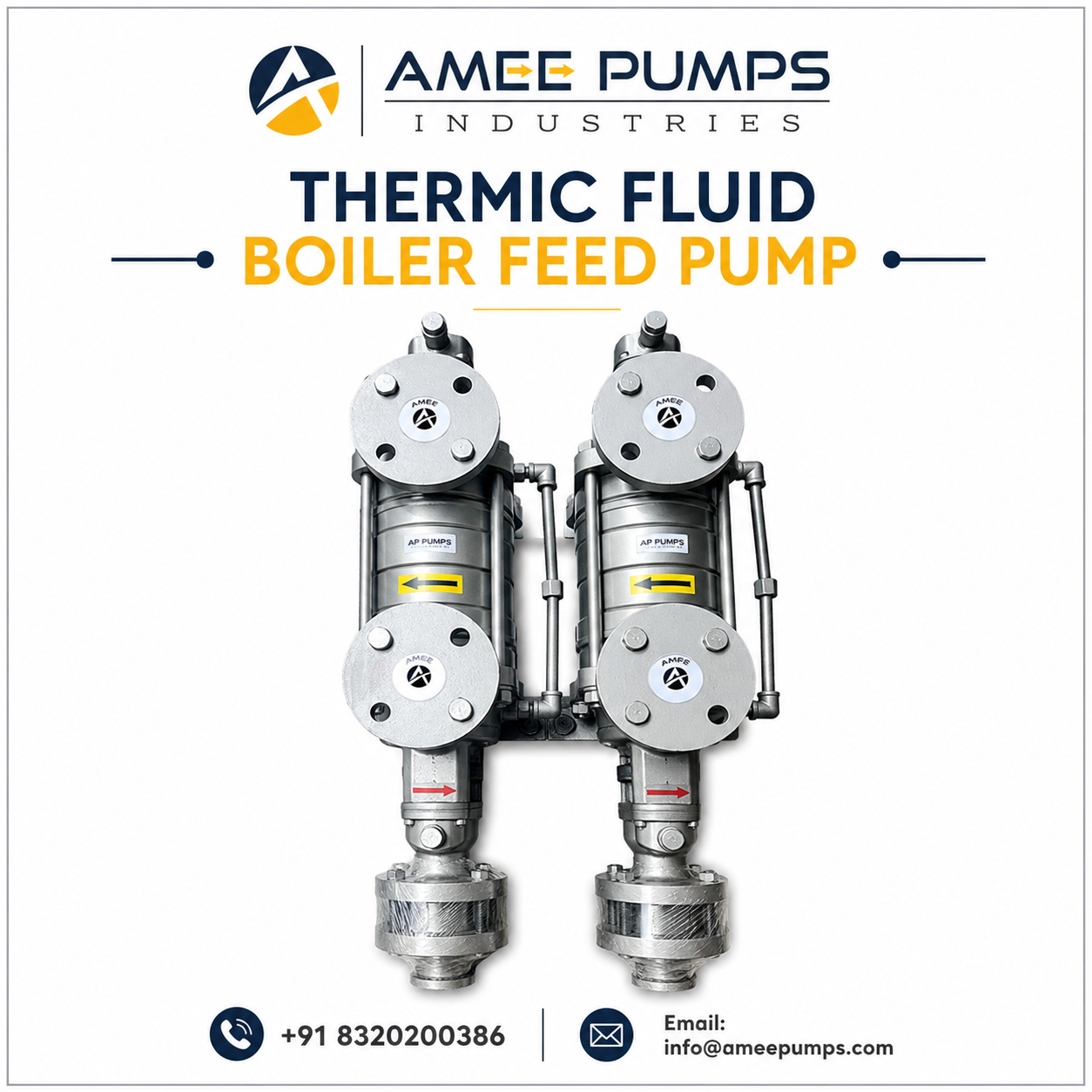
Thermic Fluid Boiler Feed Pump
Expertly engineered Thermic Fluid Boiler Feed Pumps for industrial applications in Ahmedabad. Reliable, efficient, and cost-effective solutions from Amee Pumps
What is a Thermic Fluid Boiler Feed Pump? — Overview
A thermic fluid boiler feed pump is a specialized centrifugal pump designed for circulating synthetic thermal fluids or oils at elevated temperatures, typically ranging from 150°C to over 300°C. Unlike standard water pumps, these units are built with materials and sealing technologies capable of withstanding extreme heat and the unique properties of heat transfer fluids. Their primary function is to draw the heated fluid from the boiler or heat exchanger and deliver it under pressure to the process equipment, then return the cooled fluid for reheating. This continuous circulation is essential for maintaining stable process temperatures.
Key Features and Technical Specifications
When selecting a thermic fluid boiler feed pump, several key features and specifications are crucial for ensuring optimal performance and longevity:
- High-Temperature Construction: Built with materials like cast iron, ductile iron, or stainless steel suitable for high-temperature applications.
- Specialized Sealing: Utilizes mechanical seals specifically designed for thermal fluids, often with barrier fluid systems to prevent leakage and fluid degradation.
- Robust Bearing System: Features heavy-duty bearings, often oil-lubricated, to handle the radial and axial loads at high operating temperatures.
- Back Pull-Out Design: Allows for easy maintenance and servicing without disturbing the pump casing or piping connections.
- API 610 Compliance (Optional): For critical applications, pumps may adhere to standards like API 610 for enhanced reliability and safety.
- Closed Impeller Design: Ensures efficient fluid transfer and minimizes cavitation risks.
- Flange Connections: Robust, high-temperature rated flange connections for secure and leak-free operation.
- Variable Speed Drive Compatibility: Can be configured for VFD operation to optimize energy consumption and process control.
Industrial Applications and Use Cases
Thermic fluid boiler feed pumps are indispensable across numerous industrial sectors where precise high-temperature heat transfer is required:
- Textile Industry: Used in dyeing machines, stenters, and drying equipment to maintain consistent processing temperatures.
- Chemical Processing: Essential for reactors, distillation columns, and other processes requiring controlled heating.
- Pharmaceutical Manufacturing: Utilized in sterilization, drying, and various synthesis processes.
- Food and Beverage Production: Employed in pasteurization, cooking, and drying applications.
- Wood Processing: Powers heating systems for plywood manufacturing, particleboard production, and drying kilns.
- Asphalt and Bitumen Heating: Circulates thermal oil to maintain the required temperatures for road construction materials.
- Plastic and Rubber Industries: Used in extruders, molding machines, and calendering operations.
- Oil and Gas Sector: For heating crude oil, process streams, and in refinery operations.
How to Choose the Right Thermic Fluid Boiler Feed Pump
Selecting the appropriate thermic fluid boiler feed pump involves careful consideration of your specific operational needs and system parameters. Here’s a checklist to guide your decision:
- Flow Rate and Head Requirements: Accurately determine the required flow rate (LPM/GPM) and total dynamic head (meters/feet) for your system.
- Operating Temperature and Pressure: Specify the maximum operating temperature and pressure of the thermic fluid.
- Fluid Properties: Understand the viscosity, specific gravity, and thermal expansion characteristics of the heat transfer fluid being used.
- Material Compatibility: Ensure the pump materials are compatible with the thermic fluid and operating conditions to prevent corrosion or degradation.
- Seal Type: Select a mechanical seal suitable for high temperatures and the specific thermic fluid, considering barrier fluid requirements.
- Motor Specifications: Choose a motor with appropriate power, voltage, and enclosure type for the industrial environment.
- Manufacturer's Expertise: Partner with a manufacturer with proven experience in designing and supplying high-temperature pumps.
- After-Sales Support: Verify the availability of spare parts, maintenance services, and technical assistance.
Quality Standards and Compliance
For thermic fluid boiler feed pumps, adherence to stringent quality standards is non-negotiable to ensure safety, reliability, and performance. While specific standards for thermic fluid pumps can vary, manufacturers often follow guidelines related to high-temperature fluid handling and general pump construction. Look for manufacturers who can demonstrate:
ISO 9001 Certification: Indicates a robust quality management system in place for design, manufacturing, and service.
Adherence to relevant industry codes: While not always a direct standard for thermic fluid pumps, understanding compliance with codes like API 610 (for critical applications) or general mechanical engineering standards shows a commitment to quality.
Material Certifications: Assurance that materials used meet specified standards for high-temperature service.
Rigorous Testing: Pumps should undergo hydrostatic testing, performance testing, and mechanical seal integrity checks before dispatch.
Verifying these aspects with a potential supplier ensures you are investing in a product built to withstand demanding industrial conditions.
Why Amee Pumps Industries' Experience and Capability Matters
At Amee Pumps Industries, our two decades of experience, led by seasoned professionals like Mr. Amit Panchal, have been dedicated to mastering the intricacies of pump design and manufacturing. We leverage a technology-driven approach that allows for precision engineering and cost-effective solutions, particularly for specialized applications like thermic fluid boiler feed pumps. Our manufacturing processes are honed for efficiency and accuracy, ensuring each pump meets stringent performance criteria.
We pride ourselves on a proven track record of delivering reliable, high-performance pumps tailored to the unique demands of industries operating in Ahmedabad and beyond. Our technical team possesses deep expertise in material science and fluid dynamics, enabling us to select the optimal configurations for high-temperature and demanding fluid applications. This commitment to engineering excellence, combined with a focus on quality control throughout the production cycle, makes Amee Pumps Industries a trusted partner for your critical pumping needs.
Installation, Maintenance, and Care Tips
Proper installation and regular maintenance are crucial for the longevity and efficient operation of your thermic fluid boiler feed pump.
Installation
Ensure the pump is installed on a solid, level foundation to minimize vibration.
Align the pump and motor shafts precisely to prevent premature wear on seals and bearings.
Connect piping carefully, avoiding stress on the pump casing.
Follow the manufacturer's specific instructions for flushing and filling the system with thermic fluid.
Ensure the mechanical seal barrier fluid system, if applicable, is correctly set up and monitored.
Maintenance
Regularly check for leaks around the mechanical seal and gland packing.
Monitor bearing temperatures and lubrication levels.
Inspect the pump casing and impeller for signs of wear or cavitation.
Periodically check the motor for proper operation and electrical connections.
Ensure the system's expansion tank and vents are clear to prevent pressure build-up.
- Follow the thermic fluid manufacturer's recommendations for fluid analysis and replacement schedules.
Adhering to these practices will help maximize the performance and lifespan of your thermic fluid boiler feed pump.
Frequently Asked Questions
A thermic fluid boiler feed pump is designed to circulate heat transfer fluid at high temperatures within industrial heating systems. It ensures a continuous flow of heated fluid from the boiler to the process equipment and returns the cooled fluid for reheating, maintaining stable and efficient thermal operations.
These pumps are constructed with specialized materials and sealing technologies to withstand extreme temperatures (often above 300°C) and the chemical properties of synthetic thermal oils. Standard water pumps are not designed for such high heat or the specific characteristics of heat transfer fluids.
Key considerations include the required flow rate and head, the maximum operating temperature and pressure, the specific properties of the thermic fluid, material compatibility, and the type of mechanical seal needed. The manufacturer's experience with high-temperature applications is also vital.
Amee Pumps Industries employs a technology-driven manufacturing process and rigorous quality control measures. We utilize high-grade materials, specialized sealing solutions, and robust bearing systems, backed by our team's extensive experience in designing and producing reliable industrial pumps.
While designed for thermal fluids, compatibility depends on the specific fluid's properties and the pump's construction materials and seal type. It is essential to match the pump's specifications with the chosen heat transfer fluid to ensure optimal performance and longevity.
The mechanical seal is critical for preventing the high-temperature, often volatile, thermic fluid from leaking out of the pump. Specialized seals designed for these conditions, sometimes with barrier fluid systems, are essential to maintain system integrity, prevent fluid degradation, and ensure operational safety.
Conclusion
For industries in Ahmedabad and across Gujarat that depend on precise thermal fluid management, the thermic fluid boiler feed pump is a cornerstone of operational success. Selecting a pump that is not only technically sound but also built with robust materials and advanced sealing technology is paramount. Factors like precise flow and head capabilities, material compatibility with your specific heat transfer fluid, and the manufacturer's proven expertise in high-temperature applications should guide your choice. Partnering with an experienced manufacturer like Amee Pumps Industries ensures you receive a reliable, efficient, and cost-effective solution designed to keep your critical processes running smoothly and safely.
Get In Touch
Amee Pumps Industries
