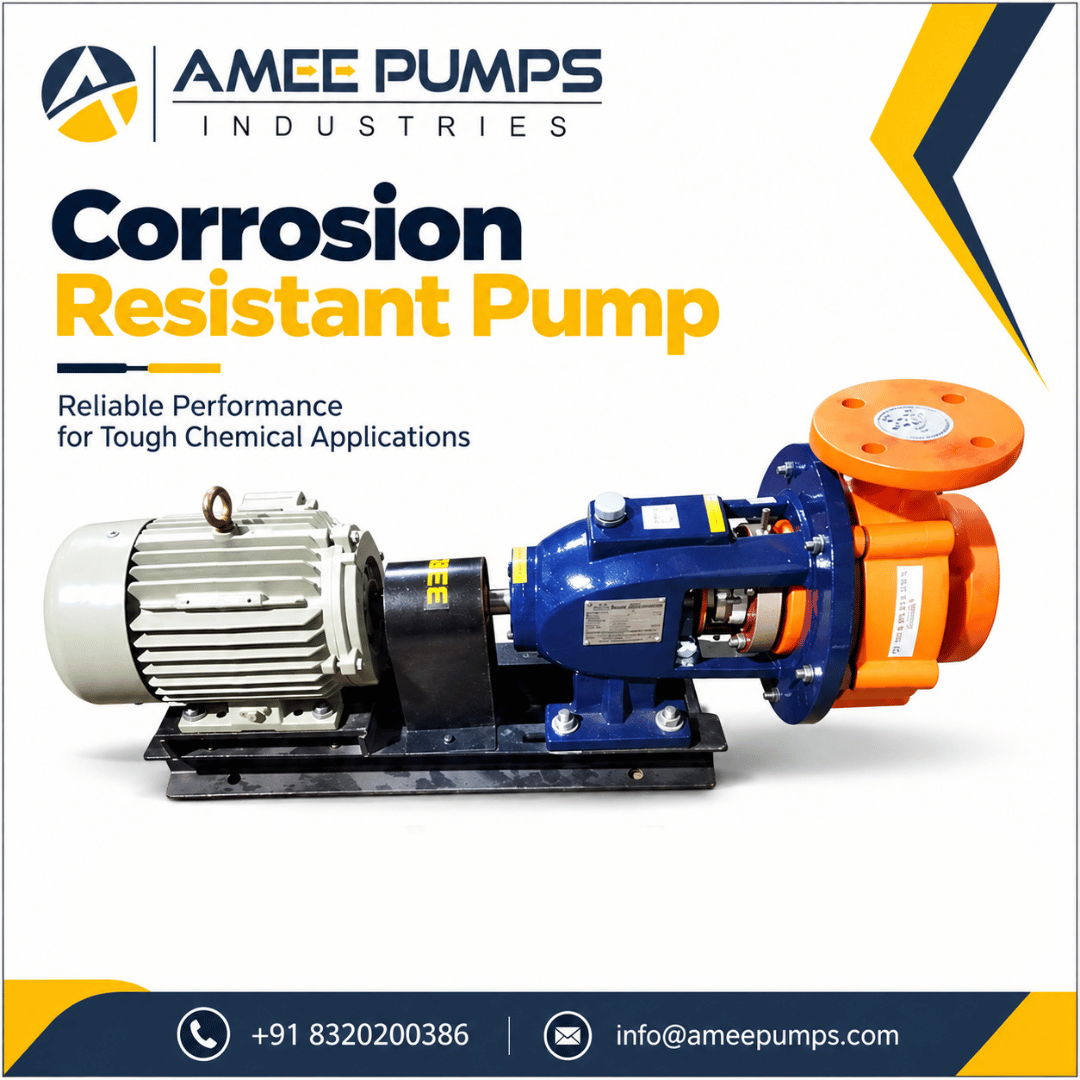
Corrosion Resistant Pump
In industrial settings where aggressive chemicals, strong acids, and harsh effluents are part of daily operations, the integrity of equipment is paramount. Standard pumps, often made from metal alloys, can quickly succumb to degradation, leading to costly downtime, product contamination, and safety hazards. This is where the importance of a corrosion resistant pump becomes undeniable. These specialized pieces of equipment are engineered to withstand chemical attack, ensuring reliable and safe fluid transfer even in the most demanding environments.
AMEE PUMPS INDUSTRIES, established in 2009 in Ahmedabad, Gujarat, India, has dedicated itself to providing robust, technology-driven pumping solutions. With a strong focus on non-metallic materials like Polypropylene (PP), the company offers a range of pumps designed to combat the challenges posed by corrosive substances. This guide explores the world of corrosion resistant pumps, their applications, the benefits they offer, and how to choose the right one for your specific needs.
Understanding Corrosion Resistant Pumps
A corrosion resistant pump is designed with materials and construction techniques that prevent or significantly slow down the process of material degradation caused by chemical reactions with its surroundings. Unlike conventional pumps, these are built to handle substances that would rapidly corrode metals, leading to failure.
The Science of Resistance: Materials Matter
The choice of material is the cornerstone of a corrosion resistant pump's effectiveness. While various advanced alloys exist, non-metallic materials, particularly Polypropylene (PP), have emerged as highly effective solutions for a wide spectrum of corrosive applications.
- Polypropylene (PP): This thermoplastic polymer is celebrated for its exceptional resistance to a broad range of strong acids, alkalis, and industrial effluents. It maintains its structural integrity where many metal alloys would degrade. PP pumps are particularly suitable for applications where fluid purity is essential or metal contamination must be avoided.
- Stainless Steel (SS) 316: For certain applications requiring a balance of corrosion resistance and higher temperature tolerance, SS 316 is a common choice. When used for pump casings, impellers, and shafts, it offers good resistance to many chemicals and high-temperature environments. AMEE PUMPS INDUSTRIES manufactures Centrifugal SS Monoblock Pumps with SS 316 casing and impeller, and an anticorrosive stainless steel shaft, highlighting their commitment to durable solutions.
Design Considerations for Longevity
Beyond material selection, the design of a corrosion resistant pump plays a crucial role. Features like back-pull-out designs, which allow for maintenance without disturbing the piping, contribute to ease of service and operational efficiency. Glandless designs, as offered by AMEE PUMPS INDUSTRIES with their Polypropylene Glandless Pumps, eliminate potential leak points, crucial when handling hazardous or valuable corrosive liquids. Dynamically balanced impellers also contribute to smoother operation, reduced vibration, and extended component life.
It's important to note that even resistant materials have limitations. Polypropylene, for instance, has temperature thresholds beyond which its strength and resistance can diminish. Understanding these limits is key to selecting the appropriate pump for sustained performance.
Key Applications of Corrosion Resistant Pumps
The versatility of corrosion resistant pumps makes them indispensable across numerous industries:
Benefits of Employing Corrosion Resistant Pumps
Investing in the right corrosion resistant pump solution offers significant advantages:
- Enhanced Safety: Reduces the risk of leaks and failures when handling hazardous chemicals, protecting personnel and the environment.
- Reduced Downtime: Superior material resilience minimizes unexpected breakdowns and maintenance interruptions.
- Extended Equipment Lifespan: Prevents premature degradation, leading to longer service life for the pump and associated systems.
- Product Integrity: Non-metallic construction prevents contamination of sensitive fluids, crucial in pharmaceutical and food-grade applications.
- Cost-Effectiveness: While initial investment might be higher than standard pumps, the reduced maintenance, longer lifespan, and prevention of costly failures offer superior long-term value.
- Operational Reliability: Consistent performance even in the presence of aggressive media ensures smooth and uninterrupted processes.
Choosing the Right Corrosion Resistant Pump
Selecting the optimal corrosion resistant pump requires careful consideration of several factors to ensure compatibility and performance.
Key Selection Criteria:
- Fluid Characteristics: Identify the exact chemical composition, concentration, temperature, and pH of the fluid to be pumped. This is the most critical factor in material selection.
- Temperature Requirements: Ensure the chosen material (e.g., PP) can withstand the operating temperature without compromising its integrity.
- Flow Rate and Head: Determine the required flow rate (volume per unit time) and head (pressure the pump must overcome) for the application.
- System Design: Consider whether a horizontal, vertical, magnetic drive, or glandless pump best fits the installation space and operational needs.
- Maintenance Access: Opt for designs that facilitate easy maintenance, such as back-pull-out configurations.
- Sealing Requirements: For hazardous fluids, glandless or sealless designs are preferable to prevent leaks.
Buyer Insight: Ask About Material Certifications
When procuring corrosion resistant pumps, always inquire about the material certifications and the exact grade of polypropylene or stainless steel used. Understanding the manufacturing and quality assurance processes behind the pump can provide confidence in its long-term performance against specific corrosive media.
Questions to Ask Before You Buy:
- What specific grade of Polypropylene or Stainless Steel is used for the wetted parts?
- What is the maximum operating temperature and pressure for this pump with my specific fluid?
- Are the impellers dynamically balanced to minimize vibration?
- What are the recommended maintenance intervals and procedures?
- Does the design allow for easy servicing without disrupting the associated piping?
- What quality assurance checks are performed during manufacturing?
AMEE PUMPS INDUSTRIES: Your Partner in Corrosion Resistance
Established in 2009 and based in Ahmedabad, Gujarat, India, AMEE PUMPS INDUSTRIES is a technology-driven manufacturer specializing in precision-engineered pumping solutions. They excel in providing cost-effective, non-metallic pumping systems designed for the most challenging industrial environments.
Specialized Product Offerings:
AMEE PUMPS INDUSTRIES offers a comprehensive range of pumps, with a particular strength in Polypropylene (PP) pumps engineered to handle highly corrosive fluids where traditional metal pumps are unsuitable or uneconomical. Their expertise extends to:
- Polypropylene (PP) Pumps: Including Centrifugal PP Monoblock Pumps and Glandless Pumps, designed for superior chemical resistance.
- Centrifugal SS 316 Pumps: Featuring SS 316 casing and impeller for robust performance in aggressive media.
- Diverse Pump Types: Their portfolio includes Chemical Process Pumps, Magnetic Drive Pumps, Air Cooled Pumps, Vertical Long Shaft Pumps, and more, addressing a wide array of industrial fluid handling needs.
Commitment to Quality and Reliability:
With a focus on quality assurance, AMEE PUMPS INDUSTRIES implements rigorous checks at every stage, from material sourcing to final testing. This ensures that their products deliver reliability and longevity, even in the harshest operating conditions. Their technology-driven approach guarantees precision and cost-effectiveness in every pump they manufacture.
Frequently Asked Questions
What makes a pump "corrosion resistant"?
A corrosion resistant pump is constructed from materials that do not degrade when exposed to specific corrosive chemicals, acids, or alkalis. These materials are chosen for their inherent chemical inertness and ability to maintain structural integrity over time in aggressive environments.
When should I choose a Polypropylene (PP) pump over a metal pump?
You should choose a PP pump when dealing with strong acids, alkalis, or industrial effluents that would rapidly corrode standard metal alloys. PP offers excellent chemical resistance at moderate temperatures and prevents metallic contamination of the fluid.
What are the temperature limitations of Polypropylene pumps?
Polypropylene's strength and resistance can decrease at elevated temperatures. While specific limits vary, it's generally suited for moderate temperature applications. Always consult the manufacturer's specifications for precise temperature ratings based on the fluid being handled.
Are glandless pumps better for corrosive fluids?
Yes, glandless (or sealless) pumps are often preferred for highly corrosive or hazardous fluids because they eliminate the potential leak points associated with traditional shaft seals (glands). This ensures leak-free operation and enhances safety.
How do I ensure a pump is suitable for my specific corrosive fluid?
The best approach is to provide the pump manufacturer with detailed information about your fluid's chemical composition, concentration, temperature, and flow requirements. They can then recommend the appropriate pump material and design for optimal compatibility and performance.
Ready to Secure Your Operations?
Don't let corrosive fluids compromise your industrial processes. AMEE PUMPS INDUSTRIES offers reliable, high-performance corrosion resistant pumps designed for demanding applications. Leveraging advanced materials like Polypropylene and Stainless Steel, we provide solutions tailored to your specific needs.
Contact AMEE PUMPS INDUSTRIES today to discuss your fluid handling challenges and find the optimal corrosion resistant pump solution for your facility in Ahmedabad, Gujarat, and beyond.
