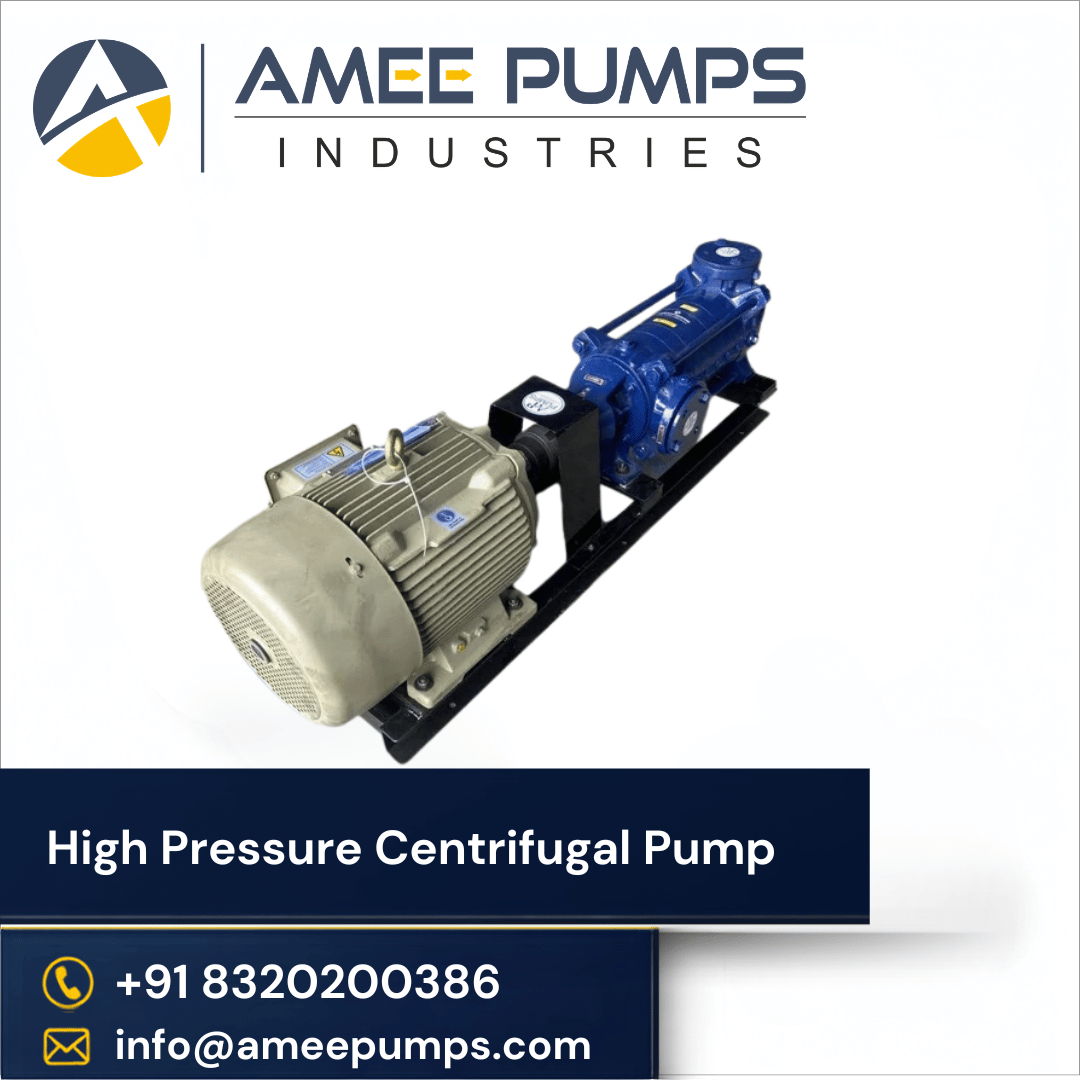
High Pressure Centrifugal Pump
High Pressure Centrifugal Pumps are indispensable workhorses in modern industry, engineered to deliver exceptional discharge pressures far exceeding those of standard pumping equipment. These robust machines are crucial for operations requiring significant force to move fluids, playing a vital role across sectors from municipal water supply to complex petrochemical processing. Understanding their capabilities and selection criteria is key to ensuring operational efficiency and reliability.
Understanding High Pressure Centrifugal Pumps
At its core, a centrifugal pump operates by converting mechanical energy into hydraulic energy. This is achieved through an impeller, a rotating component with vanes, that spins within a casing. As the impeller rotates, it imparts velocity to the fluid entering its eye, drawing it into the pump. This velocity is then converted into pressure as the fluid exits the impeller and moves through the pump casing, often referred to as a volute. This design is exceptionally efficient for low-viscosity fluids, offering continuous and smooth operation with a relatively simple construction featuring fewer moving parts compared to other pump types.
The distinction of a High Pressure Centrifugal Pump lies in its ability to generate significantly elevated discharge pressures, often well above 150 psi and commonly reaching or exceeding 1,000 psi in demanding industrial applications. To achieve these high pressures, these pumps often employ a multistage design. In a multistage configuration, the fluid discharged from the impeller of one stage is directed to the impeller of the next stage. Each subsequent impeller adds further head (pressure) to the fluid, allowing the pump to build up the necessary high discharge pressure progressively. This staged approach is fundamental to meeting the stringent pressure requirements of many industrial processes.
While incredibly versatile, it's important to note that standard centrifugal pumps are generally best suited for fluids with low viscosity. For highly viscous fluids, their efficiency can decrease significantly, and alternative pump technologies might be more appropriate. Additionally, like many centrifugal pumps, they often require priming – filling the pump casing and suction line with fluid before startup – to operate effectively and prevent damage.
Diverse Applications Across Industries 🌊
The robust performance and high-pressure capabilities of these pumps make them suitable for a vast array of critical industrial applications:
Water Supply & Distribution
Efficiently boosting water pressure for large municipal networks, high-rise buildings, and extensive irrigation systems.
Chemical & Petrochemical Processing
Transferring corrosive fluids such as acids and alkalis, and handling volatile substances safely under pressure.
Oil & Gas Industry
Critical for processes requiring high-pressure fluid transfer, including refining, pipeline operations, and enhanced oil recovery.
Wastewater Treatment
Managing fluid flows and pressure in complex treatment plants, including dewatering operations.
Boiler Feed Applications
Supplying high-pressure water to boilers, essential for power generation and industrial heating processes.
General Industrial Processes
Moving fluids between tanks, supporting various manufacturing operations, and facilitating process flows requiring high head.
Key Benefits of High Pressure Centrifugal Pumps
Opting for a high pressure centrifugal pump offers several distinct advantages for industrial operations:
- High Flow Rates: Capable of handling large volumes of fluid efficiently.
- Continuous Operation: Provide a smooth, uninterrupted flow, ideal for continuous processes.
- Simplicity & Reliability: Fewer moving parts lead to simpler designs, reducing potential points of failure and often resulting in lower maintenance needs.
- Cost-Effectiveness: For many applications involving low-viscosity fluids, they represent an efficient and economical pumping solution, especially with designs focused on reduced costs.
- Versatility: Adaptable to a wide range of fluid types (within viscosity limits) and demanding pressure conditions.
Selecting Your High Pressure Centrifugal Pump
Choosing the right high pressure centrifugal pump is a critical decision that impacts operational efficiency, safety, and cost. Consider the following factors:
Essential Selection Criteria:
- Pressure & Flow Requirements: Accurately determine the required discharge pressure and the necessary flow rate for your specific application. This is the most fundamental parameter.
- Fluid Properties: Analyze the nature of the fluid to be pumped, including viscosity, temperature, corrosiveness, and the presence of solids. While good for low-viscosity fluids, aggressive or abrasive fluids may require specific materials or designs.
- System Design: Understand the overall system layout, including suction lift, discharge head, and pipework configuration, as these influence the pump's performance.
- Materials of Construction: Select materials compatible with the pumped fluid to ensure longevity and prevent corrosion or degradation. Stainless steel or specialized alloys are often used for corrosive or high-temperature applications.
- Efficiency & Energy Consumption: Higher efficiency pumps consume less energy, leading to lower operating costs over the pump's lifespan.
- Reliability and Maintenance: Consider the pump's design for durability and ease of maintenance, especially in continuous operation scenarios.
Buyer Insight: Don't underestimate the importance of understanding your fluid's precise characteristics. Minor variations in viscosity or the presence of even small abrasive particles can significantly impact pump longevity and performance, especially in high-pressure, multistage systems. Accurate data is key to a successful pump selection.
Questions to Ask Before Buying:
What is the exact pressure rating required for my application?
Having precise pressure requirements ensures you select a pump with adequate capacity and design.
What is the flow rate needed at the specified pressure?
Flow rate and pressure are interdependent; defining both is crucial for proper pump sizing.
What are the complete properties of the fluid being pumped (viscosity, temperature, corrosivity)?
Fluid properties dictate material selection and can influence pump efficiency and lifespan.
What are the site conditions, including ambient temperature and available power?
Environmental factors and power availability are practical considerations for pump operation.
What level of maintenance is expected, and are spare parts readily available?
Understanding maintenance requirements and support ensures long-term operational viability.
AMEE PUMPS INDUSTRIES: Precision in Every Pump 🇮🇳
Founded in 2009 and based in Ahmedabad, Gujarat, India, AMEE PUMPS INDUSTRIES leverages a technology-driven approach to pump design and manufacturing. The company prioritizes precision, efficiency, and simplicity, aiming to reduce design costs while delivering high-performance, cost-effective solutions. With a commitment to achieving project success, AMEE PUMPS INDUSTRIES offers a comprehensive range of pumps tailored to meet diverse industrial demands. Their product portfolio includes specialized solutions like the High Pressure Centrifugal Pump, alongside other critical types such as Chemical Process Pumps, Filter Press Side Suction Pumps, and more, ensuring clients receive reliable equipment designed for demanding applications.
Centrifugal Back Pull Out Pump
Chemical Process Pump
High Pressure Multistage Boiler Feed Pump
Sewage Dewatering Pump
Frequently Asked Questions
What makes a centrifugal pump a "high pressure" pump?
A high pressure centrifugal pump is defined by its capability to generate discharge pressures significantly exceeding those of standard pumps, often well over 150 psi and commonly reaching 1,000 psi or more in industrial settings. This is typically achieved through a multistage design where fluid passes through multiple impellers sequentially.
Are high pressure centrifugal pumps suitable for all types of liquids?
These pumps are most effective with low-viscosity fluids. They are not ideal for highly viscous liquids, as efficiency drops. For abrasive or highly corrosive fluids, specific material selection and pump designs are necessary.
What is the main advantage of a multistage centrifugal pump?
The primary advantage of a multistage design is its ability to achieve very high discharge pressures by adding pressure in successive stages, making it suitable for applications where a single-stage pump would be insufficient.
How does AMEE PUMPS INDUSTRIES ensure the quality of its high pressure pumps?
AMEE PUMPS INDUSTRIES utilizes a tech-driven approach focused on precision in design and manufacturing. They aim for simplicity and efficiency, ensuring their pumps deliver reliable, cost-effective solutions designed for consistent performance.
Find Your High Pressure Pumping Solution
For demanding industrial applications requiring reliable, high-pressure fluid transfer, AMEE PUMPS INDUSTRIES offers expertly engineered solutions. Benefit from their tech-driven approach and commitment to efficiency. Contact us to discuss your specific needs and discover how our High Pressure Centrifugal Pumps can optimize your operations.
Explore AMEE PUMPS Solutions