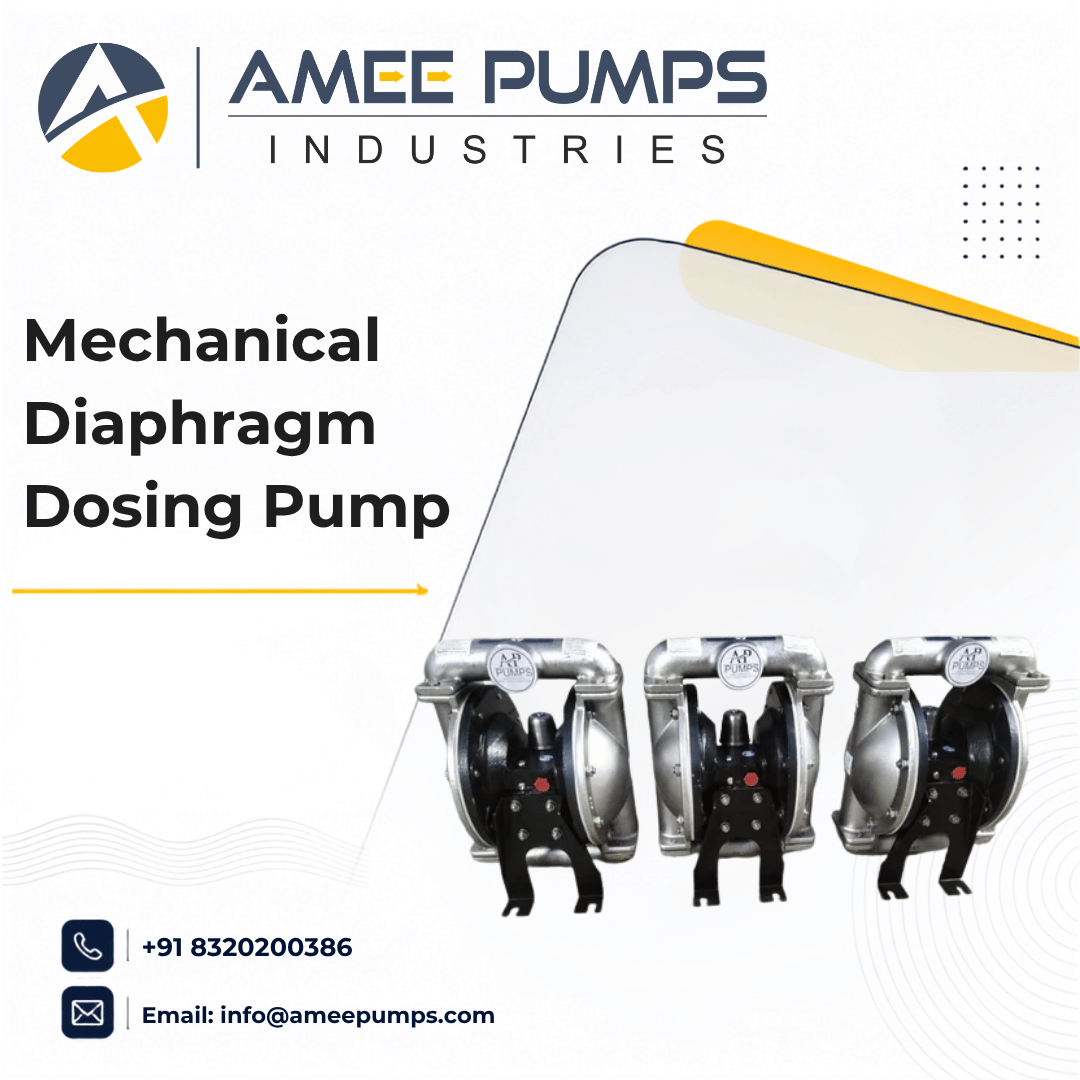
Mechanical Diaphragm Dosing Pump
Mechanical Diaphragm Dosing Pumps are essential components in various industrial processes, known for their precision and reliability in fluid transfer and dosing. Among these, Air Operated Double Diaphragm (AODD) pumps offer a robust and versatile solution. AMEE PUMPS INDUSTRIES, established in 2009 and based in Ahmedabad, Gujarat, India, leverages a tech-driven approach to design and manufacture these critical pumps, aiming for cost-effectiveness and precision. With a claimed 100% success rate on projects, they focus on delivering solutions tailored to demanding applications.
This guide delves into the intricacies of mechanical diaphragm dosing pumps, with a special focus on AODD technology, exploring their benefits, applications, and what to consider when making a purchase. Whether you're handling aggressive chemicals, sensitive materials, or viscous fluids, understanding these pumps is key to optimizing your operations.
What Are Mechanical Diaphragm Dosing Pumps?
Mechanical Diaphragm Dosing Pumps are a type of positive displacement pump. Their core function relies on the reciprocating motion of a flexible diaphragm to move fluid. In many industrial contexts, especially for challenging fluid transfer, Air Operated Double Diaphragm (AODD) pumps are a prominent example. These pumps operate using compressed air, which alternately pressurizes chambers on either side of two diaphragms. As one diaphragm moves forward, it expels fluid from its chamber while drawing fluid into the other chamber. This dual-diaphragm action ensures a continuous and controlled flow, making them ideal for precise dosing applications.
The absence of traditional mechanical seals and rotating shafts in AODD pumps significantly reduces wear and the likelihood of leaks, which is a major advantage when handling hazardous or corrosive substances. This design simplifies maintenance and enhances operational safety.
Key Benefits of AODD Pumps for Dosing
Choosing AODD pumps for your dosing needs offers a multitude of advantages:
Reduced Leakage Risk
The diaphragm design eliminates the need for dynamic seals, greatly minimizing the risk of hazardous fluid leaks.
Lower Maintenance
Fewer wear parts compared to mechanically actuated systems translate into reduced maintenance downtime and costs.
Corrosive Fluid Handling
Robust construction materials allow these pumps to handle a wide range of corrosive and aggressive chemicals effectively.
Precise Dosing Control
Variable air supply pressure and volume allow for fine-tuning of flow rates, enabling accurate dosing of fluids.
Continuous Operation
Designed for durability, AODD pumps can operate continuously, ensuring consistent process flow.
Self-Priming Capability
Many AODD pumps can handle dry running for short periods and are self-priming, simplifying startup and operation.
Diverse Applications of Diaphragm Dosing Pumps
The versatility of mechanical diaphragm dosing pumps, particularly AODD types, makes them suitable for a vast array of industries and applications:
- Chemical Transfer and Dosing: Precisely metering chemicals in water treatment, chemical processing, and manufacturing.
- Paint and Solvent Handling: Safely transferring volatile and potentially hazardous paints, inks, and solvents.
- Slurry and Sludge Pumping: Moving abrasive and high-solids content fluids in mining, construction, and waste management.
- Oil and Lubricant Transfer: Handling various oils and lubricants in industrial maintenance and production.
- Wastewater Treatment: Dosing treatment chemicals and transferring wastewater sludge.
- Pharmaceutical Liquid Transfer: Safely moving sensitive pharmaceutical liquids where contamination is a concern.
- Ceramic Processing: Transferring slip and glazes in ceramic manufacturing.
- Adhesive and Sealant Pumping: Dispensing adhesives and sealants in assembly and manufacturing lines.
AMEE PUMPS INDUSTRIES manufactures AODD pumps specifically designed to meet the demands of these challenging chemical transfer and dosing systems.
Buyer Guidance: Selecting the Right Mechanical Diaphragm Dosing Pump
Choosing the appropriate mechanical diaphragm dosing pump is crucial for efficiency, safety, and longevity. Consider these factors:
💡 Buyer Insight: Fluid Properties Matter Most
Always prioritize understanding the exact properties of the fluid you need to pump. Viscosity, specific gravity, temperature, pH, and the presence of solids will heavily influence the pump material selection, diaphragm type, and overall pump design needed for optimal performance and longevity.
Key Selection Criteria:
- Fluid Compatibility: Ensure the pump materials (including diaphragms, valves, and housing) are chemically resistant to the fluid being pumped.
- Flow Rate Requirements: Determine the necessary volume of fluid to be transferred or dosed per unit of time.
- Pressure Needs: Assess the system's back pressure or discharge pressure requirements.
- Solids Handling: If pumping fluids with solids, consider pumps with valve designs that can accommodate them without clogging.
- Environmental Conditions: Evaluate the operating environment for factors like temperature, humidity, and potential for hazardous atmospheres.
- Air Supply: Ensure a reliable source of clean, dry compressed air of the correct pressure and volume is available.
- Maintenance Considerations: While AODD pumps generally require less maintenance, ease of access for diaphragm and valve replacement is still a factor.
Questions to Ask Before Buying:
- What is the exact chemical composition and concentration of the fluid?
- What are the maximum and minimum operating temperatures?
- Does the fluid contain any abrasive solids? If so, what is their size and concentration?
- What is the required flow rate and discharge pressure?
- What is the available compressed air supply (pressure and volume)?
- Are there any specific material compatibility requirements for the pump components?
- What are the safety regulations relevant to the fluid and the pumping operation?
Experience the AMEE PUMPS INDUSTRIES Difference
Established in 2009, AMEE PUMPS INDUSTRIES, located in Ahmedabad, Gujarat, India, brings a wealth of experience to the pump manufacturing sector. They employ a tech-driven approach to pump design and manufacturing, focusing intently on precision, cost-effectiveness, and operational simplicity. This commitment ensures that the Air Operated Double Diaphragm (AODD) pumps they produce are not just functional but also highly reliable for demanding chemical transfer and dosing systems.
With a dedication to quality and a claimed 100% success rate on projects, AMEE PUMPS INDUSTRIES strives to provide tailored solutions that meet the specific needs of their clients. Their expertise in AODD technology means they understand the challenges of handling difficult fluids and are equipped to offer dependable pumping solutions.
Frequently Asked Questions (FAQ)
What is the primary difference between a mechanical diaphragm pump and an AODD pump?
A traditional mechanical diaphragm pump uses a mechanical linkage (like a crankshaft or solenoid) to move the diaphragm. An Air Operated Double Diaphragm (AODD) pump, however, uses compressed air to actuate the diaphragms, offering advantages like variable speed control, stall capability, and inherent air-driven safety features.
Can AODD pumps handle solids in the fluid?
Yes, many AODD pumps are designed with special valve configurations (like large solids-handling ball valves) that allow them to effectively pump fluids containing solids, slurries, and sludge.
Are AODD pumps suitable for hazardous environments?
Yes, AODD pumps are often preferred in hazardous or potentially explosive environments because they are air-powered, meaning they have no electrical components that could create an ignition source. They are also designed to prevent leaks, further enhancing safety.
How is the flow rate controlled on an AODD pump?
The flow rate of an AODD pump is typically controlled by regulating the amount and pressure of the compressed air supplied to it. Adjusting an air regulator allows for precise speed and volume control.
What are the most common failure points in diaphragm pumps?
The most common wear components are the diaphragms and the check valves (whether they are balls or flap types). Diaphragm failure can occur due to material fatigue, chemical attack, or excessive stress. Valve issues can arise from wear, debris, or improper seating.
Ready to Optimize Your Fluid Transfer?
Discover how AMEE PUMPS INDUSTRIES' Air Operated Double Diaphragm (AODD) Pumps can provide reliable, cost-effective, and safe solutions for your chemical transfer and dosing needs. Leveraging a tech-driven approach and years of expertise, we are committed to delivering precision engineered pumps from our base in Ahmedabad, Gujarat, India.
Request a Solution Consultation