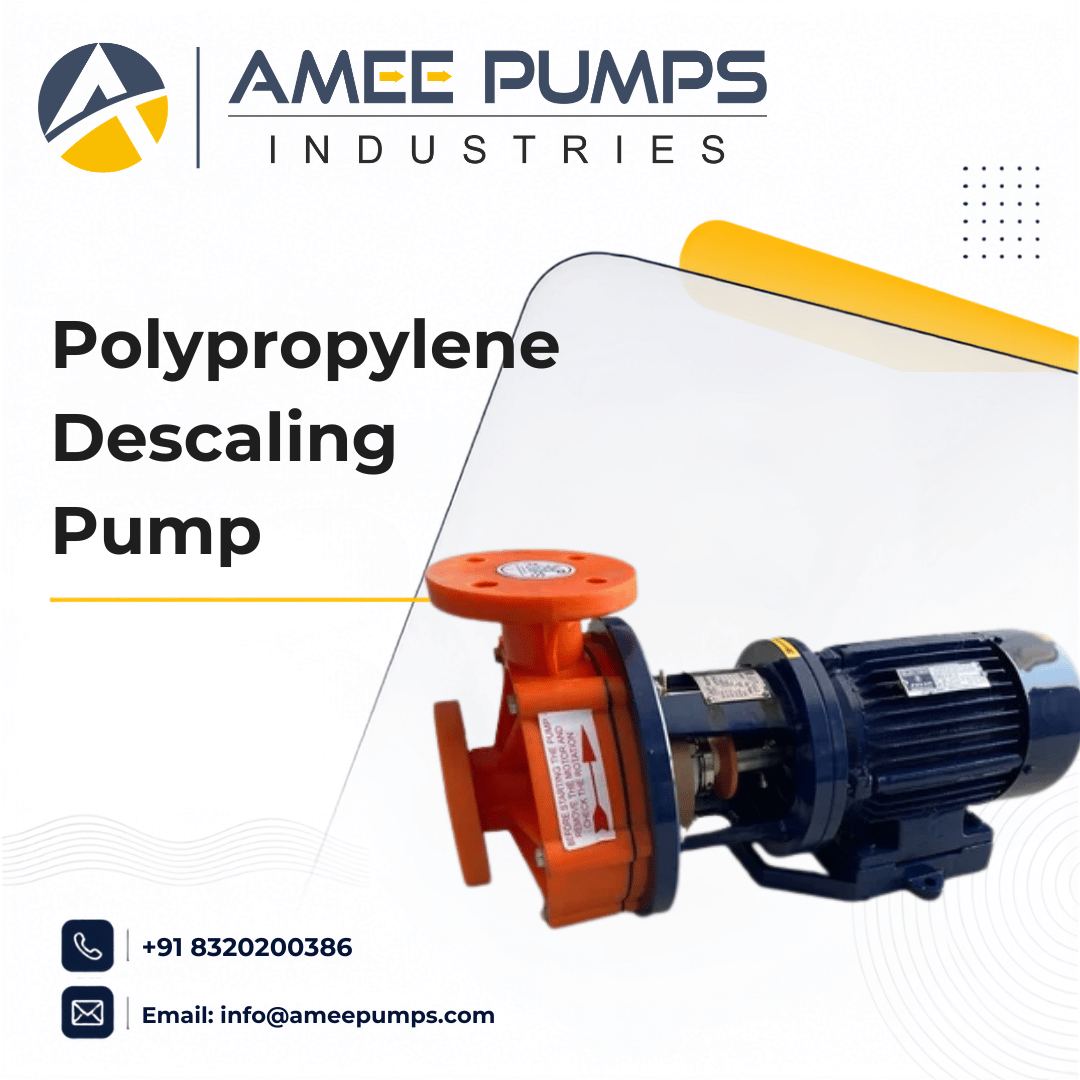
Polypropylene Descaling Pump
Expertly designed polypropylene descaling pumps for industrial use in Ahmedabad. Reliable, efficient, and cost-effective solutions from Amee Pumps Industries.
What is a Polypropylene Descaling Pump? — Overview
A polypropylene descaling pump is a type of positive displacement pump constructed primarily from polypropylene, a robust thermoplastic known for its excellent chemical resistance and durability. These pumps are designed to handle abrasive slurries, viscous liquids, and corrosive chemicals, making them particularly effective for descaling operations. They work by creating a vacuum to draw fluid into a chamber and then displacing it through an outlet, ensuring consistent flow rates regardless of pressure fluctuations. The material choice of polypropylene provides a significant advantage in environments where metal pumps would quickly corrode or degrade.
Key Features and Technical Specifications
- Material Construction: Body and wetted parts made from high-grade polypropylene for superior chemical and abrasion resistance.
- Positive Displacement Mechanism: Ensures consistent flow rate and self-priming capabilities, ideal for viscous or slurry-like media.
- Sealless Design Options: Available with sealless magnetic drive or double mechanical seals to prevent leakage of hazardous or corrosive fluids.
- High Temperature Resistance: Capable of operating effectively at elevated temperatures common in industrial descaling processes.
- Corrosion Immunity: Unaffected by a wide range of acids, alkalis, solvents, and other aggressive chemicals.
- Robust Impeller/Gear Design: Engineered for efficient handling of solids and abrasive particles without significant wear.
- Compact and Lightweight: Polypropylene's inherent properties allow for a lighter pump unit compared to metallic alternatives.
- Variable Speed Drive Compatibility: Allows for precise control over flow rates to match specific descaling requirements.
Industrial Applications and Use Cases
- Chemical Processing: Transferring corrosive acids and alkalis used in cleaning and descaling reactors, tanks, and pipelines.
- Metal Finishing: Pumping pickling solutions and acid baths for surface treatment and scale removal from metal parts.
- Wastewater Treatment: Handling abrasive sludge and chemicals used in scale prevention and equipment cleaning.
- Pharmaceutical Manufacturing: Transferring cleaning-in-place (CIP) solutions and sanitizing agents that may be corrosive.
- Textile Industry: Pumping dye solutions and cleaning chemicals that require chemical inertness.
- Power Generation: Descaling boilers and heat exchangers where mineral deposits are a significant issue.
- Food and Beverage: Transferring cleaning solutions for equipment sanitation where chemical resistance is needed.
- Oil and Gas: Pumping corrosive chemicals for pipeline maintenance and scale removal.
How to Choose the Right Polypropylene Descaling Pump
Selecting the appropriate polypropylene descaling pump involves careful consideration of your specific operational needs. Here’s a checklist to guide your decision:
- Fluid Characteristics: Identify the exact chemical composition, concentration, temperature, and viscosity of the fluid to be pumped. This is crucial for confirming polypropylene's compatibility and determining required pump capacity.
- Flow Rate and Head Requirements: Determine the necessary volume of fluid to be moved per unit of time and the total pressure the pump must overcome.
- Operating Environment: Assess ambient temperature, potential for exposure to external chemicals, and any space constraints.
- Seal Requirements: Decide if a sealless design is necessary to prevent leaks of hazardous materials or if a standard mechanical seal will suffice.
- Solids Handling Capability: If the descaling solution contains abrasive particles or sludge, ensure the pump's impeller or gear design can handle them without excessive wear.
- Certifications and Standards: Verify if the pump meets relevant industry standards for safety and performance, especially if handling hazardous chemicals.
- Manufacturer's Expertise: Choose a supplier with proven experience in manufacturing and supporting polypropylene pumps for industrial applications.
- After-Sales Support: Inquire about availability of spare parts, maintenance services, and technical assistance.
Quality Standards and Compliance
When selecting a polypropylene descaling pump, verifying compliance with relevant quality standards is non-negotiable. Manufacturers committed to quality will adhere to international standards such as ISO 9001 for quality management systems. For pumps used in specific hazardous environments or applications, certifications like ATEX (for explosive atmospheres) or specific material certifications might be required. Buyers should look for clear documentation regarding material traceability, manufacturing process controls, and performance testing. Reputable suppliers will readily provide details on the specific standards their products meet and offer test reports to confirm performance and material integrity.
Why Amee Pumps Industries' Experience and Capability Matters
At Amee Pumps Industries, our two decades of experience, led by seasoned professionals like Mr. Amit Panchal, have been dedicated to mastering the intricacies of pump design and manufacturing. We leverage a technology-driven approach, which allows us to achieve exceptional precision while significantly reducing design and manufacturing costs compared to traditional methods. Our team has honed its skills in complex, fast-paced industrial settings, earning us a reputation for reliability and efficiency.
We pride ourselves on a 100% project success rate, a testament to our meticulous engineering, robust quality control, and deep understanding of our clients' needs. Our manufacturing processes are optimized for producing high-quality, cost-effective polypropylene descaling pumps that deliver maximum value. When you partner with Amee Pumps Industries, you are choosing a team committed to delivering solutions that streamline your operations and ensure long-term performance, backed by genuine expertise and a proven track record.
Installation, Maintenance, and Care Tips
Proper installation and regular maintenance are crucial for maximizing the lifespan and performance of your polypropylene descaling pump.
- Installation: Ensure the pump is installed on a stable, level foundation, away from excessive heat or direct sunlight. Connect piping securely, ensuring proper alignment to avoid undue stress on the pump casing. For sealless pumps, ensure the magnetic coupling is not subjected to external magnetic fields.
- Priming: If the pump is not self-priming, ensure it is properly primed before starting operation. Never run the pump dry, as this can damage internal components.
- Regular Inspections: Periodically check for leaks, unusual noises, or vibrations. Inspect the pump casing and connections for any signs of wear or chemical attack.
- Seal Maintenance: For pumps with mechanical seals, follow the manufacturer's recommendations for inspection and replacement. Ensure the seal faces are kept clean.
- Fluid Compatibility: Always confirm that the fluid being pumped is within the chemical and temperature resistance limits of the polypropylene material.
- Cleaning: After use, especially with aggressive chemicals, it is advisable to flush the pump with a compatible, less aggressive fluid or water to remove residual corrosive substances.
Frequently Asked Questions
Polypropylene offers exceptional resistance to a wide array of acids, alkalis, and solvents commonly found in descaling solutions. This chemical inertness prevents corrosion and degradation, ensuring a longer service life for the pump compared to metal alternatives in aggressive environments.
Yes, many polypropylene descaling pumps are designed with robust impeller or gear mechanisms capable of handling abrasive slurries and particles. The inherent toughness of polypropylene also contributes to its resistance against wear from such materials.
While specific grades vary, polypropylene generally offers good thermal stability. Most industrial polypropylene pumps can operate effectively in temperatures ranging from ambient up to around 80°C (176°F), though consulting the manufacturer's specifications for precise limits is essential.
Accurate determination of your required flow rate and discharge head is critical. You must also consider the viscosity and specific gravity of the fluid being pumped. Consulting with a pump specialist who can analyze your process parameters will ensure you select an appropriately sized and specified unit.
A sealless design, often using magnetic drives, eliminates the potential for leaks associated with traditional shaft seals. This is particularly important when pumping hazardous, corrosive, or valuable fluids, enhancing safety, environmental protection, and reducing operational losses.
Regular inspections are recommended, ideally before and after each significant operational period. Key checks include looking for leaks, listening for unusual noises, monitoring performance, and examining the pump casing and connections for any signs of wear or damage.
Conclusion
For industries in Ahmedabad facing the persistent challenge of scale and corrosive fluid handling, a polypropylene descaling pump represents a reliable and cost-effective solution. Its inherent chemical resistance, durability, and ability to handle abrasive media make it indispensable for maintaining operational efficiency and equipment integrity. When selecting a pump, prioritizing material compatibility, understanding your specific process requirements, and partnering with an experienced manufacturer like Amee Pumps Industries ensures you receive a solution that delivers long-term performance and value.
Get In Touch
Amee Pumps Industries
