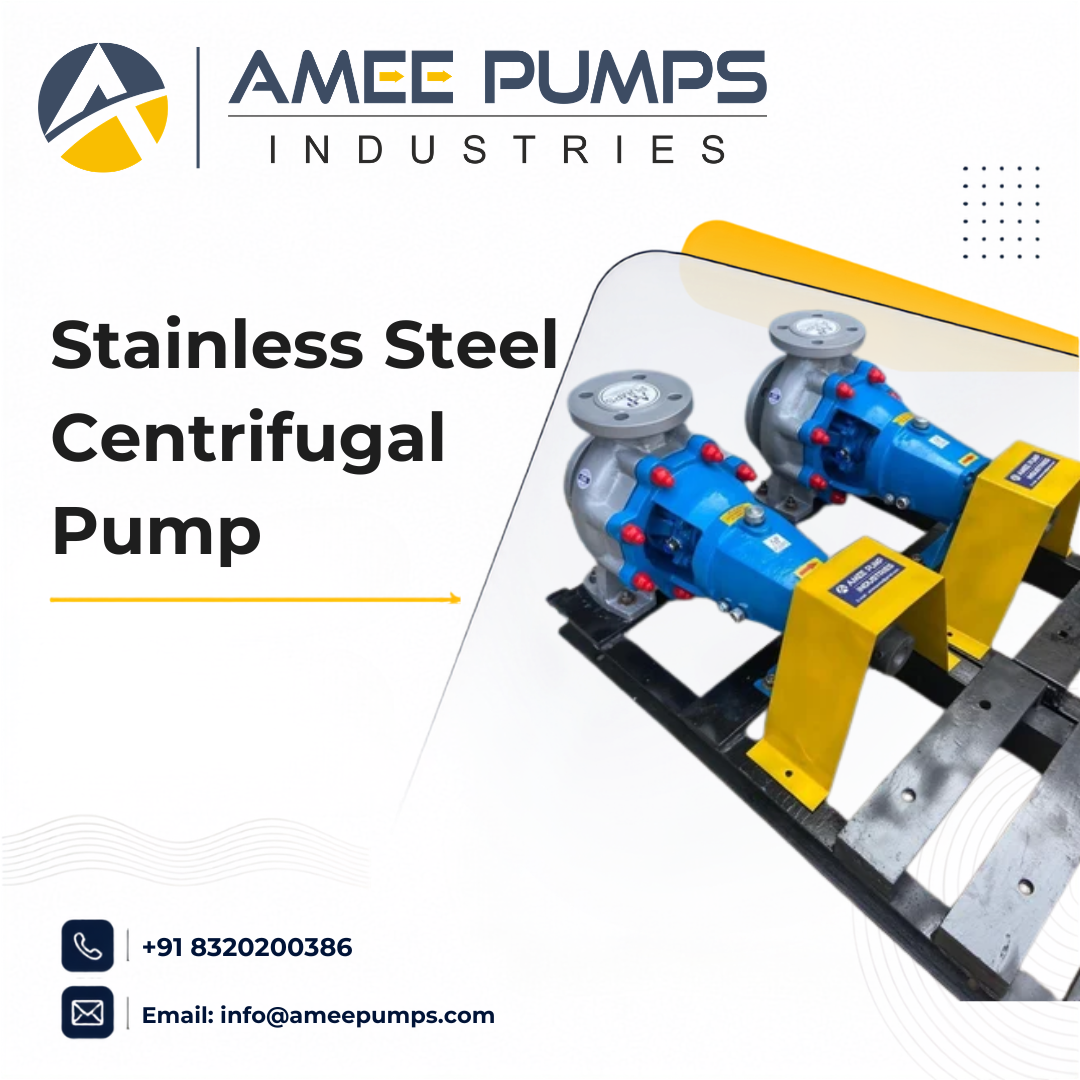
Stainless Steel Centrifugal Pump
Expertly designed stainless steel centrifugal pumps for industrial use in Ahmedabad. Discover reliable, efficient, and cost-effective solutions from Amee Pumps
Key Features and Technical Specifications
- Corrosion Resistance: High-grade stainless steel alloys (e.g., SS304, SS316, SS316L) offer excellent protection against a wide range of acids, alkalis, solvents, and other corrosive chemicals.
- Hygienic Design: Smooth internal surfaces and crevice-free construction minimize bacterial growth and facilitate easy cleaning, essential for food, beverage, and pharmaceutical applications.
- High Temperature Capability: Stainless steel can withstand elevated temperatures, making these pumps suitable for processes involving hot fluids.
- Durability and Strength: The inherent strength of stainless steel ensures a long service life, even under demanding operational pressures and mechanical stresses.
- Non-Contaminating: The material does not leach impurities into the fluid, preserving the integrity and purity of sensitive liquids.
- Variety of Impeller Designs: Available with open, semi-open, or closed impellers to suit different fluid viscosities and solids content.
- Seal Options: Configurable with various mechanical seal types (e.g., single, double, cartridge) to ensure leak-free operation and compatibility with different fluids and operating conditions.
Industrial Applications and Use Cases
- Chemical Processing: Transferring acids, bases, solvents, and other aggressive chemicals in manufacturing plants.
- Pharmaceuticals: Handling purified water, active pharmaceutical ingredients (APIs), and sterile solutions where purity is paramount.
- Food and Beverage: Pumping milk, juices, oils, syrups, and other food products, ensuring hygiene and preventing contamination.
- Water Treatment: Circulating treated water, handling wastewater, and managing chemical dosing in treatment facilities.
- Textile Industry: Used in dyeing, bleaching, and finishing processes involving various chemical solutions.
- Petrochemicals: Transferring refined petroleum products and intermediate chemicals where corrosion resistance is needed.
- General Industrial: Applications requiring clean water transfer, cooling systems, and general fluid circulation.
How to Choose the Right Stainless Steel Centrifugal Pump
Selecting the appropriate stainless steel centrifugal pump is vital for optimal performance and longevity. Consider these factors:
- Fluid Properties: Analyze the chemical composition, viscosity, temperature, and presence of solids in the fluid to be pumped. This dictates the required grade of stainless steel and impeller type.
- Flow Rate and Head Requirements: Determine the precise volume of fluid to be moved per unit time and the total pressure (head) the pump must overcome.
- Material of Construction: Select the correct stainless steel alloy (e.g., SS316L for highly corrosive or pharmaceutical applications) based on fluid compatibility.
- Seal Type: Choose a mechanical seal that is compatible with the fluid, temperature, and pressure to prevent leaks and ensure safety.
- Motor Specifications: Ensure the motor is appropriately sized, rated for the environment (e.g., explosion-proof if necessary), and compatible with available power supply.
- Certifications and Standards: Verify that the pump meets relevant industry standards (e.g., hygienic standards for food/pharma) and has necessary certifications.
- Supplier Reputation and Support: Partner with a reputable manufacturer or supplier known for quality, reliability, and good after-sales service.
- Customization Needs: Assess if any specific modifications or custom designs are required for your unique application.
Quality Standards and Compliance
For stainless steel centrifugal pumps, adherence to quality standards is non-negotiable, especially in sensitive industries. Buyers should look for pumps manufactured in compliance with international standards such as ISO 9001 for quality management systems. For specific applications, compliance with standards like ASME for pressure vessels, FDA regulations for food contact materials, or GMP (Good Manufacturing Practice) guidelines for pharmaceuticals is essential. Verification of material traceability, surface finish specifications (e.g., Ra values for hygienic applications), and hydrostatic testing reports provides assurance of quality and performance.
Why Amee Pumps Industries' Experience and Capability Matters
At Amee Pumps Industries, our two decades of experience, led by Mr. Amit Panchal, have instilled a deep understanding of the nuances in pump design and manufacturing. We leverage a technology-driven approach that allows for precision engineering and cost-effective solutions without compromising on quality. Our manufacturing processes are honed for efficiency and reliability, ensuring that every stainless steel centrifugal pump we produce meets rigorous internal quality controls.
Our technical team possesses the expertise to assess complex fluid handling challenges and recommend or design pumps that precisely fit your application's demands. We focus on building robust, durable pumps that deliver consistent performance, minimizing downtime for our clients. From material selection to final testing, our commitment is to provide reliable, high-value fluid transfer solutions that support the operational success of industries in Ahmedabad and beyond.
Installation, Maintenance, and Care Tips
Proper installation and regular maintenance are key to maximizing the lifespan and performance of your stainless steel centrifugal pump.
- Installation: Ensure the pump is installed on a solid, level foundation to prevent vibration. Align the pump and motor shafts accurately during coupling. Connect piping carefully, avoiding undue stress on the pump casing. Prime the pump before starting to prevent dry running, which can damage seals and impellers.
- Routine Checks: Regularly inspect for leaks around the seals and flanges. Monitor for unusual noises or vibrations during operation. Check bearing lubrication levels and temperatures.
- Cleaning: For hygienic applications, follow established cleaning-in-place (CIP) or sterilization-in-place (SIP) procedures. Ensure all internal surfaces are accessible for thorough cleaning.
- Seal Maintenance: Pay close attention to the mechanical seal. Any signs of leakage should be addressed promptly by a qualified technician.
- Impeller and Casing Inspection: Periodically inspect the impeller for wear or damage and the casing for signs of erosion or corrosion. Address any issues to maintain pumping efficiency.
- Seasonal Storage: If the pump is to be stored for extended periods, drain all fluid, clean thoroughly, and protect all openings from dust and moisture.
Frequently Asked Questions
The primary advantage is its exceptional resistance to corrosion and chemical attack, making it suitable for a wide range of aggressive fluids and preventing contamination of sensitive media.
SS304 and SS316 are the most common grades. SS316, with its molybdenum content, offers superior resistance to pitting and crevice corrosion, making it ideal for more demanding chemical and pharmaceutical applications.
It converts rotational kinetic energy from a motor into fluid velocity via an impeller. As the fluid exits the impeller into the volute casing, its velocity is slowed down, converting this kinetic energy into static pressure.
A closed impeller has vanes enclosed by two shrouds, suitable for clean, low-viscosity fluids. An open impeller has vanes attached to a hub but no shrouds, better for fluids with some solids or higher viscosity.
Regular visual inspections for leaks should be performed during operation. A more thorough inspection or replacement schedule depends on the operating conditions, fluid type, and manufacturer recommendations, often ranging from annually to every few years.
While standard designs are best for low-viscosity fluids, specialized designs with larger clearances, specific impeller types, and higher power motors can handle moderately viscous fluids. For very high viscosities, positive displacement pumps are often more efficient.
Conclusion
For industries in Ahmedabad requiring reliable, hygienic, and corrosion-resistant fluid transfer, stainless steel centrifugal pumps are an essential component. Their ability to handle diverse media, from aggressive chemicals to pure pharmaceuticals, underscores their versatility. Choosing the right pump involves a careful assessment of fluid properties, operational requirements, and material compatibility. Partnering with experienced manufacturers like Amee Pumps Industries ensures you receive not only a high-quality product but also the technical support needed to select and maintain the optimal solution for your specific industrial needs.
Get In Touch
Amee Pumps Industries
