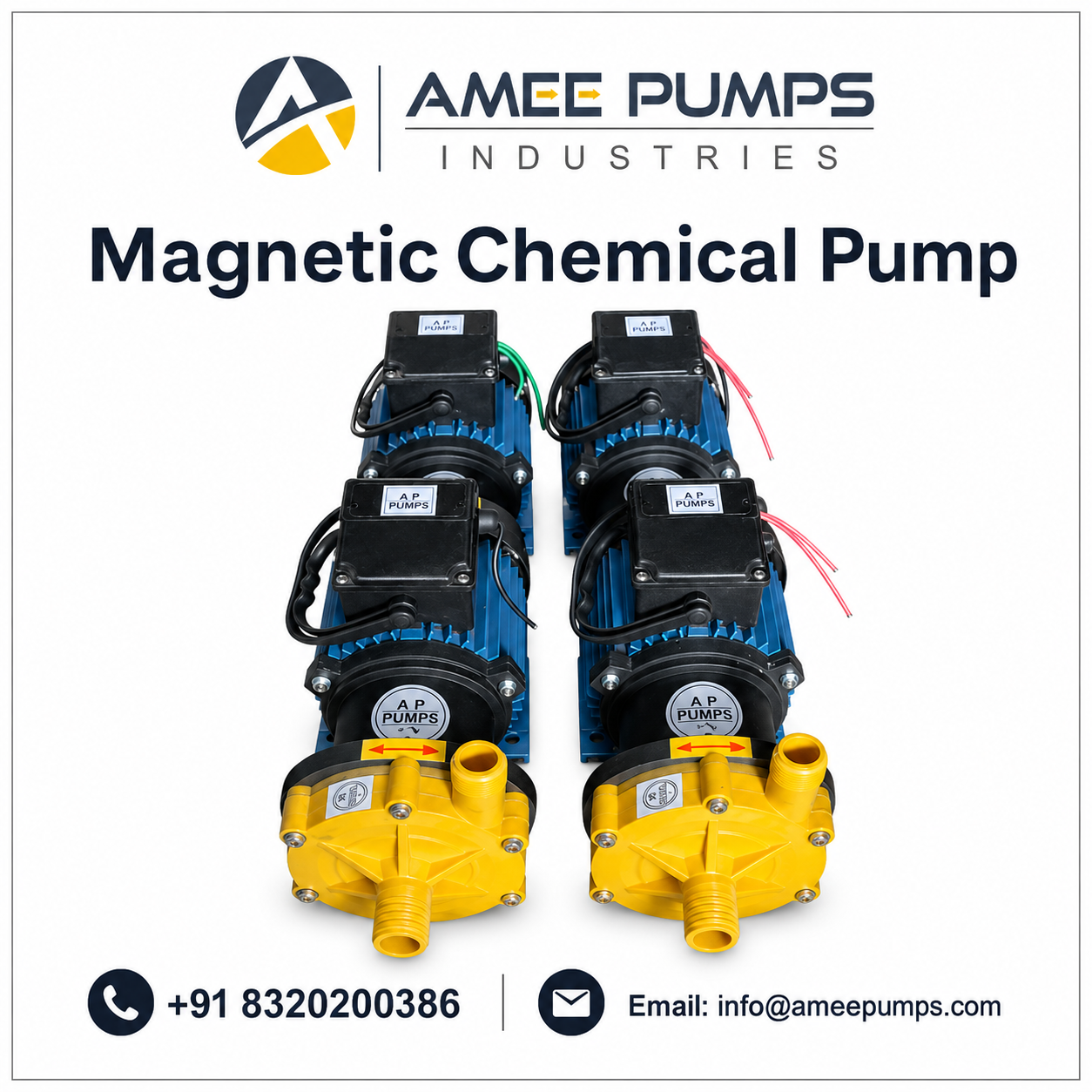
Magnetic Chemical Pump
Expert magnetic chemical pump solutions in Ahmedabad. Discover reliable, high-performance pumps designed for demanding industrial applications.
What is a Magnetic Chemical Pump? — Overview
A magnetic chemical pump, also known as a magnetic drive pump or mag-drive pump, is a type of centrifugal pump designed to handle hazardous, corrosive, or valuable fluids without the risk of leakage. Instead of a mechanical shaft seal, it uses a system of magnets to transmit torque from the motor to the impeller. The motor drives an outer magnet assembly, which in turn magnetically couples with an inner magnet assembly attached to the impeller. This ingenious design creates a hermetically sealed pumping chamber, ensuring that the pumped fluid never comes into contact with the external environment or the pump's motor.
Key Features and Technical Specifications
- Sealless Design: Eliminates dynamic seals, preventing leakage and reducing maintenance.
- Hermetically Sealed Casing: Ensures complete containment of hazardous or valuable fluids.
- Corrosion-Resistant Materials: Constructed from materials like PTFE, PFA, PVDF, or exotic alloys to withstand aggressive chemicals.
- Variable Flow Rates: Capable of handling a wide range of flow capacities based on impeller and motor size.
- High Temperature and Pressure Capabilities: Designed to operate reliably under demanding process conditions.
- Low NPSHr: Optimized hydraulic design for efficient operation even with low Net Positive Suction Head available.
- Explosion-Proof Motor Options: Available with ATEX or equivalent certified motors for hazardous environments.
- Compact Footprint: Often designed for space-saving installations.
Industrial Applications and Use Cases
- Chemical Processing: Transferring acids, bases, solvents, and other corrosive chemicals in manufacturing processes.
- Pharmaceuticals: Handling high-purity water, active pharmaceutical ingredients (APIs), and sterile solutions where contamination is unacceptable.
- Petrochemicals: Pumping volatile hydrocarbons, fuels, and aggressive intermediates.
- Water and Wastewater Treatment: Metering chemicals for pH adjustment, disinfection, or flocculation.
- Food and Beverage: Transferring food-grade liquids, syrups, and flavorings where hygiene is critical.
- Semiconductor Manufacturing: Pumping ultra-pure chemicals and etchants in cleanroom environments.
- Mining and Metallurgy: Handling corrosive slurries and process fluids.
- Power Generation: Circulating chemicals for boiler feed water treatment.
How to Choose the Right Magnetic Chemical Pump
Selecting the appropriate magnetic chemical pump is crucial for ensuring safety, efficiency, and longevity. Consider these factors:
- Fluid Properties: Chemical composition, concentration, temperature, viscosity, specific gravity, and presence of solids.
- Flow Rate and Head Requirements: Determine the exact volume of fluid to be moved and the pressure it needs to overcome.
- Material Compatibility: Ensure all wetted parts are resistant to the specific chemical being pumped.
- Operating Conditions: Maximum and minimum operating temperatures, pressures, and environmental conditions.
- Safety and Environmental Regulations: Compliance requirements for hazardous fluid handling.
- Motor Specifications: Voltage, phase, frequency, and any special requirements like explosion-proofing.
- Certifications: Verify adherence to relevant industry standards (e.g., ISO, API).
- Supplier Reputation and Support: Choose a manufacturer with proven experience and reliable after-sales service.
Quality Standards and Compliance
For magnetic chemical pumps, adherence to stringent quality standards is non-negotiable. Buyers should look for manufacturers who comply with international standards such as ISO 9001 for quality management systems. Specific material certifications, like those for PTFE or exotic alloys, are also important to ensure the pump's longevity and safety when handling aggressive media. Compliance with industry-specific guidelines, such as those for hazardous area electrical equipment (e.g., ATEX directives in Europe, or equivalent national standards), is vital for pumps used in potentially explosive environments. Verifying that the pump's design and construction meet the specific demands of the fluid being handled and the operational environment is key to a successful and safe installation.
Why Amee Pumps Industries' Experience and Capability Matters
With a foundation built since 2009, Amee Pumps Industries brings a wealth of practical experience to the design and manufacturing of magnetic chemical pumps. Led by seasoned professionals with deep expertise in fluid dynamics and material science, our team understands the intricate challenges of chemical handling. We leverage a technology-driven approach, integrating advanced design tools and manufacturing processes to ensure precision and reliability. Our commitment to quality control at every stage, from material selection to final testing, guarantees that each pump meets rigorous performance benchmarks. This dedication to engineering excellence, coupled with our capability to offer customized solutions and dependable after-sales support, makes Amee Pumps Industries a trusted partner for your critical fluid transfer needs in Ahmedabad and beyond.
Installation, Maintenance, and Care Tips
Proper installation and regular maintenance are essential for the optimal performance and longevity of magnetic chemical pumps.
- Installation: Ensure the pump is installed on a solid, level foundation, away from excessive vibration. Verify that piping is properly supported and aligned to avoid undue stress on the pump casing. Ensure the motor's electrical connections are made by a qualified electrician according to local codes.
- Priming: Most centrifugal pumps, including mag-drive types, require priming before startup, especially if the suction line is not completely filled with liquid. Follow manufacturer guidelines for the specific model.
- Operation: Avoid running the pump dry, as this can damage the internal components and magnets. Monitor for unusual noises or vibrations, which could indicate a problem. Ensure the operating temperature stays within the pump's specified limits.
- Maintenance: While sealless pumps require less maintenance than sealed ones, regular inspections are still necessary. Check for any signs of external leakage (though rare), inspect the impeller and casing for wear or corrosion during scheduled shutdowns, and ensure the motor bearings are lubricated as per the motor manufacturer's recommendations. Keep the pump and surrounding area clean.
Frequently Asked Questions
A magnetic chemical pump utilizes an external magnetic coupling to drive the impeller, eliminating the need for a traditional shaft seal. This sealless design prevents leaks, making it ideal for hazardous or corrosive fluids where conventional pumps would pose a significant risk.
These pumps are designed to handle a wide array of chemicals, including strong acids, bases, solvents, oxidizers, and high-purity liquids. The specific materials of construction, such as PTFE, PFA, or exotic alloys, are chosen based on the chemical's properties to ensure compatibility and resistance to corrosion.
Yes, many magnetic chemical pumps are engineered to operate at elevated temperatures. However, the maximum operating temperature is dependent on the materials used in the pump's construction, particularly the magnets and elastomers, and the specific design of the pump.
The primary benefits include the elimination of leakage, which enhances safety and environmental protection, and reduced maintenance requirements due to the absence of dynamic seals that are prone to wear and failure. This also leads to lower operational costs over the pump's lifespan.
Selecting the right pump involves analyzing the fluid's properties (chemical type, temperature, viscosity), the required flow rate and head, and any specific environmental or safety regulations. Consulting with an experienced pump manufacturer like Amee Pumps Industries is crucial for accurate selection.
While sealless, these pumps still require periodic checks. This includes inspecting for external damage, ensuring proper lubrication of motor bearings, and during planned shutdowns, checking the impeller and casing for wear or corrosion. Avoiding dry running is also critical.
Conclusion
For industries in Ahmedabad and across Gujarat that require the safe and reliable transfer of aggressive or valuable fluids, magnetic chemical pumps represent a critical technological advancement. Their sealless design fundamentally eliminates leakage risks, offering superior safety, environmental protection, and reduced maintenance compared to conventional sealed pumps. When selecting a magnetic chemical pump, careful consideration of fluid properties, operational parameters, material compatibility, and adherence to quality standards is paramount. Partnering with an experienced manufacturer like Amee Pumps Industries, known for its engineering expertise, quality manufacturing, and commitment to customer support, ensures you receive a robust solution tailored to your specific industrial needs, keeping your operations running smoothly and securely.
Get In Touch
Amee Pumps Industries
