PP Centrifugal Pump Manufacturer in India
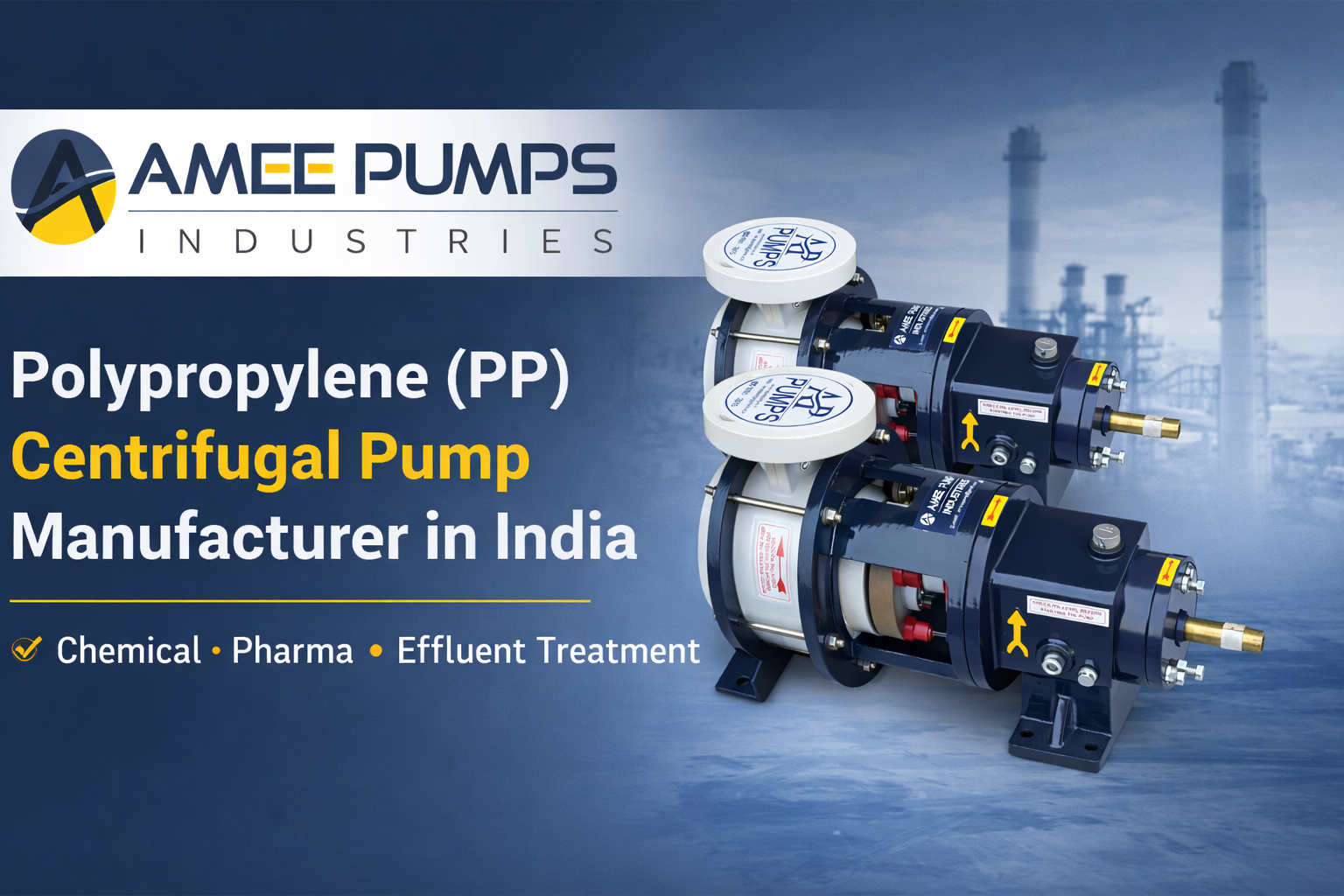
PP Centrifugal Pump Manufacturer in India
Polypropylene pumps play a vital role in industries where handling corrosive liquids is a routine requirement. A PP centrifugal pump manufacturer in India supports sectors such as chemicals, pharmaceuticals, paper and pulp, and wastewater treatment by supplying corrosion-resistant pumping solutions designed for demanding process conditions. These pumps are engineered to deliver consistent hydraulic performance while ensuring long service life in chemically aggressive environments.
In India's expanding industrial landscape, the need for reliable and chemically compatible pumping systems continues to grow. Manufacturing plants, effluent treatment facilities, and processing units require pumps capable of handling acids, alkalis, and solvent-based fluids without premature wear or material degradation. Polypropylene centrifugal pumps address this need through non-reactive material construction and a structurally stable design.
Understanding PP Centrifugal Pump Technology
A PP centrifugal pump operates on the principle of centrifugal force. When the impeller rotates within the pump casing, it imparts kinetic energy to the fluid and converts it into pressure energy. This movement allows the liquid to travel efficiently from the suction side to the discharge side. Polypropylene is used for all wetted parts, ensuring compatibility with corrosive and chemically aggressive media.
The monoblock configuration integrates the pump and motor into a single compact unit. This design minimizes alignment concerns and simplifies installation. It also supports space-efficient layouts while reducing maintenance complexity and maintaining stable operational performance.
Technical Configuration and Performance Range
Industrial-grade PP centrifugal pumps are manufactured in various specifications to meet different operational demands. Typical performance parameters include a maximum head of up to 50 meters and a flow capacity of up to 50 m³ per hour. Pump speeds generally range between 1440 RPM and 2900 RPM, depending on the specific process requirement.
| Parameter | Specification |
|---|---|
| Maximum Head | Up to 50 meters |
| Flow Capacity | Up to 50 m³ per hour |
| Pump Speed | 1440 RPM – 2900 RPM |
| Max Operating Temperature | Approximately 80°C |
| Connection Type | Flange-ended |
| Sealing | Mechanical seals or gland packing |
| Casing / Impeller Material | PP, GRP, UHMWPE, PVDF |
| Shaft Sleeve Material | GRP, Ceramic, Alloy 20, Hastelloy |
| Bearing Bracket | Graded cast iron |
Flange-ended connections provide secure and reliable pipeline integration. Sealing arrangements may include mechanical seals or gland packing, selected according to the nature of the fluid and operating conditions. With a maximum operating temperature of approximately 80°C, these pumps are suitable for a wide range of industrial liquids.
Material selection is based on chemical compatibility and durability. While polypropylene is commonly used for the casing, impeller, and back plate, alternative materials such as GRP, UHMWPE, and PVDF may be chosen for enhanced chemical resistance. Shaft sleeves can be manufactured from GRP, ceramic, Alloy 20, or Hastelloy grades to match specific process environments. Bearing brackets are typically constructed from graded cast iron to ensure structural rigidity and operational stability.
Applications Across Industrial Sectors in India
A PP centrifugal pump manufacturer in India serves industries where corrosion resistance and chemical stability are essential. These pumps are widely applied in:
- Chemical processing plants handling acids and alkalis
- Pharmaceutical manufacturing units requiring non-contaminating materials
- Paper and pulp industries for chemical dosing applications
- Effluent and wastewater treatment facilities
- Electroplating and surface treatment units
- Fertilizer and agrochemical production plants
In chemical environments, polypropylene pumps are preferred due to their resistance to a broad range of aggressive substances.
In pharmaceutical operations, material integrity helps prevent unwanted reactions between pump components and process fluids, maintaining product quality and safety.
Why Polypropylene is Preferred in Corrosive Pumping Applications
Polypropylene combines chemical resistance, lightweight properties, and mechanical strength. Unlike metallic pumps that may corrode when exposed to acidic or alkaline media, PP pumps retain structural integrity under similar conditions.
The non-metallic construction reduces the risk of scaling and rust formation, which is particularly important in applications where fluid purity must be preserved. Within specified temperature limits, polypropylene also provides consistent performance in moderate-temperature process lines.
Manufacturing Standards and Quality Considerations
When selecting a PP centrifugal pump manufacturer in India, adherence to quality standards is critical. Industrial pumps must be produced with dimensional accuracy, properly balanced impellers, and precision-machined components to ensure smooth operation and minimal vibration.
Standard testing procedures typically include hydrostatic testing, performance validation, and seal inspection. Proper balancing of the rotating assembly reduces bearing load and enhances operational life. Manufacturers that maintain structured quality control processes generally provide greater reliability for long-term industrial use.
Installation and Operational Best Practices
Correct installation significantly influences pump efficiency and service life. During commissioning, proper alignment and secure base mounting are essential. The suction line should be designed to minimize air entrapment and reduce friction losses.
- Ensure a stable foundation with appropriate vibration isolation
- Maintain correct suction pipe sizing and alignment
- Prevent dry running conditions
- Monitor seal condition periodically
- Follow recommended bearing lubrication schedules
These measures help maintain operational efficiency and reduce unexpected downtime in industrial facilities.
Maintenance and Service Life
PP centrifugal pumps typically require relatively low maintenance when operated within recommended limits. Periodic inspection of seals, bearings, and impellers helps prevent unplanned failures.
Since polypropylene does not corrode like metal, the casing and internal flow components generally retain their structural condition over extended periods. However, verifying chemical compatibility before installation remains essential to avoid premature degradation. Regular monitoring of vibration levels and operating temperatures further enhances service life. A preventive maintenance approach supports consistent hydraulic performance and helps control overall lifecycle costs.
Choosing the Right PP Centrifugal Pump Manufacturer in India
Selecting the appropriate manufacturer involves evaluating several technical and operational factors. Buyers should review material quality, production capabilities, performance range, and technical support services.
- Availability of multiple material options for specific chemicals
- Suitable performance range for required head and capacity
- Flexible sealing configurations
- Demonstrated experience in chemical and process industries
- Proper documentation and testing standards
Industrial buyers often prefer manufacturers with proven expertise in handling demanding process environments. Engineering assistance and customization capability can also be important for project-based applications.
Role of PP Pumps in India's Industrial Growth
India's industrial infrastructure continues to expand, particularly in chemical processing, pharmaceuticals, and environmental management. Corrosion-resistant pumping systems are essential for maintaining safety and operational continuity in these sectors.
PP centrifugal pumps contribute to safer chemical handling, lower maintenance frequency, and stable process flow. Their compatibility with a wide spectrum of industrial liquids makes them suitable for both small production units and large-scale processing plants.
As environmental regulations become more stringent, effluent treatment and chemical containment systems increasingly depend on reliable pump technology. Polypropylene pumps offer a dependable solution for such critical applications.
Conclusion
A PP centrifugal pump manufacturer in India plays a significant role in supporting chemical, pharmaceutical, and process industries with corrosion-resistant pumping solutions. Polypropylene construction, robust mechanical design, and adaptable configurations make these pumps suitable for a wide range of industrial applications. Careful evaluation of technical specifications, material compatibility, and quality standards helps ensure reliable and long-term performance in demanding operating environments.
Frequently Asked Questions
A PP centrifugal pump is suitable for chemical applications because polypropylene provides strong resistance to acids, alkalis, and various corrosive fluids. The material prevents unwanted chemical reactions with the pumped liquid, ensuring structural stability and safe operation in aggressive environments.
Industrial-grade PP centrifugal pumps generally offer a maximum head of up to 50 meters and flow capacities of up to 50 m³ per hour. Actual performance varies depending on the selected model and operating conditions.
Polypropylene centrifugal pumps are typically designed for temperatures up to around 80°C. For higher temperature applications, alternative materials such as PVDF may be considered based on chemical compatibility.
These pumps are available with mechanical seals or gland packing systems. The appropriate choice depends on fluid characteristics, pressure levels, and maintenance preferences.
Yes, they are widely used in pharmaceutical facilities due to their corrosion resistance and non-contaminating properties. The material ensures that process fluids do not react with pump components, preserving product integrity.
Material compatibility is critical. The casing, impeller, and seal components must withstand the specific chemical being handled. Incorrect material selection can lead to premature failure and operational risks.
Our Blogs
- Acids Transfer PVDF Chemical Pump
- Air Cooled Pump Set
- Thermic Fluid Hot Oil Air Cooled Pump
- Air Operated Double Diaphragm SS 316 Pump
- AODD Pump PVDF MOC
- Centrifugal End Suction Pump
- High Pressure Centrifugal Pump
- Vertical Centrifugal Pump
- Hygienic Centrifugal Pump
- Petroleum Industry Centrifugal Process Pump
- Self Priming Boiler Feed Pump
- Bare Shaft PP Pump
- Self Priming Monoblock Mud Pump
- Hot Oil Centrifugal Pump
- Horizontal Centrifugal Back Pull Out Bare Shaft Coupled Pump
- Teflon Line Centrifugal Process Pump
- Corrosion Resistant Pump
- Semi Open Impeller Centrifugal Pump
- Corrosion Resistant Polypropylene Pump
- Boiler Feed Pump
- 20 LPM Oil Gear Pump
- PVDF Loading Unloading Centrifugal Pump
- Vertical Extended Shaft Slurry Pump
- Pneumatic Air Operated Double Diaphragm Pump
- CF Series Stainless Steel Centrifugal Pump
- Oil Transfer Rotary Gear Pump
- High Temperature Pump
- Horizontal Centrifugal End Suction Pump
- Sewage Plants Self Priming Mud Pump
- Caustic Vertical Pump
- Polypropylene Gland Less Pump
- 300 LPM Acid Pump
- Single Stage Centrifugal Back Pull Out Pump
- Water Treatment Centrifugal Back Pull Out Pump
- Vertical Extended Shaft Sump Pump
- Horizontal Slurry Pump
- Mechanical Diaphragm Dosing Pump
- 2 HP Centrifugal Pump
- Vertical Long Shaft Sump Pump
- Stainless Steel Pump
- Centrifugal Circulation Process Pump
- Thermic Fluid Hot Oil Pump
- Self Priming Non Clog SS 316 Mud Pump
- Vertical Long Shaft Submerged Centrifugal Pump
- High Pressure Multi Stage Boiler Feed Pump
- Vertical Sump Pump
- Side Suction Pump
- Polypropylene Descaling Pump
- Non Clog Impeller Pump
- High Discharge Pump
- Filter Press Feeding Pump
- Polypropylene Chemical Process Pump
- Magnetic Drive Polypropylene Pump
- Water Circulation Pump
- Non Metallic Pump
- Side Suction Bare Shaft Pump
- SS 304 Centrifugal Fabricated Pump
- SS316 Rotary Gear Pump
- Centrifugal Flameproof Pump
- Corrosion Resistant PVDF Chemical Pump
- Centrifugal Pump Closed Impeller
- Stainless Steel Centrifugal Pump
- Corrosion Resistant PP Pump
- Heavy Duty Rotary Gear Pump
- External Gear Pump
- SS 316 AODD Pump
- Self Priming Non Clog Mud Pump
- Hot Oil Circulation Pump
- Internal Gear Pump
- Pneumatic Double Diaphragm Pump
- Thermic Fluid Boiler Feed Pump
- Magnetic Chemical Pump
- ETP Slurry Pump
- Filter Press Feed Pump
- Water Transfer Pump
- PVDF Lined Chemical Process Pump
- Industrial Chemical Process Pump
- SS Chemical Transfer Pump
- Vertical Single Stage Centrifugal Pump
- Hot Oil Circulation Pump in India
- Centrifugal Pump Manufacturers & Suppliers in India
- Chemical Process Pump Manufacturer in India
- Horizontal Single Stage Centrifugal Pump
- Self Priming Stainless Steel Pump
- Rotary Gear SS 316 Pump
- PVDF Chemical Pump in India
- PP AODD Pump
- PP Chemical Process Pump
- Vertical Long Shaft Sump Pump
- Air Cooled Thermic Fluid Hot Oil Pump
- Centrifugal Chemical Process Pump
- Air Operated Diaphragm Pneumatic Pump
- Industrial AODD Pump
- SS Air Operated Diaphragm Pump
- Air Cooled Pump Manufacturer & Supplier in India
- AIR COOLED HOT OIL PUMP
- PP Air Operated Double Diaphragm Pumps
- Vertical Inline Single Stage Centrifugal Pump
- Magnetic Drive Acid Handling Pump
- PVDF LINED CENTRIFUGAL PUMP
- Horizontal Single Stage Centrifugal Pumps
- SS 316 Pumps Centrifugal Chemical Transfer
- Pvdf Chemical Process Pump
- Self Priming Stainless Steel Pump in india
- SS TWIN LOBE PUMP
- SS ROTARY GEAR PUMP
- HOT OIL AIRCOOLED PUMP
- SS CENTRIFUGAL PUMPS IN INDIA
- SS GEAR PUMP IN INDIA
- PVDF MAGNATIC DRIVE PUMP
- Filter Press Side Suction Pump
- CHEMICAL PROCESS PUMP
- CENTRIFUGAL COUPLED PUMP
- THERMIC FLUIED AIR COOLED PUMP
- Lobe Pump in India
- SS Self Priming Mud Pump in Gujarat
- Solvent Transfer Pump in Gujarat
- PVDF Centrifugal Pump in Ahmedabad
- Rotary Lobe Pump in Ahmedabad
- End Suction Pumps Gujarat
- SS Centrifugal Pump in Gujarat
- Solvent Transfer Pump in Ahmedabad
- Vertical Seal Less Gland Less PP Pump in Ahmedabad
- VERTICAL SEAL LESS GLAND LESS PP PUMP
- PP SELF PRIMING PUMP
- SOLVENT TRANSFER PUMP
- SS CENTRIFUGAL PUMP
- ROTARY GEAR PUMP
- CENTRIFUGAL PP PUMP
- CHEMICAL PROCESS CENTRIFUGAL PUMP
- ROTARY LOBE PUMP
- Filter Press Side Suction Pump in Gujarat
- Air Cooled Thermic Fluid Pump in India
- SS Centrifugal Monoblock Pump in Ahmedabad
- MAGNATIC DRIVE CENTRIFUGAL PUMP
- ACID APPLICATION PUMP
- AIR OPERATED DOUBLE DIAPHRAGAM PUMP
- LOBE PUMP
- HORIZONTAL CENTRIFUGAL PUMP
- SS GEAR PUMP
- FIRE FIGHITING PUMPS
- FILLTER PRESS PUMP
- BACK PULL OUT SS CENTRIFUGAL PUMP
- PP SELF PRIMING PUMP
- Horizontal Back Pull Out End Suction Pumps in India
- Hot Oil Pump in Gujarat
- PVDF Centrifugal Pump in Gujarat
- Centrifugal Pump
- Thermic Fluid Air Cool Pump
- PP Pump
- PVDF Centrifugal Pump Manufacturers in Gujarat
- End Suction Pumps in Ahmedabad
- Bentonite Pumps in Gujarat
- SS SELF PRIMING MUD PUMP
- PP MONOBLOCK PUMP
- SS CENTRIFUGAL MONOBLOCK PUMP
- LOBE PUMP
- FILLTER PRESS SIDE SUCTION PUMP
- HOT OIL PUMP
- AIR COOLED THERMIC FLUID PUMP
- PVDF CENTRIFUGAL PUMP MANUFACTURERS IN AHMEMDABAD
- Magnetic Drive PP Pump
- Horizontal Back Pull Out End Suction Pumps in Gujarat
- Bentonite Pumps in Gujarat
- AIR OPERATED DIAPHRAGAM PUMP
- MAGNATIC DRIVE PP PUMP
- Rotary Gear Pumps
- PVDF CENTRIFUGAL PUMP
- End Suction Pumps in Gujarat
- Centrifugal Process Pump in Ahmedabad
- Horizontal Back Pull Out End Suction Pumps Manufacturer in Ahmedabad
- Bentonite Pumps Manufacturer in Ahmedabad
- Chemical Process Centrifugal Pump Supplier in Ahmedabad
- End Suction Pumps
- Centrifugal Process Pump
- Horizontal Back Pull Out End Suction Pumps
- Chemical Process Centrifugal Pump
- BENTONITE PUMPS
- Pp Centrifugal Acidic Liquid Transfer Pump
- Centrifugal Process Pump For Evaporators
- Polypropylene Aodd Pump
- PP Centrifugal Monoblock Pump
- Self Priming Mud Pump in Ahmedabad
- Rotary Gear Pump Supplier in Ahmedabad
- AODD Pump in Ahmedabad
- PP Monoblock Pump in Ahmedabad
- Centrifugal Couple Drive Chemical Process Pump
- SS 316 Pumps Centrifugal Chemical Transfer in Ahmedabad
- Eva Operation Pump
- Air Operated Double Diaphragm Pump Manufacturer in Ahmedabad
- Industrial Mud Pump Manufacturer in Ahmedabad
- AODD Pump Supplier in Gujarat
- Self Priming Mud Pump in Gujarat
- PP Monoblock Pump Supplier in Ahmedabad
- PP Centrifugal Pump Manufacturer in India
- Chemical Transfer Pump Supplier in Gujarat
- End Suction Pump Manufacturer in Ahmedabad
- Centrifugal Back Pull Out Pump Manufacturer in India
- SS Centrifugal Pump Manufacturing Company in Gujarat
- SS Gear Pump Supplier in Ahmedabad
- Rotary Gear Pump Manufacturer in India
- Flange Mounted Rotary Gear Pump Manufacturer in India
- Horizontal Centrifugal Pump Supplier in Gujarat
- Acid Transfer Pump Manufacturer in India
- Multistage Boiler Feed Pump Manufacturing in Gujarat
- Polypropylene Pump in India
- Chemical Process Pump in Ahmedabad
- High Pressure Multistage Boiler Feed Pump in Gujarat
- Vertical Inline Centrifugal Pump in Ahmedabad
- Magnetic Drive Pumps in Ahmedabad
- Lobe Pump in Ahmedabad
- PP Monoblock Pump Supplier in India
- PP Centrifugal Pump Manufacturer in Ahmedabad
- Chemical Transfer Pump Supplier in India
- End Suction Pump Manufacturer in Gujarat
- Centrifugal Back Pull Out Pump in Gujarat
- SS Centrifugal Pump Manufacturer in India
- SS Gear Pump Manufacturer in Gujarat
- Hot Oil Pump in ahemdabad
- Air Cooled Thermic Fluid Pump Manufacturer in Gujarat
- Air Cooled Pump Manufacturer in Gujarat
- Rotary Gear Pump Manufacturer in Ahmedabad
- Bentonite Pump Manufacturer in India
- Centrifugal Back Pull Out Pump Manufacturer in Ahmedabad
