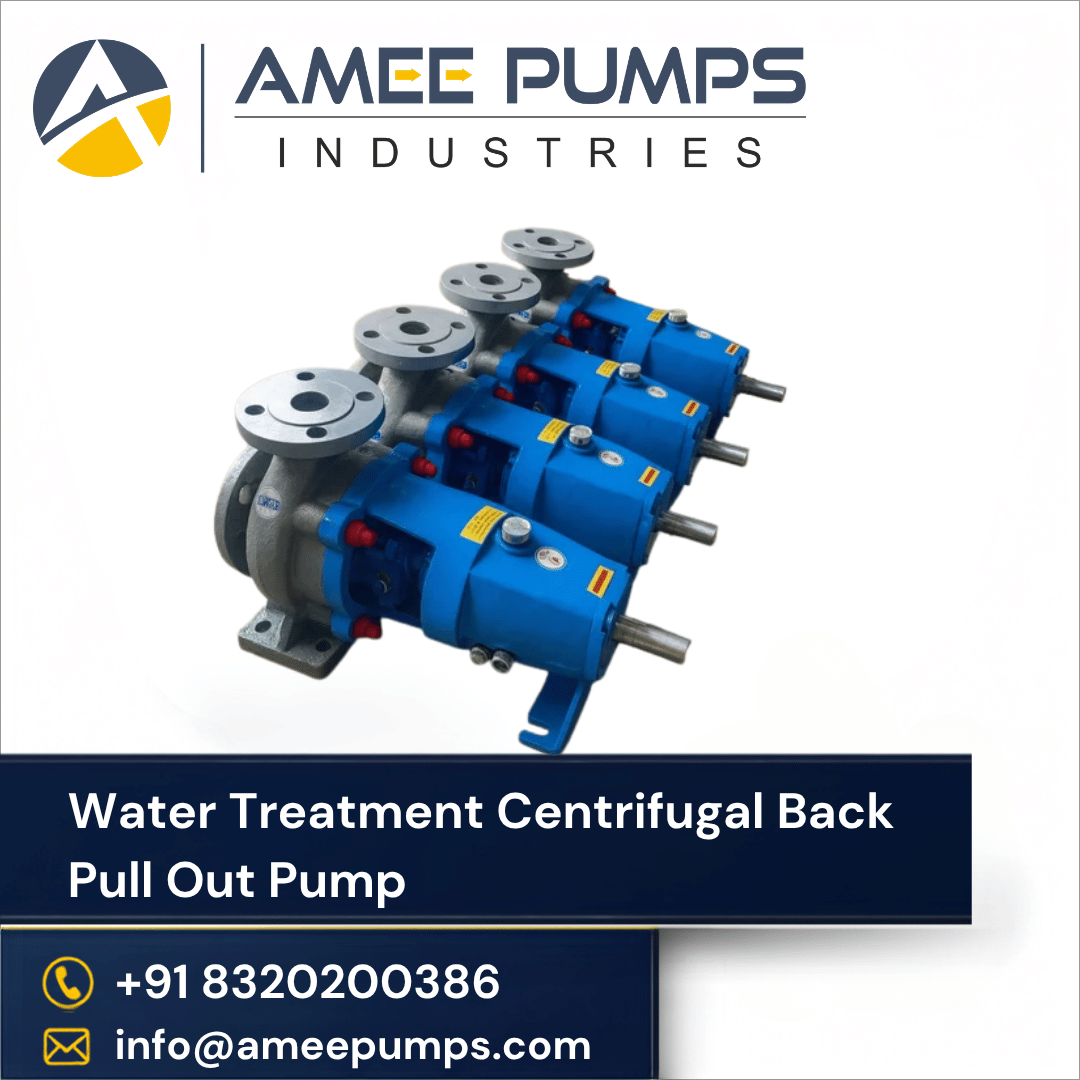
Water Treatment Centrifugal Back Pull Out Pump
The efficient and reliable movement of water is the lifeblood of any modern water treatment facility. Central to this operation are specialized pumps designed for robustness, performance, and ease of maintenance. The Water Treatment Centrifugal Back Pull Out Pump stands out as a critical component, ensuring that water is circulated, treated, and distributed effectively. These pumps are engineered to handle various stages of water processing, from raw intake to purified output, playing an indispensable role in public health and industrial sustainability.
AMEE PUMPS INDUSTRIES, based in Ahmedabad, Gujarat, India, offers advanced pumping solutions designed with a tech-driven approach. With a focus on precision and cost-effectiveness, the company provides centrifugal back pull-out pumps that meet the demanding requirements of the water treatment sector. This article delves into the importance, applications, benefits, and selection criteria for these vital pumps.
Understanding the Water Treatment Centrifugal Back Pull Out Pump
A centrifugal pump operates by using a rotating impeller to impart kinetic energy to a fluid, which is then converted into pressure energy as the fluid moves through the pump casing. The 'back pull-out' design is a key feature, meaning the motor, impeller, and shaft assembly can be withdrawn from the pump casing without disturbing the connected piping or the pump body itself. This design significantly simplifies maintenance, reduces downtime, and makes servicing more efficient.
In the context of water treatment, these pumps are essential for:
- Circulation: Moving vast quantities of water through various treatment stages, such as aeration, sedimentation, and filtration.
- High-Pressure Jetting: Applications like cleaning tanks, filters, or membranes within the treatment process.
- Disinfection: Facilitating the movement of water into disinfection chambers or for chemical dosing.
- Desalination: Crucial in reverse osmosis and other desalination plants for maintaining the high pressures required for separating salt from water.
- Distribution: Pumping treated water into municipal supply networks or industrial distribution systems.
- Effluent Discharge: Moving treated wastewater to discharge points or further treatment stages.
The robust construction and efficient operational principle of centrifugal back pull-out pumps make them ideal for the continuous, demanding cycles of water treatment facilities. They are designed to handle varying fluid conditions and can be adapted for corrosive or abrasive elements commonly found in water and wastewater streams.
Key Applications in Water Treatment
The versatility of the Water Treatment Centrifugal Back Pull Out Pump allows it to be deployed across numerous applications within water management systems:
Raw Water Intake and Transfer
Moving raw water from its source (rivers, lakes, wells) to the initial treatment stages requires reliable pumps capable of handling large volumes and potentially varying solids content.
Process Water Circulation
Within the treatment plant, water must be circulated through aeration tanks, sedimentation basins, and filtration units. Back pull-out pumps ensure continuous flow with minimal disruption for upkeep.
Wastewater and Effluent Management
Treating wastewater involves multiple steps, including pumping it between treatment zones and finally discharging treated effluent, often requiring robust pumps resistant to chemical and biological elements.
Desalination Plants
In desalination facilities, these pumps are crucial for high-pressure feed applications, enabling processes like reverse osmosis to effectively remove salts and impurities.
High-Pressure Cleaning and Dosing
Used for jetting systems to clean tanks and filters, or for precise dosing of treatment chemicals like disinfectants or coagulants.
Advantages of Using Back Pull Out Pumps
The design and operational characteristics of centrifugal back pull-out pumps offer significant advantages for water treatment facilities:
- Ease of Maintenance: The back pull-out design allows for quick servicing of rotating parts without dismantling the pump or breaking pipe connections, minimizing downtime.
- High Efficiency: Optimized impeller and casing designs ensure efficient energy conversion, reducing operational costs.
- Reliability: Built for continuous operation in demanding environments, these pumps provide dependable performance.
- Versatility: Capable of handling a wide range of flow rates and head pressures, and can be constructed from materials resistant to corrosive or abrasive fluids.
- Cost-Effectiveness: While robust, their efficient operation and reduced maintenance needs contribute to a lower total cost of ownership over their lifespan.
- Precision Operation: Engineered for consistent fluid dynamics crucial for various treatment processes.
Selecting the Right Water Treatment Centrifugal Back Pull Out Pump
Choosing the appropriate pump is vital for ensuring operational efficiency and longevity. Consider these factors:
Fluid Characteristics
Assess the nature of the water being pumped – its temperature, viscosity, pH, and the presence of solids, abrasives, or corrosive substances. This dictates the materials of construction and any special design considerations.
Flow Rate and Head Requirements
Determine the required volume of water to be moved (flow rate) and the total resistance the pump must overcome (head). These are critical parameters for sizing the pump correctly.
System Integration
Consider how the pump will integrate with existing infrastructure, including power supply, piping, and control systems. The back pull-out feature simplifies installation and maintenance.
Maintenance Accessibility
While all back pull-out pumps facilitate easier maintenance, evaluate the space available for maintenance access and the potential need for specialized tools or procedures.
Energy Efficiency
Look for pumps with high-efficiency ratings to minimize energy consumption and operational costs, especially in facilities with high pumping volumes.
Material Durability
Ensure the pump materials are suitable for the specific water treatment application to prevent corrosion, erosion, and premature failure.
AMEE PUMPS INDUSTRIES: Precision in Pumping Solutions
AMEE PUMPS INDUSTRIES, established in 2009 and led by Mr. Amit Panchal, is committed to advancing pump technology. Based in Ahmedabad, Gujarat, India, the company employs a tech-driven approach to design and manufacture pumps, focusing on achieving high precision while optimizing costs.
Their range includes the essential Centrifugal Back Pull Out Pump, engineered to meet the rigorous demands of various industrial applications, including water treatment. AMEE PUMPS INDUSTRIES emphasizes a 100% success rate on its projects, reflecting a dedication to quality and customer satisfaction. By prioritizing innovation and precision engineering, they aim to provide cost-effective and reliable pumping solutions that support critical infrastructure like water treatment facilities.
Buyer Insight
When considering a Water Treatment Centrifugal Back Pull Out Pump, ask potential suppliers about their design process and how they ensure material compatibility with specific water chemistries. A proactive approach to understanding fluid dynamics and material science by the manufacturer can prevent costly issues down the line.
Frequently Asked Questions
What makes a centrifugal pump a 'back pull-out' type?
A back pull-out centrifugal pump features a design where the motor, shaft, and impeller assembly can be removed from the pump casing as a single unit. This is achieved by disconnecting the pump from the motor and the piping, allowing the internal rotating components to be withdrawn without needing to dismantle the main pump housing or disturb connected pipelines.
Why are back pull-out pumps suitable for water treatment?
Their suitability stems from the ease of maintenance and reduced downtime. Water treatment processes are often continuous, and the ability to quickly service pumps without extensive disassembly is crucial for maintaining uninterrupted operations. They are also robust enough to handle the diverse fluid conditions found in water treatment.
Can these pumps handle water with solids?
Centrifugal pumps can be designed to handle fluids containing solids. The specific impeller type and casing design will determine the pump's capability to manage particulate matter without clogging or excessive wear. It is important to specify the expected solids content when selecting a pump for such applications.
What is the primary benefit of a tech-driven approach in pump manufacturing?
A tech-driven approach typically involves utilizing advanced design software, precision manufacturing techniques, and potentially automation. This leads to pumps that are more accurately manufactured, offer higher efficiency, have improved reliability, and can be produced more cost-effectively compared to traditional methods.
Enhance Your Water Treatment Operations Today
Ensure the reliability and efficiency of your water treatment processes with high-quality Centrifugal Back Pull Out Pumps. Discover solutions designed for demanding applications, offering ease of maintenance and robust performance.
Contact AMEE PUMPS INDUSTRIES to discuss your specific requirements and find the optimal pumping solution for your water treatment needs.
