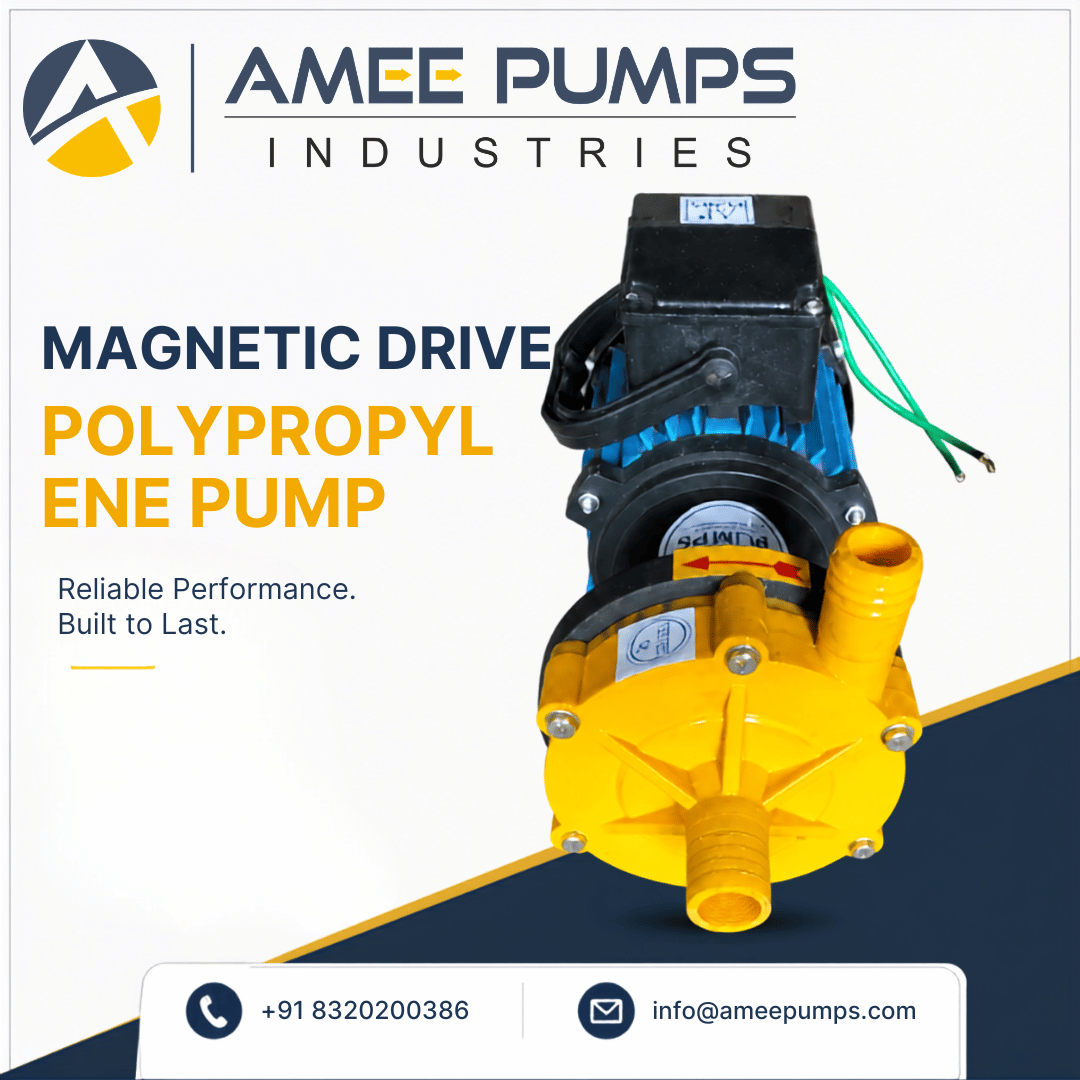
Magnetic Drive Polypropylene Pump
Expertly manufactured Magnetic Drive Polypropylene Pumps in Ahmedabad. Discover reliable, corrosion-resistant solutions for your industrial needs from Amee Pump
What is a Magnetic Drive Polypropylene Pump? — Overview
A magnetic drive polypropylene pump is a type of centrifugal pump that utilizes magnetic coupling to transmit torque from the motor to the impeller, eliminating the need for a traditional mechanical seal. The pump casing is typically constructed from polypropylene, a thermoplastic polymer known for its excellent resistance to a wide range of chemicals, including acids, bases, and solvents. The motor shaft is connected to an outer magnet assembly, which in turn drives an inner magnet assembly attached to the impeller. This magnetic connection allows the pump to operate without any direct physical connection between the motor and the wetted parts, thereby preventing leaks.
Key Features and Technical Specifications
- Material Construction: Pump casing and impeller made from high-grade polypropylene for superior chemical resistance.
- Sealless Design: Magnetic coupling eliminates mechanical seals, preventing leakage of hazardous or valuable fluids.
- Corrosion Resistance: Inertness to a broad spectrum of acids, alkalis, solvents, and other corrosive media.
- High Purity Applications: Suitable for processes requiring minimal contamination due to inert materials.
- Compact Design: Often features a more streamlined profile compared to sealed pumps.
- Quiet Operation: Magnetic drive systems can contribute to reduced noise levels during operation.
- Temperature Range: Capable of handling fluids within a specific temperature range, typically up to 60-70°C depending on the polypropylene grade and operating conditions.
- Flow Rates & Head: Available in various configurations to meet diverse flow rate and head pressure requirements.
Industrial Applications and Use Cases
- Chemical Processing: Transferring acids (e.g., hydrochloric, sulfuric), alkalis, and various chemical intermediates.
- Pharmaceutical Manufacturing: Handling high-purity water, solvents, and process chemicals where contamination is unacceptable.
- Water and Wastewater Treatment: Pumping corrosive treatment chemicals like sodium hypochlorite or ferric chloride.
- Electroplating and Metal Finishing: Circulating plating baths and rinse water containing aggressive chemicals.
- Food and Beverage Industry: Transferring acidic food products or cleaning solutions.
- Laboratory and Research Facilities: Safely moving experimental chemicals and reagents.
- Semiconductor Manufacturing: Pumping ultra-pure water and specialized cleaning solutions.
- Textile Dyeing and Finishing: Handling dye solutions and chemical treatment baths.
How to Choose the Right Magnetic Drive Polypropylene Pump
Selecting the appropriate magnetic drive polypropylene pump is critical for ensuring optimal performance and longevity. Consider the following factors:
- Fluid Compatibility: Verify the pump material's resistance to the specific chemical, its concentration, and temperature. Consult chemical resistance charts.
- Flow Rate and Head Requirements: Determine the exact volume of fluid to be moved per unit of time and the total dynamic head the pump needs to overcome.
- Operating Temperature: Ensure the pump's material and design can withstand the maximum expected fluid temperature.
- System Pressure: Consider the maximum system pressure the pump will encounter.
- Motor Specifications: Match motor voltage, phase, and enclosure type (e.g., TEFC) to site conditions and power availability.
- Certifications and Standards: Look for pumps that meet relevant industry standards for safety and performance.
- Manufacturer's Expertise and Support: Choose a reputable manufacturer with a proven track record and reliable after-sales service.
- Customization Needs: Assess if any specific modifications or features are required for your application.
Quality Standards and Compliance
When selecting a magnetic drive polypropylene pump, it's essential to ensure it adheres to recognized quality standards and compliance requirements. For pumps used in chemical or industrial applications, compliance with standards like ISO 9001 for quality management systems is a strong indicator of a manufacturer's commitment to consistent product quality. While specific material standards for polypropylene exist, the primary focus for these pumps is often on their chemical inertness and leak-free operation. Buyers should verify that the manufacturer provides documentation confirming material specifications and performance capabilities. Reputable suppliers will readily offer technical data sheets and certifications that attest to the pump's suitability for its intended corrosive or high-purity applications.
Why Amee Pumps Industries' Experience and Capability Matters
At Amee Pumps Industries, our two decades of experience, led by Mr. Amit Panchal, have been dedicated to mastering the intricacies of pump design and manufacturing. We leverage a technology-driven approach to create solutions that are not only precise but also cost-effective. Our team has honed its skills in demanding, fast-paced environments, resulting in a reputation for reliability and a 100% project success rate. We understand the critical nature of handling corrosive fluids and the importance of leak-free operation. Our manufacturing processes are meticulously controlled, ensuring that each magnetic drive polypropylene pump meets stringent quality benchmarks. This deep-seated expertise allows us to offer customized solutions and dependable after-sales support, ensuring your operations in Ahmedabad and beyond run smoothly and safely.
Installation, Maintenance, and Care Tips
Proper installation and regular maintenance are key to maximizing the lifespan and performance of your magnetic drive polypropylene pump.
Installation
Ensure the pump is installed on a solid, level foundation to prevent vibration.
Align the pump and motor shafts accurately if they are coupled separately.
Connect piping carefully, avoiding excessive stress on the pump casing.
Prime the pump before initial startup, especially if handling volatile liquids.
Verify motor rotation direction matches the impeller's design.
Maintenance
Regularly inspect the pump for any signs of external leakage, unusual noise, or vibration.
Check motor bearings and lubrication as per the motor manufacturer's recommendations.
Monitor pump performance (flow, pressure) for any deviations from normal operating parameters.
Keep the pump exterior clean, free from chemical residues.
In case of any issues, consult the manufacturer's manual or contact their technical support.
Care:
Avoid running the pump dry, as this can damage the impeller and magnets.
Do not exceed the pump's specified temperature or pressure limits.
If the pump is to be stored for an extended period, ensure it is thoroughly cleaned and drained.
Frequently Asked Questions
Polypropylene offers excellent resistance to a wide array of corrosive chemicals, including strong acids and bases, making it ideal for applications where other materials would quickly degrade. Its inert nature also makes it suitable for high-purity fluid transfer.
Magnetic drive pumps use magnets to transmit torque from the motor to the impeller through a containment shell. This eliminates the need for a traditional shaft seal, which is a common failure point for leaks in conventional pumps.
While polypropylene offers good chemical resistance, its temperature handling capabilities are limited compared to some metals. Standard polypropylene pumps typically operate effectively up to around 60-70°C, depending on the specific chemical and operating conditions.
The primary advantages are the elimination of leaks, which is critical for hazardous or valuable fluids, improved safety, reduced environmental impact, and lower maintenance costs associated with seal replacement.
You need to know the required flow rate (e.g., liters per minute or gallons per minute) and the total head (pressure) the pump must overcome. Consulting chemical resistance charts for the fluid being pumped is also essential.
Maintenance primarily involves inspecting for external damage, ensuring motor lubrication is up-to-date, and monitoring for any unusual operating noises or vibrations. The absence of seals significantly reduces routine maintenance needs.
Conclusion
For industries in Ahmedabad and across Gujarat dealing with corrosive or high-purity fluids, the magnetic drive polypropylene pump represents a robust, safe, and reliable solution. Its sealless design, combined with the inherent chemical resistance of polypropylene, effectively mitigates the risks of leaks and contamination. When selecting a supplier, consider the manufacturer's experience, commitment to quality standards, and ability to provide ongoing support. Amee Pumps Industries, with its proven expertise and dedication to precision engineering, offers the assurance of a dependable pumping solution tailored to your specific industrial needs.
Get In Touch
Amee Pumps Industries
