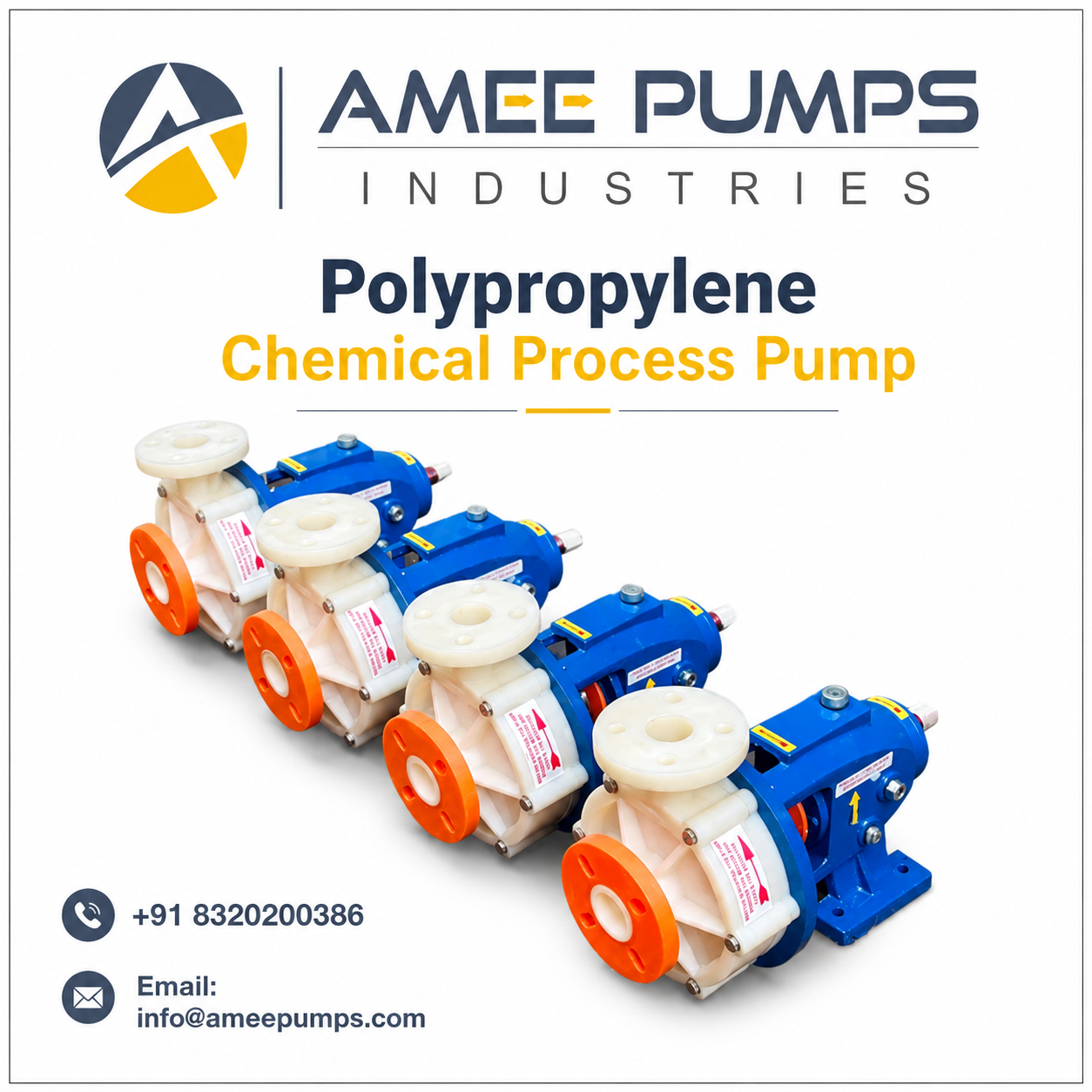
Polypropylene Chemical Process Pump
Expertly designed Polypropylene Chemical Process Pumps for Ahmedabad industries. Discover reliable, cost-effective solutions from Amee Pumps Industries.
Key Features and Technical Specifications
- Material Construction: All wetted components made from virgin, high-density polypropylene for superior chemical inertness.
- Corrosion Resistance: Excellent resistance to a broad range of acids, alkalis, salts, and organic solvents.
- Temperature Range: Suitable for continuous operation up to approximately 60-70°C (140-158°F), depending on the specific chemical and concentration.
- Sealing Options: Available with various mechanical seal configurations (e.g., single, double) using chemically resistant elastomers and faces.
- Design Type: Typically centrifugal, available in back pull-out design for easy maintenance.
- Flange Standards: Manufactured to comply with international standards like ANSI/ASME or DIN for easy integration into existing piping systems.
- Impeller Design: Optimized impeller geometry for efficient fluid handling and minimal shear for sensitive fluids.
- Robust Casing: Thick-walled casing designed to withstand system pressure and external impacts.
Industrial Applications and Use Cases
- Chemical Manufacturing: Transferring raw materials, intermediates, and finished products like acids, bases, and solvents.
- Pharmaceutical Industry: Handling purified water, solvents, and various chemical reagents in drug production.
- Textile Dyeing and Processing: Circulating dye solutions, bleaching agents, and effluent treatment chemicals.
- Water and Wastewater Treatment: Pumping corrosive chemicals for pH adjustment, disinfection, and flocculation.
- Electroplating and Metal Finishing: Transferring plating baths, pickling acids, and cleaning solutions.
- Food and Beverage: Pumping cleaning-in-place (CIP) solutions and certain food-grade acids or bases.
- Laboratory and Research: Safely moving experimental chemicals and waste streams.
- Fertilizer Production: Handling corrosive components in fertilizer manufacturing processes.
How to Choose the Right Polypropylene Chemical Process Pump
Selecting the correct polypropylene chemical process pump is crucial for longevity and performance. Consider these factors:
- Chemical Compatibility: Verify the pump material's resistance to the specific chemical, its concentration, and operating temperature. Consult chemical resistance charts.
- Flow Rate and Head Requirements: Determine the precise flow rate (LPM/GPM) and total dynamic head (TDH) needed for your application.
- Temperature and Pressure: Ensure the pump can safely handle the maximum operating temperature and system pressure.
- Seal Type: Choose a mechanical seal material and configuration appropriate for the fluid being pumped and operating conditions to prevent leakage.
- Motor Specifications: Select a motor with the correct power, voltage, and enclosure type (e.g., TEFC) suitable for the environment.
- Certifications and Standards: Look for pumps that meet relevant industry standards (e.g., ISO, ANSI) for quality and safety.
- Supplier Reputation and Support: Partner with a reputable manufacturer or supplier with proven experience and reliable after-sales service.
- Customization Needs: Assess if any specific modifications or features are required for your unique application.
Quality Standards and Compliance
When selecting a polypropylene chemical process pump, verifying adherence to quality standards is non-negotiable. Reputable manufacturers will ensure their pumps are built in accordance with international benchmarks. This often includes compliance with standards like ISO 9001 for quality management systems, ensuring consistent manufacturing processes and product quality. For dimensional accuracy and interchangeability, pumps may be designed to ANSI or DIN flange standards. Furthermore, material traceability and testing for chemical resistance are critical aspects that buyers should inquire about. Ensuring the pump's construction meets these benchmarks provides confidence in its reliability and safety when handling hazardous chemicals.
Why Amee Pumps Industries' Experience and Capability Matters
At Amee Pumps Industries, our two decades of experience, led by Mr. Amit Panchal, have been dedicated to mastering the intricacies of pump design and manufacturing. We leverage a technology-driven approach, allowing for precision engineering and cost-effective solutions, especially when compared to traditional methods. Our team has honed its skills in complex, fast-paced industrial environments, resulting in a proven track record of delivering reliable performance.
We focus on practical design that simplifies operation and maintenance, ensuring our polypropylene chemical process pumps meet the specific demands of Ahmedabad's diverse industries. Our commitment to quality control throughout the manufacturing process, from material selection to final testing, ensures that each pump delivered is built for durability and efficiency. This deep understanding of chemical handling challenges allows us to provide solutions that genuinely support our clients' operational continuity and safety.
Installation, Maintenance, and Care Tips
Proper installation and regular maintenance are key to maximizing the lifespan and performance of your polypropylene chemical process pump. Always ensure the pump is installed on a solid, level foundation to minimize vibration. Verify that the piping is properly aligned and supported to avoid undue stress on the pump casing and flanges. Before starting, flush the system to remove any debris.
Regularly inspect the pump for leaks, especially around the mechanical seal. Monitor for unusual noises or vibrations, which could indicate bearing wear or impeller issues. Follow the manufacturer's lubrication schedule for bearings if applicable. Periodically check the motor for overheating. Always ensure the power is disconnected before performing any maintenance. For mechanical seal issues, consult the manufacturer's guidelines or a qualified technician.
Frequently Asked Questions
Polypropylene pumps are highly resistant to a wide range of acids (like sulfuric, hydrochloric), alkalis (like sodium hydroxide), salts, and many organic solvents. However, they are generally not recommended for strong oxidizing agents or certain hydrocarbons at elevated temperatures. Always consult a detailed chemical resistance chart for specific applications.
The continuous operating temperature limit for polypropylene pumps is typically around 60-70°C (140-158°F). This can vary depending on the specific grade of polypropylene, the concentration of the chemical being handled, and the presence of mechanical stress. Exceeding this limit can lead to material softening and reduced performance.
Pump sizing involves calculating the required flow rate (in LPM or GPM) and the total dynamic head (TDH) for your system. TDH accounts for static lift, friction losses in piping, and system pressure. It's advisable to consult with an experienced pump supplier who can assist in accurate system analysis and pump selection.
Polypropylene offers superior corrosion resistance against a much broader spectrum of aggressive chemicals compared to most metals. It is also lighter, less expensive, and does not suffer from galvanic corrosion. This makes it an ideal choice for applications where metal pumps would quickly degrade.
Mechanical seals should be visually inspected for any signs of leakage during routine operational checks. A small amount of weeping might be normal for some seal types, but significant leakage indicates a problem. Depending on the service, a more thorough inspection might be recommended annually or as part of scheduled maintenance.
While polypropylene offers excellent chemical resistance, it is not as inherently abrasion-resistant as some specialized metals or ceramics. For highly abrasive slurries, alternative pump materials or designs with enhanced wear resistance might be more suitable, or specific impeller designs for slurry handling should be considered.
Conclusion
For industries in Ahmedabad dealing with corrosive chemicals, selecting the right pump is a decision that impacts safety, efficiency, and operational costs. A polypropylene chemical process pump offers a robust, cost-effective solution, providing excellent resistance to a wide array of aggressive media. Key considerations include verifying chemical compatibility, understanding flow and head requirements, and ensuring the pump meets relevant quality standards. Partnering with an experienced manufacturer like Amee Pumps Industries, with a proven commitment to precision engineering and reliable performance, ensures you receive a pump solution tailored to your specific industrial needs, backed by expertise that keeps your operations running smoothly.
Get In Touch
Amee Pumps Industries
