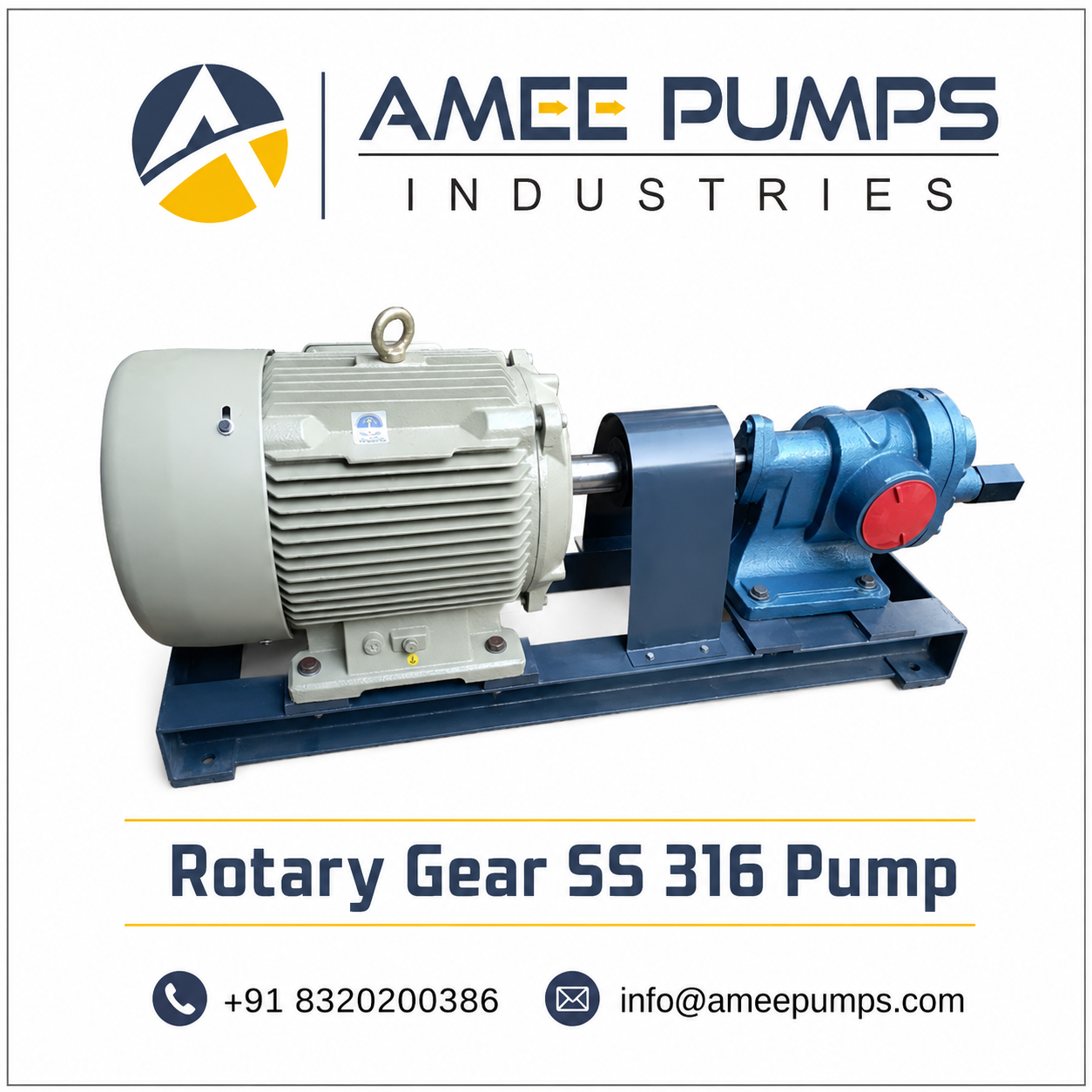
Rotary Gear SS 316 Pump
Discover robust Rotary Gear SS 316 Pumps for chemical and industrial applications in Ahmedabad. Ensure reliable, precise fluid transfer for viscous and corrosiv
Why This Matters in Ahmedabad
Ahmedabad, situated in Gujarat, stands as a significant industrial and manufacturing center in India. The region hosts a wide array of industries, including pharmaceuticals, chemicals, textiles, food processing, and oil & gas. Each of these sectors frequently deals with fluids that are either highly viscous, chemically aggressive, or require stringent hygiene standards. For these industries, conventional pumps may not offer the necessary precision, material resistance, or consistent flow. The demand for specialized pumping solutions, particularly those constructed from corrosion-resistant materials like SS 316, is therefore consistently high across Ahmedabad's industrial landscape.
What is a Rotary Gear SS 316 Pump — Overview
A Rotary Gear SS 316 Pump is a positive displacement pump designed to transfer fluids by using the meshing action of gears to create a non-pulsating flow. Unlike centrifugal pumps that rely on kinetic energy, gear pumps trap and move a fixed amount of fluid with each rotation, making them ideal for handling viscous liquids and applications requiring precise flow control. The "SS 316" designation refers to the pump's construction material: Stainless Steel 316. This specific alloy offers superior corrosion resistance, especially against chlorides and various acids, and maintains strength at high temperatures, making it suitable for a broad spectrum of industrial and hygienic applications.
Key Features and Technical Specifications
- Positive Displacement Operation: Delivers a constant flow rate irrespective of discharge pressure variations.
- Self-Priming Capability: Can draw fluid from below the pump's level without external priming.
- SS 316 Construction: Provides excellent resistance to corrosion, pitting, and crevice corrosion from aggressive chemicals.
- High Viscosity Handling: Efficiently transfers thick, viscous fluids that challenge other pump types.
- Reversible Flow Direction: Allows for fluid transfer in both directions, enhancing operational flexibility.
- Compact Design: Often features a smaller footprint, suitable for installations with limited space.
- Robust Sealing Options: Available with various mechanical seals or gland packings to prevent leakage and suit specific fluid properties.
- Temperature Stability: Maintains performance across a wide range of operating temperatures due to SS 316 properties.
Industrial Applications and Use Cases
- Chemical Processing: Transferring acids, alkalis, solvents, and other corrosive chemicals in manufacturing plants.
- Pharmaceutical Industry: Handling syrups, emulsions, and active pharmaceutical ingredients (APIs) where hygiene and material purity are critical.
- Food and Beverage: Pumping edible oils, chocolate, molasses, dairy products, and other viscous food items requiring sanitary conditions.
- Oil and Gas: Moving crude oil, lubricants, fuel oils, and other petroleum products in refineries and distribution networks.
- Paint and Ink Manufacturing: Transferring pigments, resins, and finished paint or ink products with consistent viscosity.
- Textile Industry: Dosing dyes, chemicals, and sizing agents in fabric processing.
- Adhesives and Sealants: Pumping high-viscosity glues, resins, and sealants for various assembly processes.
- Cosmetics and Personal Care: Handling lotions, creams, soaps, and other viscous cosmetic formulations.
How to Choose the Right Rotary Gear SS 316 Pump
Selecting the appropriate rotary gear pump requires careful consideration of several operational factors to ensure optimal performance and longevity. Buyers should evaluate their specific application needs against the pump's capabilities.
- Fluid Characteristics: Assess the fluid's viscosity, temperature, chemical compatibility, and presence of any solids. SS 316 is crucial for corrosive or hygienic fluids.
- Flow Rate and Pressure Requirements: Determine the necessary volumetric flow rate and the discharge pressure needed to overcome system resistance.
- Sealing Arrangement: Choose between different mechanical seal types (single, double, cartridge) or gland packing based on fluid properties and leakage tolerance.
- Drive Options: Consider motor type, speed, and power requirements, including options for variable speed drives for flow control.
- Certifications and Standards: Verify compliance with relevant industry standards such as ISO, API, or specific hygienic certifications for food and pharmaceutical applications.
- Supplier Experience and Support: Evaluate the manufacturer's track record, technical expertise, and availability of spare parts and after-sales service.
- Customization Needs: Determine if standard pump configurations meet the application or if custom modifications are required for specific process integration.
Quality Standards and Compliance
For industrial pumps, adherence to quality standards is non-negotiable, particularly for Rotary Gear SS 316 Pumps used in critical applications. Buyers should always verify that the pumps meet recognized national and international standards. Key certifications often include ISO 9001 for quality management systems, ensuring consistent manufacturing processes. For pumps handling petroleum or chemical products, compliance with API (American Petroleum Institute) standards, such as API 676 for positive displacement pumps, indicates robust design and performance. Furthermore, for food and pharmaceutical applications, certifications like FDA compliance or specific hygienic design standards are essential to prevent contamination and ensure product safety. Verifying these standards confirms the pump's reliability, safety, and suitability for its intended industrial environment.
Why Company Experience and Capability Matters
The long-term performance and reliability of an industrial pump largely depend on the expertise of its manufacturer. Amee Pumps Industries, with its foundation in 2009 and led by Mr. Amit Panchal's two decades of experience, exemplifies the value of seasoned capability in pump design and manufacturing. Our tech-driven approach ensures precision engineering, which translates into pumps that perform reliably in demanding environments. We focus on robust quality control throughout the manufacturing process, from material selection for the SS 316 components to the final assembly and testing. This commitment ensures that each Rotary Gear SS 316 Pump leaving our facility, located at Factory No-113, Mahavir Industrial Park - 2, Opp. Vinayak Estate-3, Kathwada Singarva Road, Ahmedabad, meets stringent performance criteria. Our capability extends to offering solutions that are not only efficient but also tailored to specific industrial requirements, backed by reliable delivery and responsive after-sales support.
Installation, Maintenance and Care Tips
Proper installation and routine maintenance are crucial for maximizing the lifespan and efficiency of a Rotary Gear SS 316 Pump.
- Installation: Ensure the pump is mounted on a rigid, level foundation to prevent vibration and misalignment. Correct alignment between the pump and motor shaft is critical to avoid premature bearing and seal failure. Piping should be properly supported to prevent strain on the pump casing.
- Priming: Always ensure the pump is properly primed before starting, especially for the initial operation. Running a positive displacement pump dry can cause significant damage to its internal components.
- Lubrication: Follow the manufacturer's guidelines for lubrication of bearings and other moving parts. Use the specified type and quantity of lubricant.
- Seal Inspection: Regularly inspect mechanical seals or gland packing for any signs of leakage. Address minor leaks promptly to prevent escalation and potential damage to the pump or surrounding equipment.
- System Cleanliness: Maintain a clean fluid system to prevent abrasive particles from entering the pump, which can cause wear on gears and bearings. Consider installing strainers or filters upstream.
- Performance Monitoring: Periodically check pump performance parameters such as flow rate, pressure, and power consumption. Any significant deviation can indicate an issue requiring attention.
- Temperature Checks: Monitor the operating temperature of the pump and motor. Excessive heat can be a sign of mechanical problems or improper operation.
Frequently Asked Questions
Rotary Gear SS 316 Pumps are highly effective for transferring a wide range of viscous and corrosive fluids. This includes various chemicals, acids, alkalis, solvents, edible oils, syrups, molasses, pharmaceutical ingredients, paints, inks, and petroleum products. The SS 316 construction ensures chemical compatibility and resistance to degradation from aggressive substances, making it suitable for demanding industrial processes.
The main advantages of SS 316 construction are its superior corrosion resistance, particularly against chlorides and many industrial chemicals, and its ability to maintain strength at elevated temperatures. This material also offers excellent hygienic properties, making it ideal for food, beverage, and pharmaceutical applications where product purity and ease of cleaning are essential. It contributes to a longer pump lifespan in harsh environments.
A rotary gear pump is a positive displacement pump, meaning it moves a fixed volume of fluid with each rotation, delivering a constant flow rate regardless of discharge pressure. In contrast, a centrifugal pump is a kinetic pump that uses an impeller to accelerate fluid, converting kinetic energy into pressure. Centrifugal pumps are generally better for low-viscosity, high-flow applications, while gear pumps excel with viscous fluids and precise flow control.
Routine maintenance for Rotary Gear SS 316 Pumps typically involves regular inspection of seals for leaks, checking bearing lubrication levels, and monitoring pump performance parameters like flow and pressure. It is also important to ensure proper shaft alignment, keep the fluid system clean with appropriate filtration, and periodically check for any unusual noises or vibrations that might indicate mechanical issues.
While SS 316 offers good wear resistance, rotary gear pumps are generally not ideal for highly abrasive fluids. Abrasive particles can cause accelerated wear on the meshing gears and internal components, leading to reduced efficiency and premature failure. For applications involving abrasive slurries, other pump types specifically designed for such conditions, often with specialized linings or materials, might be more suitable.
Rotary Gear SS 316 Pumps are designed for a wide range of flow rates and pressures, depending on their size, gear design, and motor speed. They can achieve flow rates from a few liters per minute up to several hundred liters per minute, and discharge pressures can range from moderate to high, often exceeding 10 bar (150 psi), making them versatile for various industrial fluid transfer tasks.
Conclusion
The Rotary Gear SS 316 Pump stands as a robust and reliable solution for industries in Ahmedabad and beyond, particularly those dealing with viscous, corrosive, or sensitive fluids. Its positive displacement mechanism, combined with the exceptional material properties of Stainless Steel 316, ensures precise flow, chemical compatibility, and long-term operational integrity. When selecting such a critical piece of equipment, focusing on a manufacturer's proven experience, adherence to quality standards, and comprehensive technical support is paramount. Choosing the right pump is an investment in consistent process performance, reduced maintenance, and overall operational safety.
Get In Touch
Amee Pumps Industries
