End Suction Pumps
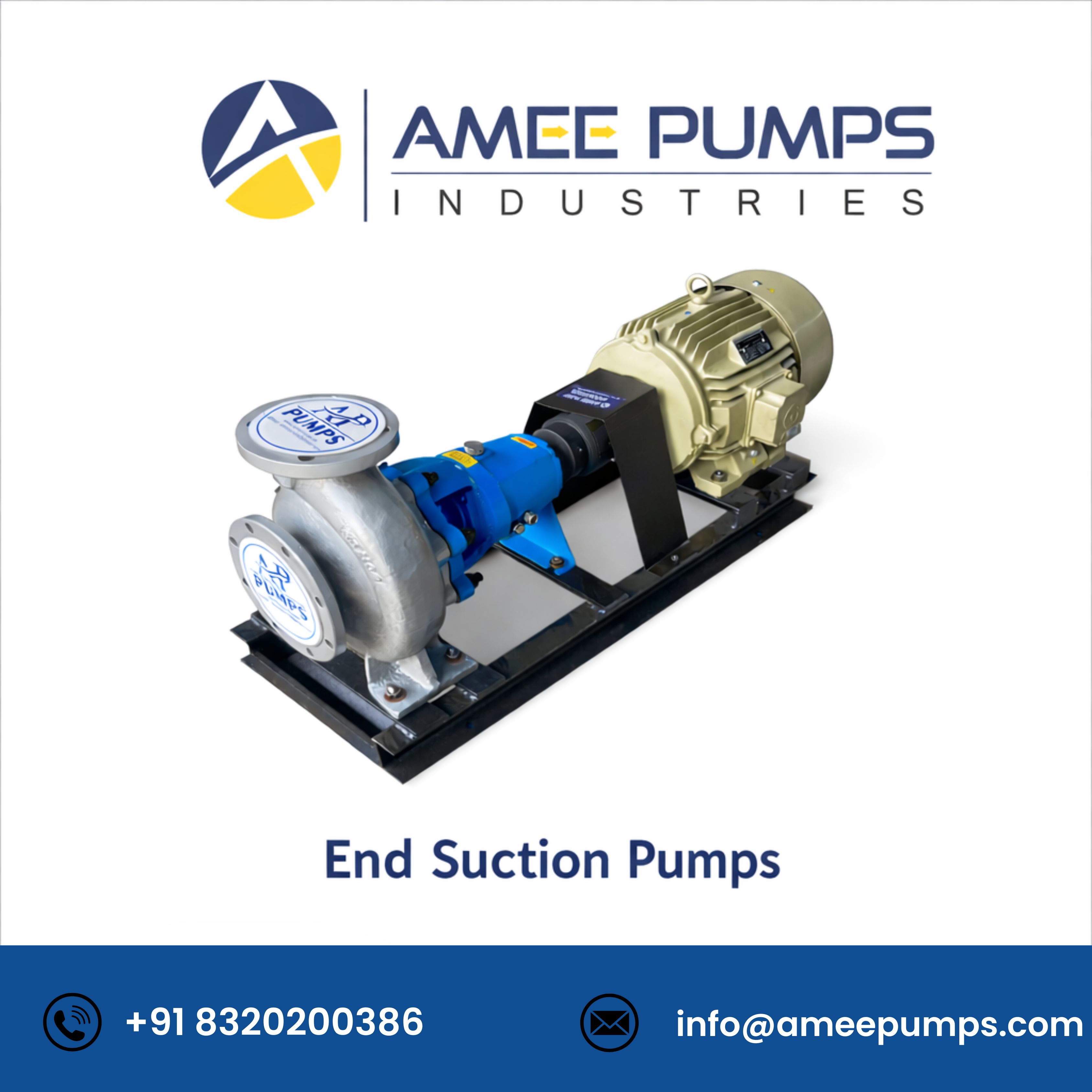
End Suction
Pumps
End suction pumps are widely used in industrial fluid handling systems due to their simple design, reliable performance, and adaptability across a wide range of applications.
End Suction Pumps
End suction pumps are widely used in industrial fluid handling systems due to their simple design, reliable performance, and adaptability across a wide range of applications. These pumps are designed to transfer liquids efficiently from one point to another while maintaining consistent flow and pressure. Their straightforward configuration and stable operation make them a practical choice for industries that require continuous and controlled fluid movement.
In industrial environments where uptime and efficiency are critical, end suction pumps offer a dependable solution. They are commonly used for handling water, chemicals, and process fluids across manufacturing, processing, and utility sectors. Their ability to perform under varying operating conditions makes them suitable for both standard and demanding applications.
Understanding the Working Principle of End Suction Pumps
End suction pumps operate on the principle of centrifugal force, enabling efficient fluid transfer through mechanical energy conversion. When the pump starts, the motor drives the impeller, creating a low-pressure zone at the suction inlet. This pressure difference draws fluid into the pump.
As the impeller rotates, it accelerates the fluid outward, converting mechanical energy into kinetic energy. The pump casing then converts this kinetic energy into pressure energy, allowing the fluid to move through the discharge outlet. This continuous process ensures a steady and controlled flow, making end suction pumps suitable for systems that require stable fluid movement.
The design supports smooth operation with minimal vibration and reduced energy loss, contributing to overall system efficiency.
Key Design Features of End Suction Pumps
End suction pumps are known for their compact and functional design, which supports easy installation and simplified maintenance. The configuration typically includes a single suction inlet with a discharge outlet positioned perpendicular to the inlet.
Some of the key design characteristics include:
- Single-stage centrifugal design for efficient fluid transfer
- Horizontal shaft alignment for stable and balanced operation
- Back pull-out design option for convenient maintenance access
- Compatibility with various materials depending on fluid type
- Flexible sealing options such as mechanical seals or gland packing
These features make end suction pumps highly adaptable to different industrial requirements while ensuring long-term operational reliability.
Industrial Applications of End Suction Pumps
End suction pumps are used across multiple industries where fluid handling is essential. Their versatility allows them to handle different types of liquids, including clean water, chemicals, and process fluids.
Common applications include:
- 01Water circulation and supply systems
- 02Chemical processing and transfer operations
- 03Cooling systems in industrial plants
- 04Effluent and wastewater treatment processes
- 05Irrigation and general utility applications
Their ability to deliver consistent performance under varying conditions makes them suitable for both general-purpose and specialized applications.
Advantages of Using End Suction Pumps in Industrial Systems
End suction pumps offer several operational advantages that contribute to improved system efficiency and reduced maintenance complexity. Their simple design is a key reason for their widespread use across industries.
Some of the practical benefits include:
- Easy installation with minimal space requirements
- Simple construction that reduces maintenance efforts
- Efficient performance for continuous operations
- Compatibility with a wide range of fluids
- Cost-effective operation over long-term use
These advantages make end suction pumps a preferred choice for industries seeking reliable and efficient fluid handling solutions.
Material Selection and Durability Considerations
Material selection plays a critical role in determining the performance and lifespan of end suction pumps. Depending on the type of fluid being handled, different materials are used to ensure resistance to corrosion, temperature variations, and wear.
Common materials include cast iron, stainless steel, and alloy-based compositions. For chemical and aggressive fluids, corrosion-resistant materials are preferred to maintain structural integrity and consistent performance.
Proper material selection ensures that the pump operates efficiently under varying industrial conditions without compromising durability.
Maintenance and Operational Efficiency
Maintaining end suction pumps is relatively straightforward due to their simple construction. Regular inspection and preventive maintenance help ensure consistent performance and extend the operational lifespan of the pump.
Key maintenance practices include:
- Checking alignment and vibration levels
- Monitoring seal condition and leakage
- Inspecting the impeller for wear or damage
- Ensuring proper lubrication of moving parts
- Verifying system pressure and flow consistency
Following these practices helps minimize downtime and maintain efficient system operation.
Selecting the Right End Suction Pump for Industrial Use
Choosing the right end suction pump depends on several factors related to the application and operating environment. Understanding these parameters ensures optimal performance and long-term reliability.
Important considerations include:
- Type of fluid and its properties
- Required flow rate and pressure
- Operating temperature and working conditions
- Material compatibility
- Installation requirements and available space
A well-selected pump improves efficiency while reducing maintenance requirements and overall operational costs.
Role of End Suction Pumps in Modern Industrial Systems
In modern industrial systems, end suction pumps play a crucial role in maintaining process continuity and operational efficiency. Their ability to integrate seamlessly into existing setups makes them a valuable component in various applications.
With increasing demand for energy efficiency and reliable performance, these pumps continue to evolve in design and functionality. Industries depend on them for consistent fluid handling, ensuring smooth and uninterrupted processes.
Their adaptability and performance stability make them a long-term solution for industrial fluid management.
Conclusion
End suction pumps remain a reliable and efficient solution for industrial fluid handling systems. Their simple design, consistent performance, and adaptability across applications make them a practical choice for industries that require stable and continuous operation. By understanding their working principles, design features, and application scope, businesses can effectively integrate these pumps into their systems to achieve improved efficiency and long-term operational reliability.
Frequently Asked Questions
An end suction pump is used to transfer liquids such as water, chemicals, and process fluids in industrial and utility systems where consistent flow and pressure are required.
It works on the centrifugal principle, where a rotating impeller creates pressure differences, allowing fluid to enter through the suction inlet and exit through the discharge outlet at higher pressure.
These pumps are widely used in manufacturing, chemical processing, water treatment, agriculture, and power generation industries where fluid handling is essential.
They offer a simple design, easy maintenance, efficient operation, and compatibility with various fluids, making them suitable for continuous industrial use.
Maintenance includes regular inspection of seals, alignment checks, lubrication, and monitoring flow and pressure to ensure optimal performance.
Yes, with appropriate material selection such as stainless steel or alloy compositions, these pumps can safely handle chemical fluids.
Get In Touch
Our Blogs
- Acids Transfer PVDF Chemical Pump
- Air Cooled Pump Set
- Thermic Fluid Hot Oil Air Cooled Pump
- Air Operated Double Diaphragm SS 316 Pump
- AODD Pump PVDF MOC
- Centrifugal End Suction Pump
- High Pressure Centrifugal Pump
- Vertical Centrifugal Pump
- Hygienic Centrifugal Pump
- Petroleum Industry Centrifugal Process Pump
- Self Priming Boiler Feed Pump
- Bare Shaft PP Pump
- Self Priming Monoblock Mud Pump
- Hot Oil Centrifugal Pump
- Horizontal Centrifugal Back Pull Out Bare Shaft Coupled Pump
- Teflon Line Centrifugal Process Pump
- Corrosion Resistant Pump
- Semi Open Impeller Centrifugal Pump
- Corrosion Resistant Polypropylene Pump
- Boiler Feed Pump
- 20 LPM Oil Gear Pump
- PVDF Loading Unloading Centrifugal Pump
- Vertical Extended Shaft Slurry Pump
- Pneumatic Air Operated Double Diaphragm Pump
- CF Series Stainless Steel Centrifugal Pump
- Oil Transfer Rotary Gear Pump
- High Temperature Pump
- Horizontal Centrifugal End Suction Pump
- Sewage Plants Self Priming Mud Pump
- Caustic Vertical Pump
- Polypropylene Gland Less Pump
- 300 LPM Acid Pump
- Single Stage Centrifugal Back Pull Out Pump
- Water Treatment Centrifugal Back Pull Out Pump
- Vertical Extended Shaft Sump Pump
- Horizontal Slurry Pump
- Mechanical Diaphragm Dosing Pump
- 2 HP Centrifugal Pump
- Vertical Long Shaft Sump Pump
- Stainless Steel Pump
- Centrifugal Circulation Process Pump
- Thermic Fluid Hot Oil Pump
- Self Priming Non Clog SS 316 Mud Pump
- Vertical Long Shaft Submerged Centrifugal Pump
- High Pressure Multi Stage Boiler Feed Pump
- Vertical Sump Pump
- Side Suction Pump
- Polypropylene Descaling Pump
- Non Clog Impeller Pump
- High Discharge Pump
- Filter Press Feeding Pump
- Polypropylene Chemical Process Pump
- Magnetic Drive Polypropylene Pump
- Water Circulation Pump
- Non Metallic Pump
- Side Suction Bare Shaft Pump
- SS 304 Centrifugal Fabricated Pump
- SS316 Rotary Gear Pump
- Centrifugal Flameproof Pump
- Corrosion Resistant PVDF Chemical Pump
- Centrifugal Pump Closed Impeller
- Stainless Steel Centrifugal Pump
- Corrosion Resistant PP Pump
- Heavy Duty Rotary Gear Pump
- External Gear Pump
- SS 316 AODD Pump
- Self Priming Non Clog Mud Pump
- Hot Oil Circulation Pump
- Internal Gear Pump
- Pneumatic Double Diaphragm Pump
- Thermic Fluid Boiler Feed Pump
- Magnetic Chemical Pump
- ETP Slurry Pump
- Filter Press Feed Pump
- Water Transfer Pump
- PVDF Lined Chemical Process Pump
- Industrial Chemical Process Pump
- SS Chemical Transfer Pump
- Vertical Single Stage Centrifugal Pump
- Hot Oil Circulation Pump in India
- Centrifugal Pump Manufacturers & Suppliers in India
- Chemical Process Pump Manufacturer in India
- Horizontal Single Stage Centrifugal Pump
- Self Priming Stainless Steel Pump
- Rotary Gear SS 316 Pump
- PVDF Chemical Pump in India
- PP AODD Pump
- PP Chemical Process Pump
- Vertical Long Shaft Sump Pump
- Air Cooled Thermic Fluid Hot Oil Pump
- Centrifugal Chemical Process Pump
- Air Operated Diaphragm Pneumatic Pump
- Industrial AODD Pump
- SS Air Operated Diaphragm Pump
- Air Cooled Pump Manufacturer & Supplier in India
- AIR COOLED HOT OIL PUMP
- PP Air Operated Double Diaphragm Pumps
- Vertical Inline Single Stage Centrifugal Pump
- Magnetic Drive Acid Handling Pump
- PVDF LINED CENTRIFUGAL PUMP
- Horizontal Single Stage Centrifugal Pumps
- SS 316 Pumps Centrifugal Chemical Transfer
- Pvdf Chemical Process Pump
- Self Priming Stainless Steel Pump in india
- SS TWIN LOBE PUMP
- SS ROTARY GEAR PUMP
- HOT OIL AIRCOOLED PUMP
- SS CENTRIFUGAL PUMPS IN INDIA
- SS GEAR PUMP IN INDIA
- PVDF MAGNATIC DRIVE PUMP
- Filter Press Side Suction Pump
- CHEMICAL PROCESS PUMP
- CENTRIFUGAL COUPLED PUMP
- THERMIC FLUIED AIR COOLED PUMP
- Lobe Pump in India
- SS Self Priming Mud Pump in Gujarat
- Solvent Transfer Pump in Gujarat
- PVDF Centrifugal Pump in Ahmedabad
- Rotary Lobe Pump in Ahmedabad
- End Suction Pumps Gujarat
- SS Centrifugal Pump in Gujarat
- Solvent Transfer Pump in Ahmedabad
- Vertical Seal Less Gland Less PP Pump in Ahmedabad
- VERTICAL SEAL LESS GLAND LESS PP PUMP
- PP SELF PRIMING PUMP
- SOLVENT TRANSFER PUMP
- SS CENTRIFUGAL PUMP
- ROTARY GEAR PUMP
- CENTRIFUGAL PP PUMP
- CHEMICAL PROCESS CENTRIFUGAL PUMP
- ROTARY LOBE PUMP
- Filter Press Side Suction Pump in Gujarat
- Air Cooled Thermic Fluid Pump in India
- SS Centrifugal Monoblock Pump in Ahmedabad
- MAGNATIC DRIVE CENTRIFUGAL PUMP
- ACID APPLICATION PUMP
- AIR OPERATED DOUBLE DIAPHRAGAM PUMP
- LOBE PUMP
- HORIZONTAL CENTRIFUGAL PUMP
- SS GEAR PUMP
- FIRE FIGHITING PUMPS
- FILLTER PRESS PUMP
- BACK PULL OUT SS CENTRIFUGAL PUMP
- PP SELF PRIMING PUMP
- Horizontal Back Pull Out End Suction Pumps in India
- Hot Oil Pump in Gujarat
- PVDF Centrifugal Pump in Gujarat
- Centrifugal Pump
- Thermic Fluid Air Cool Pump
- PP Pump
- PVDF Centrifugal Pump Manufacturers in Gujarat
- End Suction Pumps in Ahmedabad
- Bentonite Pumps in Gujarat
- SS SELF PRIMING MUD PUMP
- PP MONOBLOCK PUMP
- SS CENTRIFUGAL MONOBLOCK PUMP
- LOBE PUMP
- FILLTER PRESS SIDE SUCTION PUMP
- HOT OIL PUMP
- AIR COOLED THERMIC FLUID PUMP
- PVDF CENTRIFUGAL PUMP MANUFACTURERS IN AHMEMDABAD
- Magnetic Drive PP Pump
- Horizontal Back Pull Out End Suction Pumps in Gujarat
- Bentonite Pumps in Gujarat
- AIR OPERATED DIAPHRAGAM PUMP
- MAGNATIC DRIVE PP PUMP
- Rotary Gear Pumps
- PVDF CENTRIFUGAL PUMP
- End Suction Pumps in Gujarat
- Centrifugal Process Pump in Ahmedabad
- Horizontal Back Pull Out End Suction Pumps Manufacturer in Ahmedabad
- Bentonite Pumps Manufacturer in Ahmedabad
- Chemical Process Centrifugal Pump Supplier in Ahmedabad
- End Suction Pumps
- Centrifugal Process Pump
- Horizontal Back Pull Out End Suction Pumps
- Chemical Process Centrifugal Pump
- BENTONITE PUMPS
- Pp Centrifugal Acidic Liquid Transfer Pump
- Centrifugal Process Pump For Evaporators
- Polypropylene Aodd Pump
- PP Centrifugal Monoblock Pump
- Self Priming Mud Pump in Ahmedabad
- Rotary Gear Pump Supplier in Ahmedabad
- AODD Pump in Ahmedabad
- PP Monoblock Pump in Ahmedabad
- Centrifugal Couple Drive Chemical Process Pump
- SS 316 Pumps Centrifugal Chemical Transfer in Ahmedabad
- Eva Operation Pump
- Air Operated Double Diaphragm Pump Manufacturer in Ahmedabad
- Industrial Mud Pump Manufacturer in Ahmedabad
- AODD Pump Supplier in Gujarat
- Self Priming Mud Pump in Gujarat
- PP Monoblock Pump Supplier in Ahmedabad
- PP Centrifugal Pump Manufacturer in India
- Chemical Transfer Pump Supplier in Gujarat
- End Suction Pump Manufacturer in Ahmedabad
- Centrifugal Back Pull Out Pump Manufacturer in India
- SS Centrifugal Pump Manufacturing Company in Gujarat
- SS Gear Pump Supplier in Ahmedabad
- Rotary Gear Pump Manufacturer in India
- Flange Mounted Rotary Gear Pump Manufacturer in India
- Horizontal Centrifugal Pump Supplier in Gujarat
- Acid Transfer Pump Manufacturer in India
- Multistage Boiler Feed Pump Manufacturing in Gujarat
- Polypropylene Pump in India
- Chemical Process Pump in Ahmedabad
- High Pressure Multistage Boiler Feed Pump in Gujarat
- Vertical Inline Centrifugal Pump in Ahmedabad
- Magnetic Drive Pumps in Ahmedabad
- Lobe Pump in Ahmedabad
- PP Monoblock Pump Supplier in India
- PP Centrifugal Pump Manufacturer in Ahmedabad
- Chemical Transfer Pump Supplier in India
- End Suction Pump Manufacturer in Gujarat
- Centrifugal Back Pull Out Pump in Gujarat
- SS Centrifugal Pump Manufacturer in India
- SS Gear Pump Manufacturer in Gujarat
- Hot Oil Pump in ahemdabad
- Air Cooled Thermic Fluid Pump Manufacturer in Gujarat
- Air Cooled Pump Manufacturer in Gujarat
- Rotary Gear Pump Manufacturer in Ahmedabad
- Bentonite Pump Manufacturer in India
- Centrifugal Back Pull Out Pump Manufacturer in Ahmedabad
